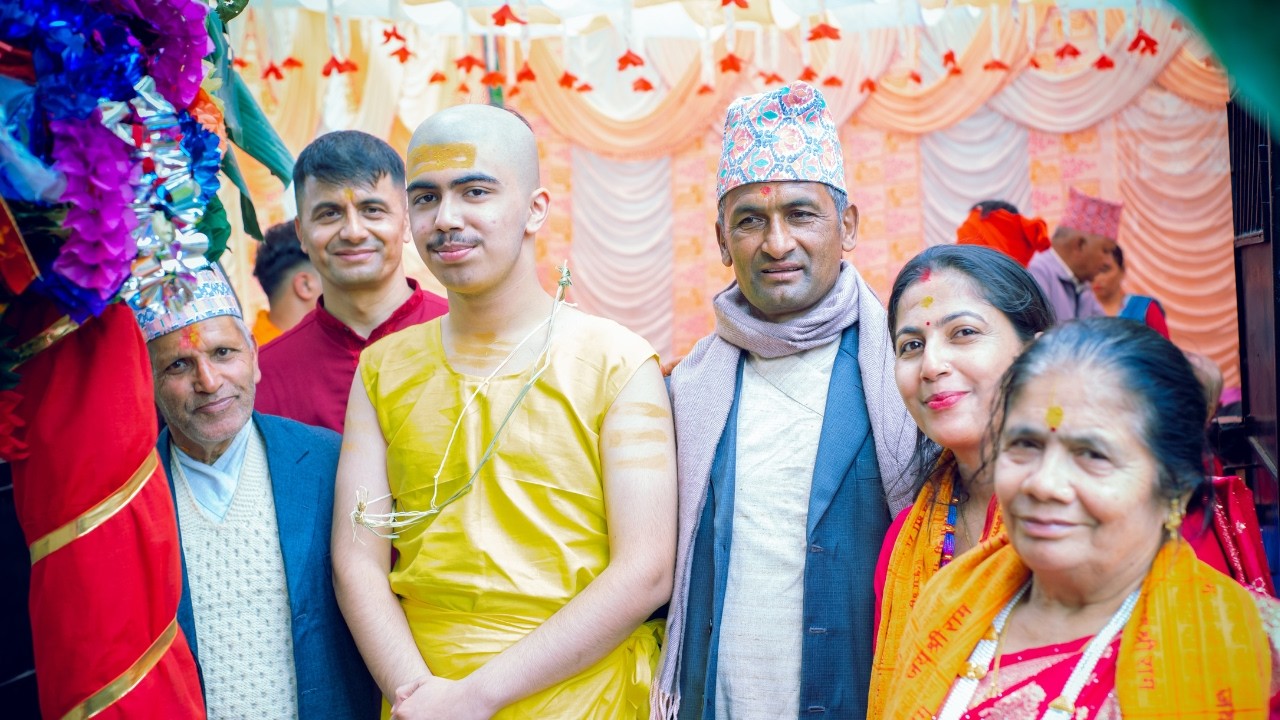
ब्रतबन्ध (Bratabandha) ७ फागुन २०८२,बिहिवार || Saksham Gyawali
Автор: sanju dhakal
Загружено: 2026-02-21
Просмотров: 51
Описание:
The earliest form of this saṁskāra, whose name there are no records of, may have been to mark the acceptance of a person into a particular community.Indologically, the ritual is present in the Gṛhyasūtras and Dharmasūtras and Dharmaśāstras, as well as a couple of times in the Saṃhitās.
Educational courses or training has been referred to in the Chandogya Upaniṣad and in the Yājñavalkya Smṛti; Gharpure writes that during the Smṛti period, Upanayana may have attained a permanent fixture if the life of students to be as compared to being optional before.
In the Atharvaveda, and later in the Sutras period, the word upanayana meant taking responsibility of a student, the beginning of an education, a student's initiation into "studentship" and the acceptance of the student by the teacher. Preceptors could include a guru, ācharya, upādhyāya, and ṛtvik.
Gradually, new layers of meaning emerged, such as the inclusion of goddess Sarasvatī or Sāvitrī, with the teacher becoming the enabler of the connection between this goddess and the student. The meaning was extended to include Vedāngas and vows among other things.
The education of a student was not limited to ritual and philosophical speculations found in the Vedas and the Upaniṣads. It extended to many arts and crafts, which had their own, similar rites of passages. The Aitareya Brāhmaṇa, Āgamas, and Purāṇas genres of literature in Hinduism describe these as Śilpa Śāstras.They extend to all practical aspects of culture, such as the sculptor, the potter, the perfumer, the wheelwright, the painter, the weaver, the architect, the dancer, and the musician. The training of these began from childhood and included studies about dharma, culture, reading, writing, mathematics, geometry, colours, tools, as well as traditions and trade secrets. The rites of passage during apprentice education varied in the respective guilds.Suśruta and Charaka developed the initiation ceremony for students of Āyurveda.The Upanayana rite of passage was also important to the teacher, as the student would therefrom begin to live in the gurukula (school).
Upanayana became an elaborate ceremony, that includes rituals involving the family, the child and the teacher. A boy receives during this ceremony a sacred thread called the yajnopavita to be worn. The yajnopavita ceremony announces that the child had entered into formal education.In the modern era, the Upanayana rite of passage is open to anyone at any age.The Upanayana follows the Vidyārambhaṃ, the previous rite of passage.Vidyārambhaṃ became an intermediary samskāra following the evolution in writing and language.Vidyārambhaṃ now marked the beginning of primary education or literacy while Upanayana went on to refer to spiritual education. The Upanayana can also take place at the student's home for those who are home schooled. Ceremonial bhikṣa as one of the rituals during Upanayana became important, attaining sizeable proportions.The actual initiation occurred during the recitation of the Gāyatrī Mantra.The spiritual birth would take place four days after the initial Upanayana rituals. It was then that the last ritual was performed, the Medhajanana.The Samavartanam or convocation ritual marked the end of the course.The Upanayana became a permanent feature around the Upaniṣad period.
Attire includes a daṇḍa or staff and a mekhala or girdle.
Повторяем попытку...
Доступные форматы для скачивания:
Скачать видео
-
Информация по загрузке: