The Genius Behind Roman Heating Systems
Автор: Ancient Rome Secrets
Загружено: 2025-10-21
Просмотров: 46
Описание:
Romans had central heating over 2,000 years ago, long before it became common in the modern era—a fact that still astonishes engineers today.
Picture stepping into a Roman bathhouse on a frigid winter morning, the warmth radiating from beneath your feet and through the walls around you. This wasn't rare luxury reserved for emperors alone. Wealthy citizens and public visitors across the empire experienced this comfort daily, thanks to an ingenious system that circulated heat through hidden chambers below floors and inside walls. The technology behind it, called the hypocaust, represents one of ancient Rome's most impressive engineering achievements, blending practical functionality with sophisticated design.
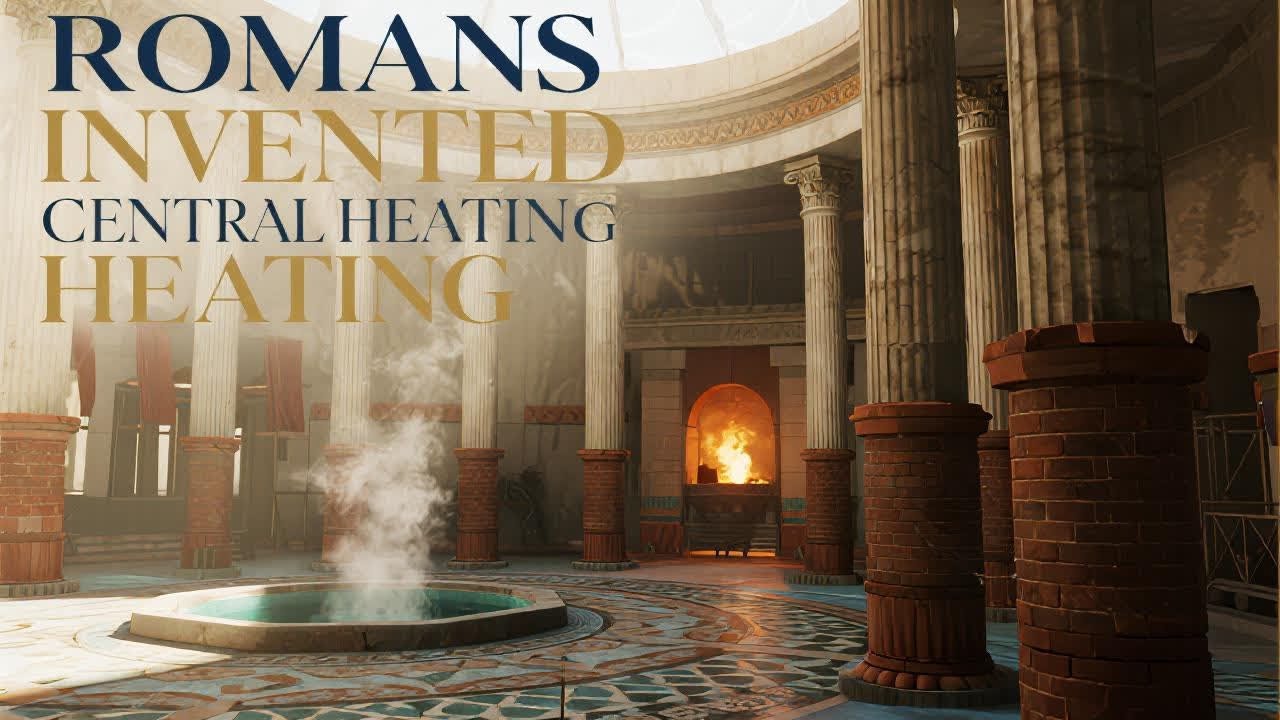
The hypocaust was the cornerstone of Roman heating, a complex network designed to distribute warmth evenly throughout a building rather than relying on simple fireplaces. At its core, the system worked by raising floors on pillars, creating a cavity underneath where hot air from a furnace could circulate. This heated air flowed through the space, warming the floor above before rising through hollow walls via terracotta pipes called tubuli. The result was consistent, radiant heat that made rooms comfortable even in the coldest months.
Romans used hypocausts in various structures, from luxurious private villas to massive public bathhouses that served thousands daily. The versatility of the design meant it could be scaled up or down depending on the building's size and purpose. Understanding how Roman heating systems worked reveals their engineering prowess and shows why this ancient technology still influences modern underfloor heating designs. From the furnaces that generated the heat to the network of pillars and pipes that distributed it, every component played a crucial role in creating comfortable living spaces across the Roman Empire.
The hypocaust's popularization is credited to Sergius Orata, an enterprising Roman from the 1st century BC who initially used the system for heating oyster beds before adapting it for buildings. His background in aquaculture and engineering gave him unique insights into heat management, and he refined the technology to market heated villas to wealthy Romans who craved comfort. The timing of his innovation coincided with the expansion of bath culture, which became central to Roman social life and drove demand for efficient, large-scale heating systems.
Roman bathhouses, or thermae, were the primary drivers for hypocaust development, requiring consistent warmth to serve their diverse functions. A typical bath complex included the caldarium, the hot room where temperatures soared, the tepidarium, a warm transitional space, and the frigidarium, the cold room for refreshing plunges. The social and cultural importance of baths, where Romans gathered for hygiene, relaxation, and conversation, fueled demand for advanced heating technology that could maintain different temperatures throughout these massive structures.
Domestic hypocausts were adapted for private homes, particularly in the villas of wealthy Romans, where they provided comfort in living areas, bedrooms, and even greenhouses. These systems differed from public baths, featuring smaller-scale furnaces and more targeted heating. Only the elite could afford such luxuries, making hypocausts symbols of status that reinforced class divisions in Roman society. Historical sources like Pliny the Younger's letters describe his heated villa in detail, offering glimpses into daily life with this remarkable technology.
Fueling hypocausts required vast quantities of wood or charcoal, with significant logistical and environmental implications. Large bathhouses could consume tons of wood daily, straining local resources and requiring trade networks to import fuel from distant regions. The labor was equally demanding, with slaves or servants operating the furnaces in hot, smoky conditions. This reliance on manual labor and extensive fuel supplies made hypocausts accessible only to those who could afford the ongoing costs.
Hypocaust systems differed across the Roman Empire, adapting to local climates, materials, and cultural practices from Britain to Syria. In colder northern provinces, simpler designs prioritized insulation and efficiency, while Italian systems were more elaborate, focused on luxury. These regional variations reflect the Romans' ability to integrate local knowledge into their engineering, creating heating solutions tailored to specific environments that worked effectively across diverse territories.
The science behind hypocausts relied on basic thermodynamics, using convection currents where hot air rises and cooler air sinks to create continuous flow through the underfloor and wall cavities. Materials like terracotta and concrete acted as thermal mass, absorbing heat and releasing it slowly, ensuring prolonged warmth even after the fire died down. This principle is similar to modern radiant floor heating,
Повторяем попытку...
Доступные форматы для скачивания:
Скачать видео
-
Информация по загрузке:




![Эффект Джанибекова [Veritasium]](https://imager.clipsaver.ru/N9HlQ-XVnFk/max.jpg)