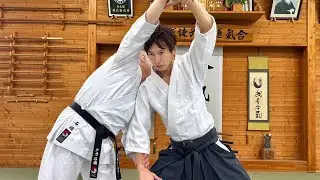
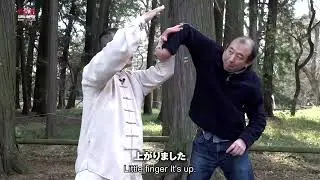
Sendo Yasuhiko “ Hua Jin,” often translated as “transforming energy” or “flowing energy,” in Tai Chi
Автор: Taikiken Pages
Загружено: 2025-03-15
Просмотров: 1423
Описание:
Our sincere thanks to: / @budojapan , for publishing all this great martial art material!
“Hua Jin,” often translated as “transforming energy” or “flowing energy,” is a subtle yet powerful principle in the internal martial arts—particularly in Tai Chi. While “Fa Jin” (explosive power) is frequently showcased for its impressive display of force, “Hua Jin” is its equally vital counterpart. It embodies the sophisticated art of redirecting and transforming incoming energy with grace and fluidity. In Tai Chi, these concepts exist in harmony, with “Hua Jin” serving as both a defensive and strategic precursor to the decisive striking power of “Fa Jin.”
1. Understanding “Hua Jin” as “Flowing Jin”
The principle of “Hua Jin” is described as “flowing Jin,” likened to the effortless glide of clouds and the steady, constant movement of a flowing river. Rather than meeting force with rigidity, practitioners learn to harness the energy coursing through their body to guide, dissipate, or redirect an opponent’s power. This is a highly refined skill that depends on sensitivity, relaxation, and whole-body integration.
Flowing Clouds and Flowing Water
Just as clouds shift shape without losing their essence, and water finds its path around obstacles without losing momentum, so too does “Hua Jin” continuously adapt and respond to an opponent’s movement.
The intention is never to stop or resist force but rather to receive and guide it.
Whole-Body Coordination
“Flowing Jin” is rooted in the entire body—every joint and muscle should be in harmony, allowing energy to pass naturally from foot to waist, then through the spine and arms.
This continuous, unbroken flow—also referred to in many Tai Chi classics—ensures that there are no blockages, no abrupt stops, and no wasted motion.
2. The Role of the Eight Gates Jin
“Flowing Jin” draws from the Eight Gates Jin (Peng, Lu, Ji, An, Cai, Lie, Zhou, Kao), fundamental energies in Tai Chi practice. Each represents different expressions or directions of power, but all can serve and be refined by “Hua Jin”:
Peng (expanding) and Lu (redirecting) most closely illustrate the transformative nature of “Hua Jin.” Peng provides the structural integrity to remain buoyant and connected, while Lu applies subtle redirection.
Ji (pressing) and An (pushing) can incorporate “flowing Jin” by smoothly pressing and pushing without hard collisions.
Cai (plucking), Lie (splitting), Zhou (elbow), and Kao (shoulder) also utilize the same principle of continuous energy flow, but in more specific applications of short power or close-in techniques.
When “Hua Jin” is present, each of these gates or energies transforms seamlessly, allowing you to neutralize and off-balance an opponent. This is done not by forceful confrontation but by a precise and well-timed yield, followed by a guided redirection of the opponent’s own force.
3. Riding the Flow: Application in Combat
In practical terms, “Hua Jin” helps you deal with an opponent’s strikes or grappling attempts by “riding” their incoming power like a raft on a river:
Yielding and Connecting
The moment contact is made, you connect with your opponent’s energy. Instead of fighting it, you let their force enter your structure while maintaining dynamic alignment and relaxation.
Through sensitivity (often honed through push-hands practice), you detect the opponent’s angle, intention, and center of balance.
Redirection and Transformation
Once you feel their energy, gently alter its direction—much like water flowing around a rock.
Your body does not become limp; rather, it remains structurally aligned yet flexible, guiding the opponent’s power away from your center.
Returning Force
As the opponent’s energy is diverted, you maintain a continuous flow, neutralizing their momentum.
The stored or redirected energy can then be quickly converted into your own striking force if needed—often seen when “Hua Jin” transitions into “Fa Jin” (explosive release).
The beauty of “Hua Jin” is that it allows you to respond with minimal effort while maximizing the opponent’s expended energy.
4. The Secret to Enhancing Fa Jin
According to the teachings of Endo Yasuhiko and many Tai Chi masters, the penetrating and destructive power of “Fa Jin” is significantly magnified when underpinned by “Hua Jin.” Why is this so?
Continuity of Energy
By maintaining a continuous internal flow of “Hua Jin,” you reduce the likelihood of energy blockages or tension spots in your body. When it’s time to issue “Fa Jin,” the energy can be released explosively, unimpeded from ground to fist (or any other contact point).
Fluidity and Adaptability
“Hua Jin” prevents rigid, telegraphed movements. An opponent may expect a direct clash, but instead, they encounter soft, elusive power. When you do release “Fa Jin,” it often comes as a surprise, originating from an angle and timing the opponent did not anticipate.
Повторяем попытку...

Доступные форматы для скачивания:
Скачать видео
-
Информация по загрузке: