This Theory Could Rewrite the Big Bang: The Cold CMB Universe.
Автор: Daniel Izzo
Загружено: 2025-09-26
Просмотров: 139
Описание:
A Thermodynamic Model of Universal Motion: Falling, Expanding, and Entropy**
What explains the fine-tuning of the universe? Could Stephen Hawking have been right—that the universe created itself? Perhaps a quantum computer, developed within this very universe, sent a wave back in time, disturbing a static, cold cosmos and triggering motion.
Everything we observe in the universe is in motion—but into what?
The universe may be expanding into a colder realm, a region near absolute zero, possibly extending toward infinity. It could be falling and accelerating, gaining energy as it does. This motion might have begun with two static gravitational vacuum fields. One of them may have destabilized, initiating cosmic motion and emitting microwave radiation near 1.6 gigahertz. This could have created Bose-Einstein condensates—a state where bosons align at ultra-low temperatures—and initiated the Cosmic Microwave Background.
From this disturbance, primordial dust might have formed. This dust could then clump into massive moon-like bodies, collapse, and go supernova, giving birth to matter at the sites where galaxies now exist.
Dark matter might be residual helium from past cycles. Because helium is extremely light and resists freezing due to its quantum behavior, it remains unfrozen even near absolute zero without extreme pressure. This property could allow helium to persist across cosmic cycles. Perhaps a quantum computer located at Earth’s position in the future sent a wave back in time to initiate this sequence.
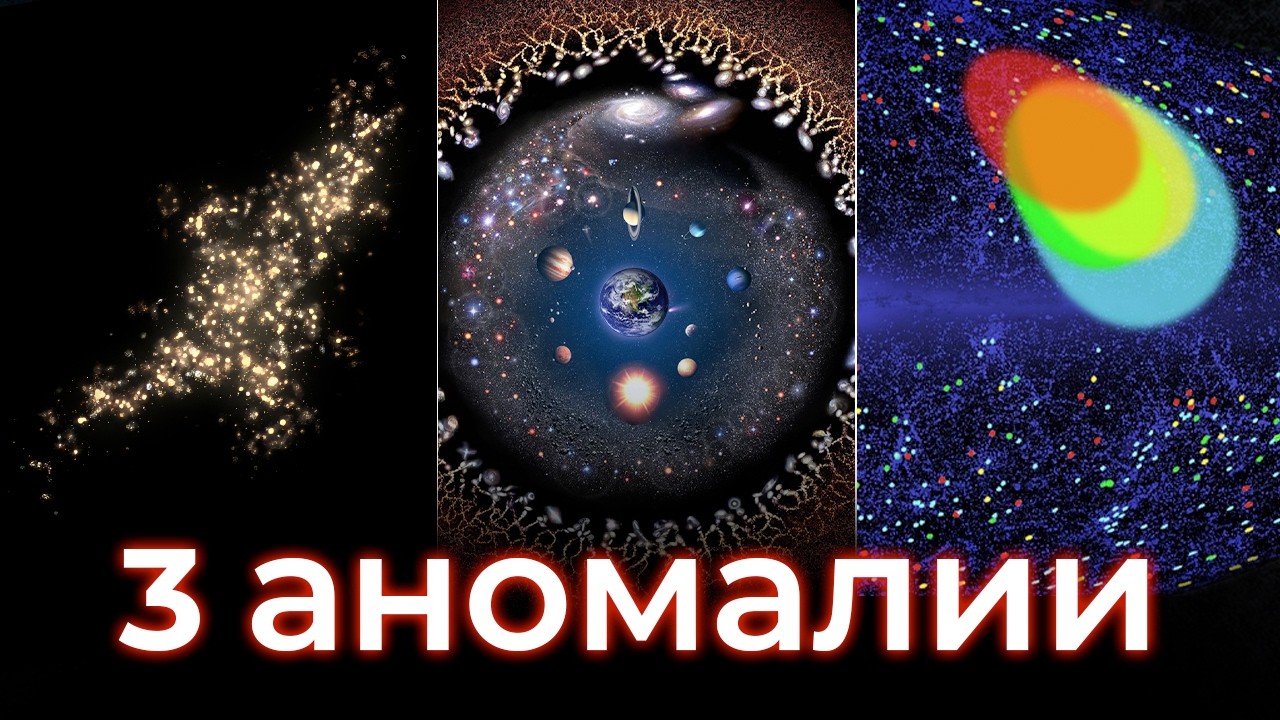
There may be no need for dark energy in this model. Instead, the universe’s motion may follow the second law of thermodynamics. Just as heat flows from warmer to cooler areas, entropy increases. In this model, galaxies with redshift may be moving outward like ripples in water. The Local Group, which exhibits blueshift, may be surging inward toward a gravitational center, perhaps near Earth. Some galaxies may appear stable—neither moving toward nor away—representing the crest of a ripple, possibly colored green in this analogy.
Imagine a rock thrown into a pond. The point where the rock hits is where galaxies like Andromeda surge inward, as seen by its movement toward Earth at around 110 kilometers per second. The surrounding outward ripples represent redshifted galaxies, which appear in surveys like the 2MASS map. These waves move away with increasing speed, much like galaxies receding from us. Stable zones, where motion seems balanced, would be analogous to the ripple’s crest.
This analogy helps clarify:
**Blueshift as Displacement**: The Local Group’s blueshifted galaxies appear to counter expansion due to gravitational forces. Galaxies such as M31 and its companions seem to be moving inward, like water pulled back where the rock hits the surface.
**Redshift as Outward Ripple**: The redshift seen in galaxies correlates with their distance from Earth. Farther galaxies show greater redshift, similar to how pond ripples move outward and dissipate.
**Green as Stability**: Some galaxies may appear relatively stable if their peculiar velocity matches our own, producing no net redshift or blueshift. Dwarf galaxies like Sculptor, with minimal motion relative to us, might reflect this balance.
The idea that two gravitational vacuum fields destabilized near Earth implies that this central zone could be a region of minimal motion, marked by BEC microwave emissions. Redshifts and blueshifts would be deviations from this quiet center. Older theories, such as the 1976 notion of quantized redshift, might align with this idea of structured wave crests. However, the uniformity of the observed CMB presents a challenge to the notion of a single-point origin.
*Is the Universe Both Falling and Expanding?*
According to this theory, the universe began in a cold, static state. The introduction of a quantum disturbance disrupted one gravitational vacuum field, initiating motion. This led to the formation of Bose-Einstein condensates, emissions around 1.6 gigahertz, the generation of pre-nucleosynthesis dust, and eventually the collapse of massive structures followed by supernovae and galaxy formation.
"Falling" in this context refers to gravitational instability—when matter collapses into more concentrated forms like stars or supernovae. Expansion, by contrast, is the dispersal of matter and energy into the surrounding cold vacuum, driven by entropy.
Повторяем попытку...

Доступные форматы для скачивания:
Скачать видео
-
Информация по загрузке: