Pre MDS states CH, CCUS, ICUS – How to manage in the clinic?
Автор: MDS Foundation, Inc.
Загружено: 2024-01-09
Просмотров: 1130
Описание:
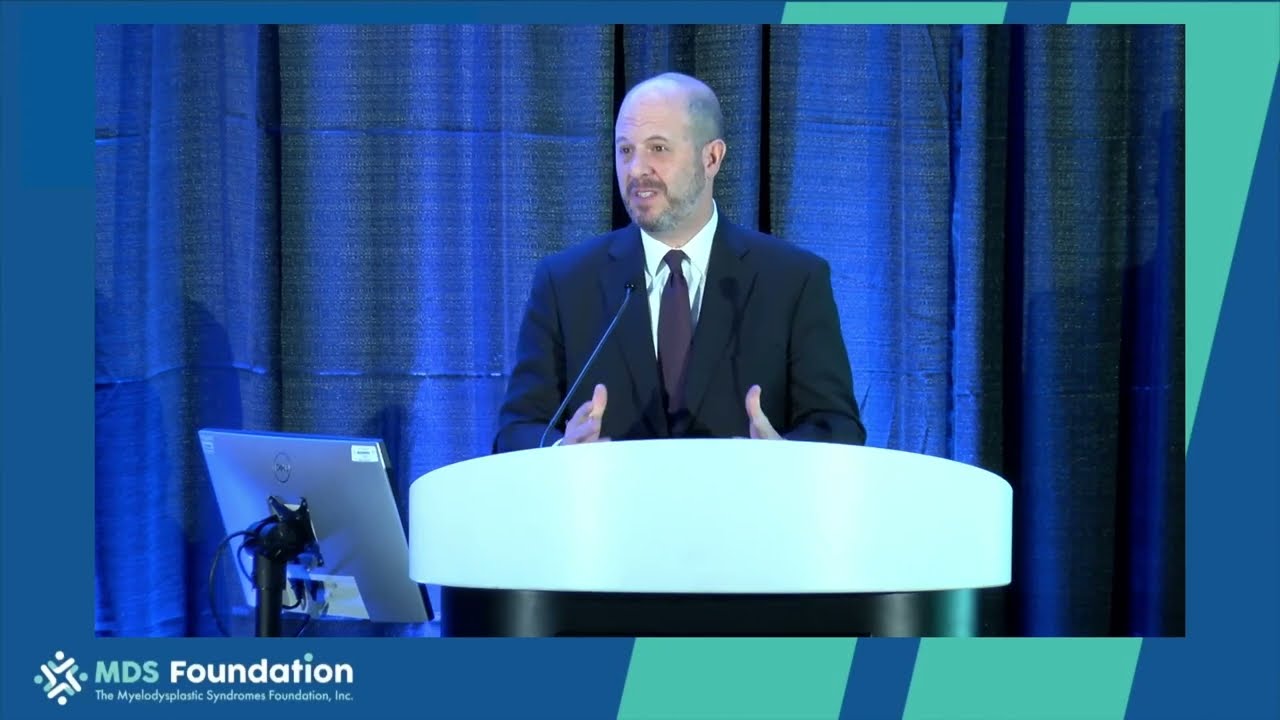
Michael R. Savona, MD, Professor of Medicine and Cancer Biology, Vanderbilt University School of Medicine, Nashville, Tennessee, USA
Clonal hematopoiesis (CH) is an over-representation of mature blood cells derived from a single, genetically identical clone.1 CH is genetically heterogeneous, with most cases resulting from somatically-derived mutations in leukemogenic driver genes within hematopoietic stem cells.2 Variants have been reported from greater than 70 CH driver genes, though more than two-thirds of CH mutations are found in one of three genes: DNMT3A, TET2, and ASXL1 (‘DTA’ mutations).1-5 While CH-associated genes span a diverse set of cellular functions and processes, including epigenetic regulation, transcription, and RNA splicing,6 the resulting effect of a CH driver mutation is enhanced cellular fitness leading to a selective advantage for the clone and subsequent clonal expansion.6
Most commonly, CH presents as clonal hematopoiesis of indeterminate potential (CHIP), an asymptomatic state with normal blood counts. CHIP is highly correlated with increasing age, with 15% of patients over the age of 65 estimated to have CH with a variant allele fraction (VAF) of at least 2%.1-3 Clonal cytopenia of uncertain significance (CCUS) occurs in the presence of a clone and one or more associated cytopenias without a clear identifiable cause and a bone marrow biopsy without myelodysplasia, and clonal monocytosis of undetermined significance (CMUS) represents a phenotype of monocytosis without marrow changes classifiable as CMML.7 Numerous studies have demonstrated that CH increases potential to progress to hematologic malignancy, thus, CH is considered a premalignant state, and it is estimated that 0.5-1% of CHIP cases transform into an overt hematologic malignancy per year after acquiring additional somatic mutations. By definition, CCUS and CMUS are accompanied with hematologic phenotypes and thus can be more pervasive, particularly in patients with multiple mutations, high VAFs, and/or those with non-DTA, myeloid-neoplasm type clones.8 A more recent analysis of over 400,000 UK biobank participants added red blood cell indices to these features to yield a CH risk score (CHRS) now available online: www.CHRSapp.com.9
Existing research points toward aberrant inflammatory signaling as a putative mechanism for CH pathology.10-13 Given the diversity of genes involved in CH, it is unlikely that a single mechanism exists for all downstream pathologies. As such, the prevailing immune dysregulation hypothesis as it currently exists does not completely reflect the complexity of CH across disease manifestations, and future work should focus on articulating mutation-specific effects on inflammation and secondary inflammatory consequences. In addition to malignancy risk, CH is associated with a high burden of organ dysfunction, and confers a 40% increase in all-cause mortality.1-2 Recent reports of CH-associated organ dysfunction include increased risk of stroke and atherosclerotic vascular disease (ASCVD),11-14 inflammation and autoimmune disease,15-17 chronic obstructive pulmonary disease,18 and chronic kidney disease,19-20 among others.21
The CHIVE (Clonal Hematopoiesis and Inflammation in the VasculaturE) Registry and Repository was established with the goal of relating genotype-phenotype relations and understanding the natural history of CH. Patients who are at risk for CH, or with known CH, provide serial access to blood and tissue collected at normally scheduled visits. CHIVE aims to maximize vascular risk reduction, and understanding the genotype-phenotype relationships of CH to develop new clinical trials in CH. Using guidance from the patterns established from retrospective data, CHIVE investigators monitor patients as ‘low risk’ or ‘high risk’ every 6, or 12 months, respectively. CHIP clinics managing these patients will use the CHRS, and validation and refinement of this tool will enhance risk stratification for myeloid neoplasia; but should not miss the opportunity for patient education around vascular risk reduction. Serial sampling in the CHIVE repository, aggressive attempts to modify vascular disease, and iterative application of lessons learned for new guidance will shape care for higher risk patients with CH, and ultimately lead to guidance for clinical trials in this arena. References at https://www.mds-foundation.org/learni....
Повторяем попытку...
Доступные форматы для скачивания:
Скачать видео
-
Информация по загрузке:


