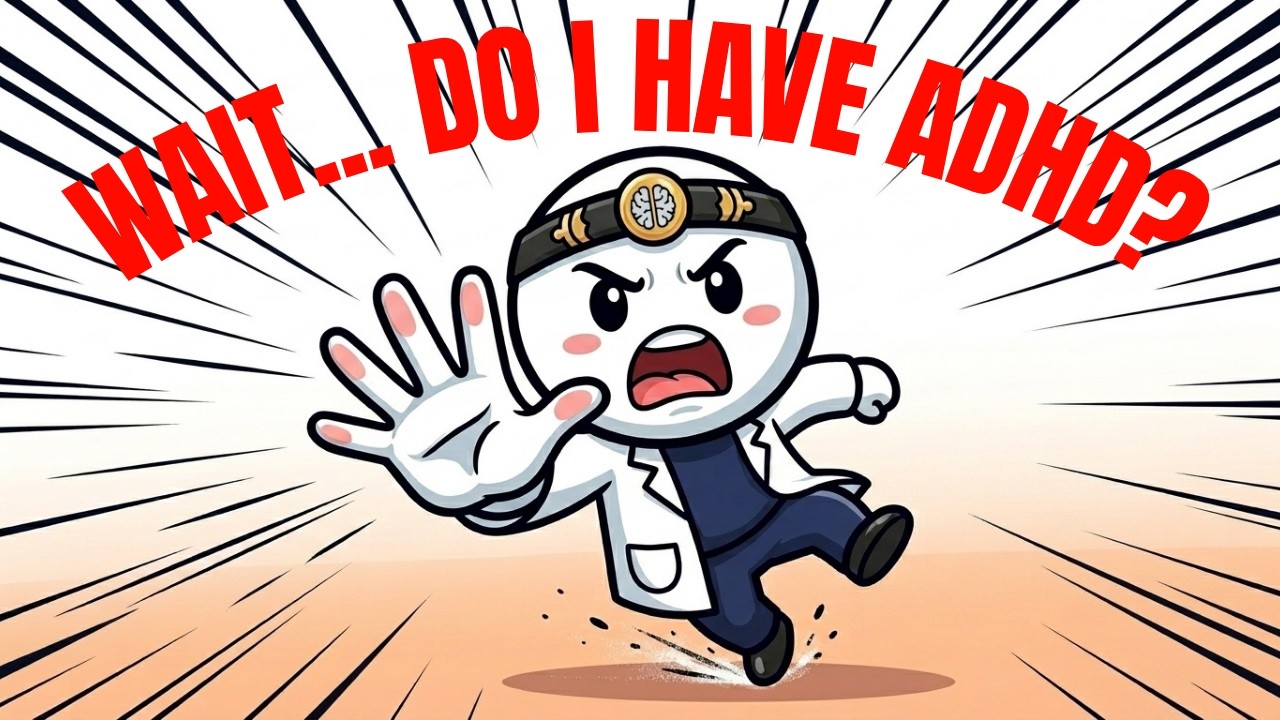
Why Everyone on TikTok Thinks They Have ADHD (And Why They're Wrong)
Автор: The Unbecoming
Загружено: 2026-07-02
Просмотров: 26
Описание:
#TheUnbecoming #ADHD #Psychology
Have you ever watched a 15-second TikTok and suddenly wondered…
"Wait… do I have ADHD?"
You related to one video.
Then another.
And another.
Before long, what started as curiosity slowly became certainty.
But here's the question most social media platforms never ask:
Are you actually recognizing a clinical condition—or simply recognizing what it feels like to be a stressed, exhausted, and overstimulated human being?
This video explores the psychology behind self-diagnosis on social media and why millions of people are mistaking everyday struggles for clinical disorders.
Because the algorithm isn't trying to understand your mind.
It's trying to understand what keeps you watching.
🧠 In this video, we explore:
Why TikTok makes so many people believe they have ADHD
How algorithms reinforce psychological confirmation bias
The Barnum Effect and why vague descriptions feel deeply personal
Why ADHD symptoms overlap with anxiety, burnout, stress, and sleep deprivation
The psychology of online self-diagnosis
How cognitive biases shape the way we interpret ourselves
What psychologists actually look for when diagnosing ADHD
The hidden risks of building your identity around an incorrect label
Why awareness and diagnosis are not the same thing
How to approach mental health with curiosity instead of certainty
⏱️ Timestamps:
00:00 – Why TikTok thinks you have ADHD
00:45 – The algorithm isn't diagnosing you
01:35 – Confirmation bias explained
02:20 – The Barnum Effect and relatable content
03:15 – Why ADHD symptoms feel so universal
04:20 – The real cost of self-diagnosis
05:30 – What a clinical ADHD assessment actually involves
06:40 – Awareness vs. diagnosis
07:30 – How to understand your mind more accurately
08:05 – The most important takeaway
If you've ever questioned your mental health because of something you saw online...
If you've ever felt relieved after finding a label that seemed to explain everything...
Or if you've wondered whether social media is helping people understand themselves—or simply making them more anxious...
this video may change the way you think.
One of the greatest strengths of modern psychology is that it encourages curiosity.
But curiosity becomes dangerous when it turns into certainty without evidence.
The human brain naturally looks for patterns.
Once we begin believing a label fits us, we start collecting proof while quietly ignoring everything that doesn't.
That's not a personal flaw.
It's simply how cognitive biases work.
The problem isn't that people are becoming more aware of mental health.
Greater awareness has helped countless people seek the support they genuinely needed.
The problem begins when an algorithm replaces careful assessment, and a viral video becomes more convincing than professional evaluation.
Your experiences deserve to be taken seriously.
But they also deserve to be understood accurately.
Because the right answer doesn't just give you a label.
It helps you find the support that actually matches what you're going through.
Real self-awareness isn't about finding the quickest explanation.
It's about asking better questions—and being willing to follow the evidence wherever it leads.
If this video resonated with you:
👍 Like & share to support more psychology content
💬 Comment: Have you ever believed a piece of psychological advice online that later turned out to be misleading?
🔔 Subscribe to The Unbecoming for more videos on psychology, cognitive biases, neuroscience, mental health, and the hidden forces shaping the way we think.
/ @theunbecoming.01
#TheUnbecoming #ADHD #Psychology
Повторяем попытку...
Доступные форматы для скачивания:
Скачать видео
-
Информация по загрузке: