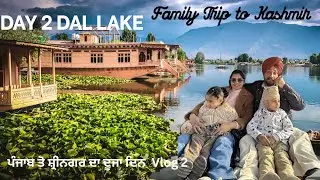
Dal Lake Mai Shikara Ride Aur Kawa Pee Kar Maza Aagaya Dard Door Ho Gaya
Автор: The Rodeo Drive
Загружено: 2024-07-18
Просмотров: 10415
Описание:
HOTEL SADAF 01942457490
Dal is a freshwater lake in Srinagar, the summer capital of the Indian-administered Jammu and Kashmir in the disputed Kashmir region.[1] It is an urban lake, the second largest lake in Jammu and Kashmir, and the most visited place in Srinagar by tourists and locals. It is integral to tourism and recreation in the Kashmir valley and is variously known as the "Lake of Flowers",[2] "Jewel in the crown of Kashmir"[3] or "Srinagar's Jewel".[4] The lake is also an important source for commercial operations in fishing and water plant harvesting.[5][6][7]
The shore line of the lake, about 15.5 kilometres (9.6 mi), is encompassed by a boulevard lined with Mughal era gardens, parks, houseboats and hotels. Scenic views of the lake can be witnessed from the shore line Mughal gardens, such as Shalimar Bagh and Nishat Bagh built during the reign of Mughal Emperor Jahangir,[8] and from houseboats cruising along the lake in the colourful shikaras.[9] During the winter season, the temperature can sometimes reach as low as −11 °C (12 °F), freezing the lake.[7][10]
he lake covers an area of 18 square kilometres (6.9 sq mi) and is part of a natural wetland which covers 21.1 square kilometres (8.1 sq mi), including its floating gardens. The floating gardens, known as "Rad" in Kashmiri, blossom with lotus flowers during July and August. The wetland is divided by causeways into four basins; Gagribal, Lokut Dal, Bod Dal and Nigeen (although Nigeen is also considered as an independent lake).[11] Lokut Dal and Bod Dal each have an island in the centre, known as Rupa Lank (or Char Chinari) and Sona Lank respectively.[10][12]
Dal is mentioned as Mahasarit (Sanskrit: महासरित्) in ancient Sanskrit texts. Ancient history records mention that a village named Isabar to the east of Dal was the residence of goddess Durga.[15] This place was known as Sureshwari on the bank of the lake, which was sourced by a spring called the Satadhara. The name "Sureshwari" refers to the goddess Parvati, suggesting that the lake was once considered sacred and possibly associated with the goddess.[16] [17]
During the Mughal period, the Mughal rulers of India designated Kashmir, Srinagar in particular, as their summer resort.[18][19] They developed the precincts of the Dal in Srinagar with sprawling Mughal-type gardens and pavilions as pleasure resorts to enjoy the salubrious cool climate.[18] After the death of Aurangzeb in 1707, which led to the disintegration of the Mughal Empire,[20] Pashtun tribes in the area around the lake and city increased, and the Afghan Durrani Empire ruled the city for several decades.[21] In 1814 a significant part of the Kashmir valley, including Srinagar, was annexed from the Afghans by Maharaja Ranjit Singh to his kingdom, and the Sikhs grew in influence in the region for 27 years.[22][23]
Повторяем попытку...
Доступные форматы для скачивания:
Скачать видео
-
Информация по загрузке: