2007 vs 2025... What happened here? ⌛️💔
Автор: Map Snap
Загружено: 2026-03-04
Просмотров: 134151
Описание:
The white house on the corner looked like it would last forever in 2007.
A black SUV sat in the driveway, a red Explorer idled with its door open, and two older men moved slowly between the vehicles like they had done a thousand times before.
The grass was cut, the porch swept, the mailbox stood straight—ordinary, stubborn proof that someone still called this place home.
In 2007, this modest single-story home stood in a quiet working-class neighborhood in a small Southern town—likely Arkansas, Tennessee, or northern Mississippi.
It belonged to an elderly couple who had lived there for decades.
He still drove the red Explorer; she kept the porch light on even during the day.
This story matters because it is the quiet, repeated tragedy of thousands of American corners: places built for families, paid off with lifetimes of overtime, then slowly emptied when the last caretaker can no longer hold on.
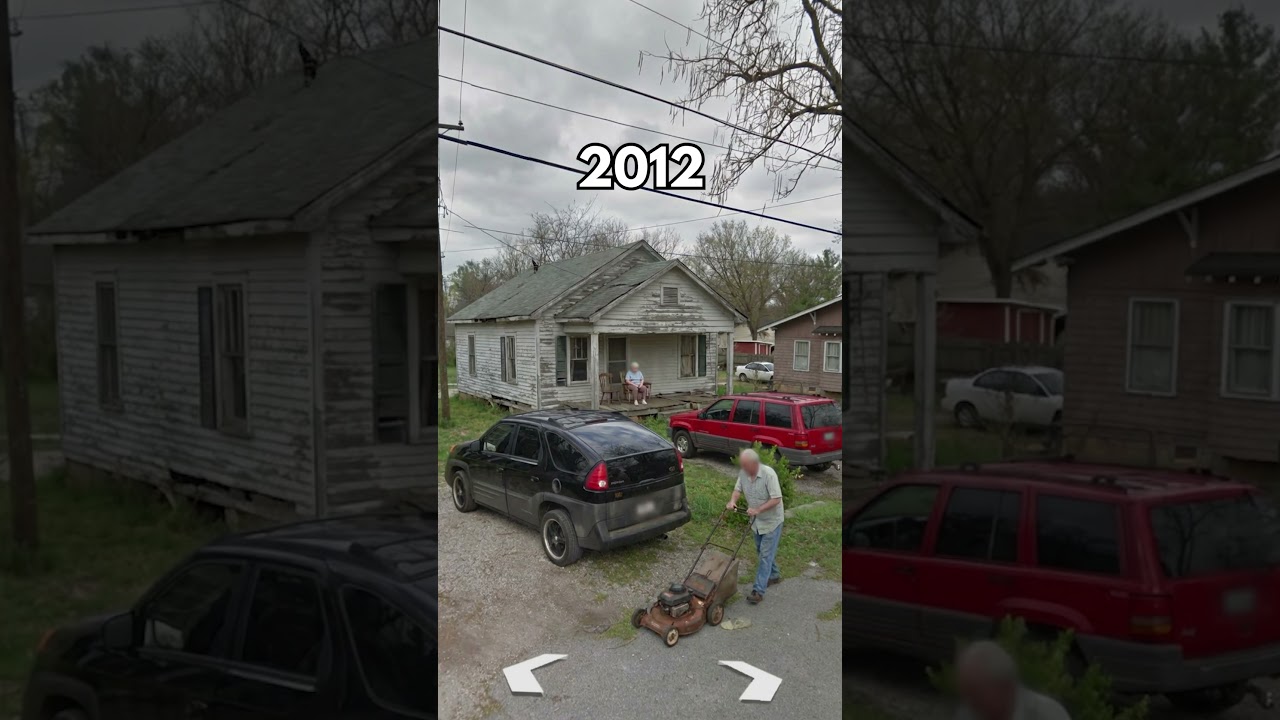
By 2012 the house was fighting to stay alive.
The same man—now visibly older—pushed a rusty mower across the patchy lawn while his wife sat on the porch steps watching him, blanket over her lap even in mild weather.
The roof had dark water stains, the paint on the trim was fading, but the grass was still cut and the mailbox still stood.
They were holding on with everything they had left—Social Security checks, stubborn pride, and the quiet fear that once they left, no one would come back.
The turning point arrived without drama.
One winter the couple passed—first one, then the other, within months.
Children lived too far away or couldn’t afford the upkeep.
The house sat vacant.
Within a year the doors were kicked in.
By 2019 the transformation was complete and brutal.
Every wall was covered in overlapping graffiti—tags, curses, territorial marks in bright colors.
Windows were shattered or boarded with plywood.
Two younger men stood in the overgrown yard, hands in pockets, claiming a space that once held family dinners and holiday lights.
The porch where an old woman once rocked now held empty beer cans and cigarette butts.
The house had become a squat, a canvas, a warning.
Then came the final chapter.
In 2025 the house was gone.
In its place stood a bright, clean McDonald’s with fresh yellow arches, a drive-thru line already forming, and a parking lot where the red Explorer once sat.
The same patch of ground that once smelled of coffee and Sunday roast now smelled of french fries and exhaust.
The old mailbox, the porch steps, the living room where grandchildren once played—all of it scraped away and replaced by corporate efficiency and quarterly profits.
This is not a story of dramatic arson or heroic redevelopment.
It is the slower, more common American ending: a home that outlived its owners, waited too long for someone to claim it, and was finally erased so strangers could order Number 3 combos in under three minutes.
The couple who spent forty years paying off that mortgage never imagined their front yard would one day be measured in Happy Meal boxes.
The land itself doesn’t mourn.
It simply waits for the next purpose—family shelter, abandoned squat, corporate profit.
But for anyone who ever sat on that porch or parked in that driveway, the loss feels personal and permanent.
What does it say about us that the places where people built entire lives can disappear so completely, replaced by something designed to be forgotten by the next shift change?
Have you ever driven past a fast-food restaurant and realized it sits on what used to be someone’s entire world?
Tell me in the comments—I read every single one.
Повторяем попытку...
Доступные форматы для скачивания:
Скачать видео
-
Информация по загрузке: