What Was a Seax? The Saxon Knife That Named England You've Never Heard Of
Автор: Medieval Wisdom
Загружено: 2026-02-24
Просмотров: 3465
Описание:
Become a member for more content on Medieval Wisdom here 👇
/ @medievalwisdom
=======================================
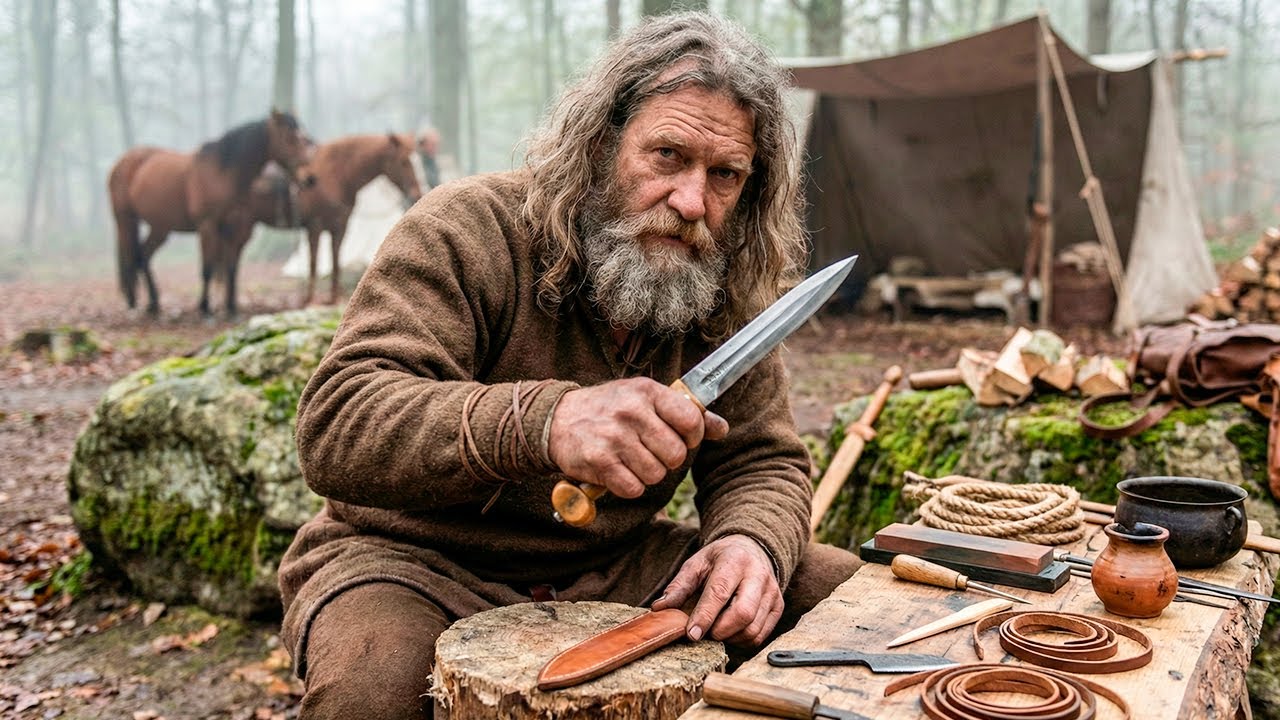
The seax was the single-edged blade that defined an entire civilization. The Saxons literally named themselves after this knife, and its design principles are still used by top bushcraft knife makers today. This video explores the archaeology, metallurgy, and cultural significance of a weapon that spent seven hundred years as the most important blade in northern Europe — and then vanished from history. From the Seax of Beagnoth in the British Museum to the composite metallurgy of Anglo-Saxon smiths, discover why this forgotten blade deserves to be remembered.
SOURCES
Wheeler, R.E.M. "London and the Saxons." London Museum, 1935. (Seax typology classification)
Westphal, H. "Franken oder Sachsen? Untersuchungen an frühmittelalterlichen Waffen." Studien zur Sachsenforschung 14, 2002. (Blade cross-section analysis)
Birch, Thomas. "Does Pattern-Welding Make Anglo-Saxon Swords Stronger?" University of Aberdeen, 2013. (Mechanical testing of pattern-welded vs. plain-forged blades)
Davidson, Hilda R. Ellis. "The Sword in Anglo-Saxon England: Its Archaeology and Literature." Woodbridge, 1962. (Pattern welding and Anglo-Saxon blade culture)
Gregory of Tours. "Historia Francorum" (History of the Franks), 6th century. (Only known use of the term "scramasax")
British Museum Collection: Seax of Beagnoth (Museum number 1857,0623.1)
Gale, David. Research on Anglo-Saxon weapon burials and seax as symbol of freemanship.
Hawkes, Sonia Chadwick. Assessment of seax combat effectiveness, Oxford conference, 1987.
Pollington, Stephen. "The English Warrior from Earliest Times to 1066." Anglo-Saxon Books, 1996.
Regia Anglorum. "Arms and Armour — Scramseax." (Reconstructionist analysis of seax use)
Online Etymology Dictionary entries for "Saxon," "Sax," and "Anglo-Saxon."
Law codes of King Ine of Wessex (688–726 CE) regarding weapon-bearing and freemanship.
medieval weapons, Anglo-Saxon seax, Viking knife history
SUBSCRIBE for more ancient wisdom that beats modern technology!
👍 LIKE if you're like medieval masters!
00:00 DROP A COMMENT
THE KNIFE THAT NAMED A PEOPLE: 01:22
ANATOMY OF A FORGOTTEN BLADE: 03:23
THE KNIFE OF FREE MEN: 06:28
DRAW YOUR KNIVES: 08:06
THE METALLURGY BEHIND THE BLADE: 09:58
BLADES THAT SPEAK: 12:42
MEDIEVAL GEOMETRY VS. MODERN STEEL — A DIRECT COMPARISON: 14:26
DISCLAIMER: This content is for educational purposes only. Do your own research and consult experts before attempting any cooling modifications. We are not responsible for outcomes from following these methods. For content removal requests, contact [email protected]
Copyright Disclaimer under Section 107 of the copyright act 1976, allowance is made for fair use for purposes such as criticism, comment, news reporting, scholarship, and research. Fair use is a use permitted by copyright statute that might otherwise be infringing. Non-profit, educational or personal use tips the balance in favour of fair use.
Повторяем попытку...

Доступные форматы для скачивания:
Скачать видео
-
Информация по загрузке: