Dr. Harch Podcast: The First Spinal Cord Recovery That Changed Everything
Автор: HarchHBOT
Загружено: 2026-02-16
Просмотров: 34
Описание:
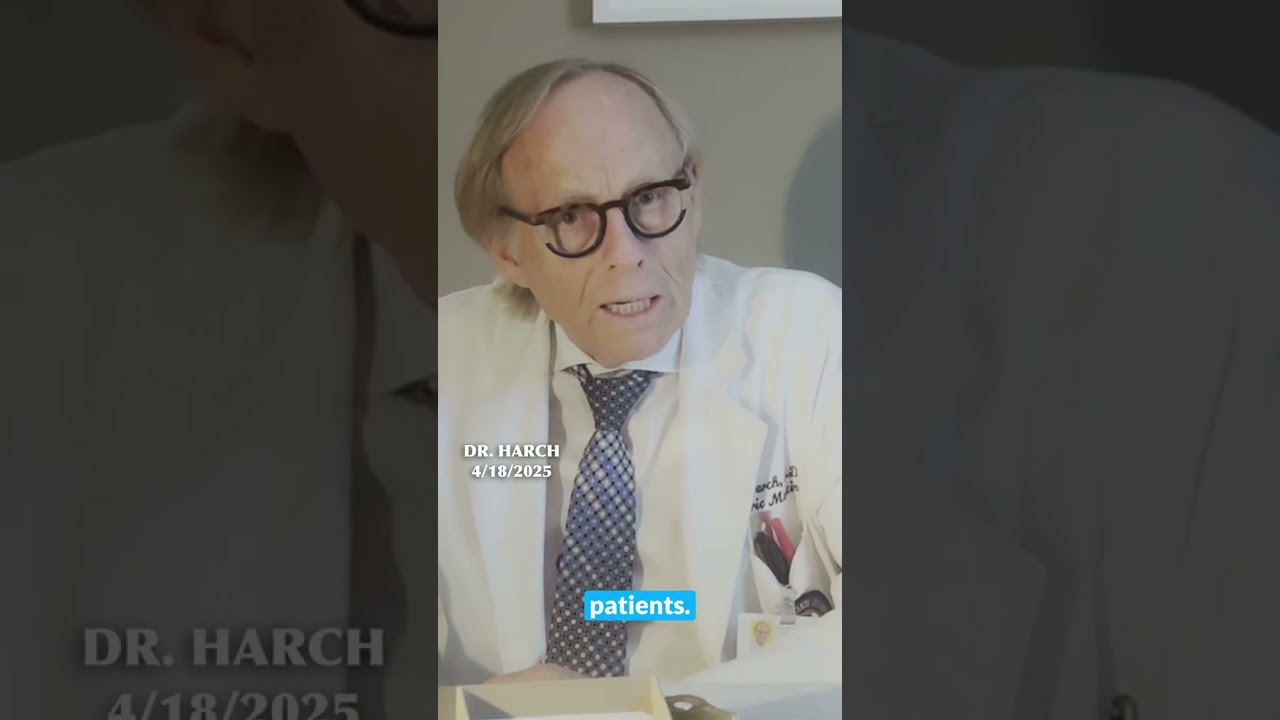
In this video, Dr. Paul Harch shares the remarkable case that transformed his understanding of hyperbaric oxygen therapy and its potential to treat severe neurological injury. In 1989, a 33-year-old man was brought to the hospital after a high-speed crash that left him completely paralyzed from a traumatic spinal cord injury.
Initial imaging showed no fracture or visible disruption of the spinal cord, but the patient rapidly lost all movement and sensation. Despite extensive emergency evaluation, including CT scans and advanced testing available at the time, doctors could not identify a clear structural cause for his paralysis. The likely explanation was a severe stretch injury or vascular damage that had cut off oxygen and blood flow to the spinal cord.
With no surgical option and no effective treatment available, the medical team faced a critical question: what else could be done?
Because the hospital had an operational hyperbaric chamber, the decision was made to try hyperbaric oxygen therapy. The goal was simple but powerful — deliver high levels of oxygen under pressure to the injured spinal cord and restore oxygenation to damaged tissue.
During the very first treatment, something extraordinary happened. While inside the chamber, the patient began to move his toe again — movement that had completely disappeared before treatment. Sensation also began to return.
He was treated daily, sometimes multiple times per day.
By day 17, the patient had recovered enough strength and function to stand, walk, and ultimately run out of the hospital.
This case demonstrated the potential role of oxygen delivery and pressure in rescuing injured nervous tissue before permanent damage occurs. For Dr. Harch, the experience was career-defining. Seeing complete paralysis begin to reverse after the first treatment opened the door to decades of work applying hyperbaric oxygen therapy to neurological conditions including traumatic brain injury, stroke, and other forms of neurovascular injury.
This story represents the moment when the possibilities of hyperbaric medicine expanded beyond traditional indications and into the treatment of complex neurological disease.
For more information visit www.hbot.com
TRANSCRIPT:
In 1989, the hyperbaric medicine world exploded for me. Out of nowhere came a series of cases that I never could have imagined I'd be treating. I remember one in particular that really opened this whole world for me, and it was a 33-year-old guy who was heavily intoxicated, driving along in his pickup truck, lost control, and hit a pine tree.
And a high speed accident. The impact was so great that the headlights had curved around. Not quite touching, the other side of the pine tree, and of course big intrusion. And he was immediately paralyzed and on the floor of the cab of the truck. And the acute injury had damaged his spinal cord.
The paramedics told me what had happened. They brought him in and by the time he got to the emergency room, he had a little flicker of movement in his left great toe and a little bit of sensation around it, and of course did all the emergency stuff, checked him for other things, and then sent him to x-ray and CT and did all the imaging.
And by the time another hour had passed, he lost that little bit of movement of his left great toe and was totally paralyzed. He had absolutely no feeling. Pinprick pain, didn't matter. Couldn't feel it. And of course the x-rays came back negative, couldn't see a fracture, called the neurosurgeon and decided that, even on CT scan, we hadn't seen it.
So the neurosurgeon decided he was gonna do a myelogram, which was inject dye into the spinal column, and then they tilt them on the table, move them around to try to see if the spinal cord has been disrupted. And no findings.
All of this took about six hours or more, and finally we're at two in the morning and the radiologist, the neurosurgeon, and myself were all standing in the radiology reading room looking at all the images, and we couldn't find anything wrong.
There was no fracture, no cord disruption. He either had a stretch injury to the cord or a vascular injury. We just didn't know.
So we asked the question: what else do we have to offer?
The obvious conclusion was this guy's spinal cord needed oxygen.
We talked to the patient, obtained consent, and placed him in the hyperbaric chamber. At depth, breathing pure oxygen under pressure, he began moving that toe again.
When he came out, sensation had returned.
We treated him every day, sometimes twice a day.
By the 17th day, he got up and ran out of the hospital.
Complete paralysis had been reversed.
That moment launched my career, because it showed what this therapy could do. The possibilities were endless.
Повторяем попытку...

Доступные форматы для скачивания:
Скачать видео
-
Информация по загрузке: