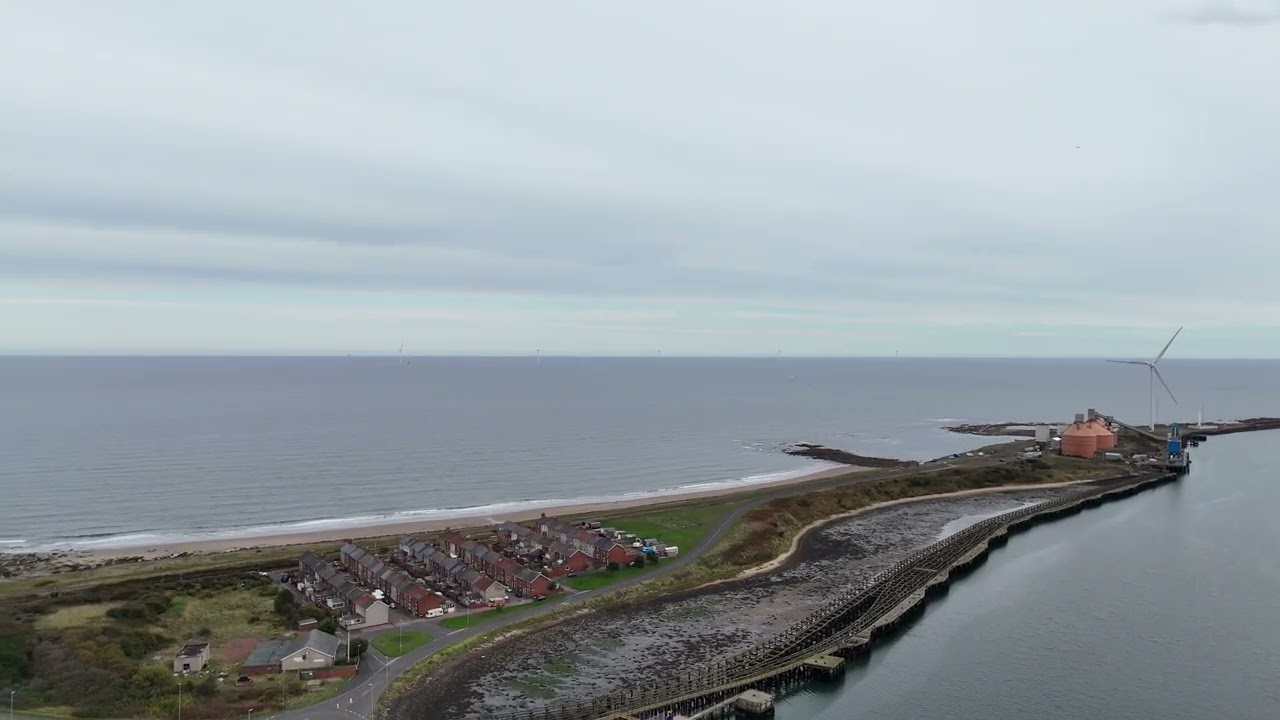
River Blyth Northumberland. Industrial part.
Автор: Aerial media north east
Загружено: 2025-09-29
Просмотров: 348
Описание:
Some history, you’ll see wooden structures, they were once the famous staithes used to load coal onto ships. And partly were get carter was filmed.
You’ll see on the Cambois side there are quite a few boats moored. Then a small boat yard you’ll see in next video.
Hope you enjoy. Any questions please ask away.
As you see, plenty of concreted areas ready for more development.
Where I’m flying, you can walk up to Bedlington into plessey woods.
Early History (12th-17th Century)
Salt Production: The earliest recorded use of the river was in the 12th century, when the monks of Newminster Abbey used local coal to evaporate brine, facilitating salt exports.
Coal Beginnings: Coal mining began in the 14th century, with significant shipments recorded by the early 17th century.
Natural Harbour: The river's initial port facilities were on the north bank, with shallow "keel" boats used to load cargo onto larger ships in the river.
Industrial Growth (18th-19th Century)
Harbour Development: The foundation of modern Blyth was laid in 1723 when landowners like the Ridley family invested in the port, initiating its growth. The formal construction of the harbour occurred in 1730.
Coal and Railways: The Blyth and Tyne Railway was built in 1847, providing access to the deep mines that were opening in the area.
Shipbuilding: A significant shipbuilding enterprise also developed, peaking in the mid-19th century.
Major Port and Decline (20th Century)
Busiest Port: By 1900, Blyth was a major coal port, and it was one of the busiest ports in England in 1961, shipping millions of tons of coal annually.
Industrial Shift: The decline of traditional heavy industries, particularly coal mining, in the late 1960s led to the closure of collieries.
Modern Era (Late 20th Century-Present)
Diversification: The port diversified into new trades, including wood products and materials for the aluminium industry.
Renewable Energy: Today, the Port of Blyth is a significant base for the offshore energy sector, particularly in renewable energy.
Heritage: The town retains many fine 18th and 19th-century buildings, a testament to its period of industrial growth
Повторяем попытку...
Доступные форматы для скачивания:
Скачать видео
-
Информация по загрузке: