#Bismillah
Автор: The Honest History Bangalore
Загружено: 2025-07-28
Просмотров: 1371
Описание:
This is the story of an ancient mosque, shrouded in mystery, where the founder’s name and epithet are not there. His grave bears no grand tomb, no chaddars, and no incense sticks—just a simple resting place at ground level. Recently, the grave was adorned with garden plants, blending seamlessly with the greenery of the mosque. To the casual visitor, it appears as just another part of the garden, but the mosque committee and old-timers know the truth it holds.
This episode draws inspiration from the book "The Sufis of Karnataka" by Muneer Ahmed Jami, a celebrated voice in Sufism and Urdu literature. With research and insights shared by the mosque’s caretakers, as well as local legends, we unravel the layers of history.
Hazrath Bismillah Shah and his family made their home in Khazi Mohallah, a place they continued to inhabit for generations. When he first camped here, the land was untamed, covered in dense jungle. Narrow, muddy paths wound through the area, and after dusk, people seldom stepped outside. There were no street lights, and the village, far removed from the peta and the Bangalore Fort, remained beyond the attention of the rulers of that era.
About five miles from the fort lay a quiet farming village known as Bellakki Palli, where the people lived simple lives, rooted in the rhythm of the fields.
The Khazi clans played an important role in shaping the history of Bangalore. They served as religious and judicial authorities under the Mughal and Adil Shahi empires. After the fall of the Adil Shahi Empire in the 1680s and the decline of the Mughal power after 1710, many Khazis migrated to different regions. Some families settled in Hoskote, Tumkur, Nelamangala, and the surrounding villages of Bangalore.
One such settlement was Khazi Mohalla, located about a kilometer from Bellakki Palli, a small farming hamlet. As trade grew, people from various regions began to settle in Bili Akki Palli—known as Bellakki Palli before the 1800s—transforming it into a thriving community.
Hazrat Bismillah Shah acquired 1.5 acres of land on what is now Cockburn Road, where he constructed a small mosque for the local community. The surrounding land was also designated as a burial ground for Muslims.
During his lifetime, Hazrat Bismillah Shah drafted a detailed will, spanning approximately 36 pages, which is currently preserved by the mosque committee.
In his will, Hazrat Bismillah Shah clearly instructed that burials on the property should cease 100 years after his death. He further directed that the land should thereafter be used exclusively for community welfare, with a special focus on education and healthcare initiatives.
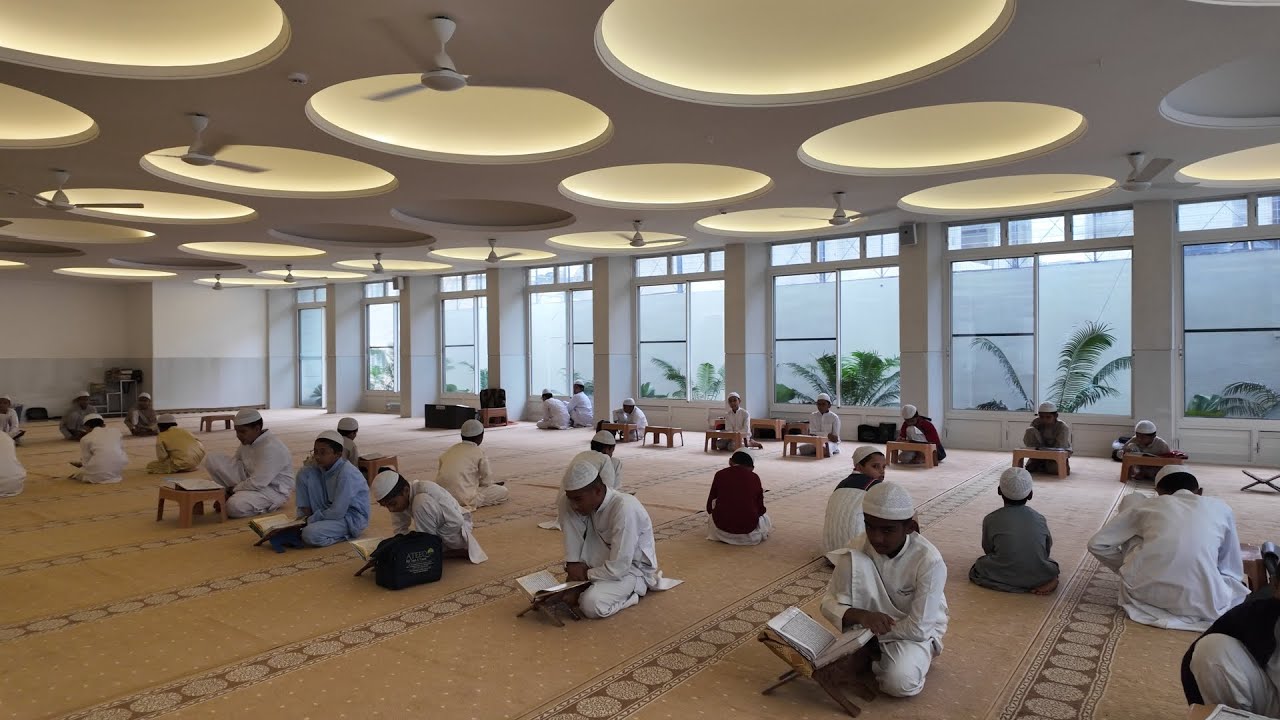
According to historical records, the mosque has been built and rebuilt three times over the years. The trustees and board members have worked tirelessly to honor the vision and guidelines set by Hazrat Bismillah Shah. Today, the site on Cockburn Road is home to a mosque, a madrasah, a school, and a hospital, continuing his legacy of service.
In 1852, the trust members laid out a plan and framework to manage an educational institution, furthering their mission of empowering future generations.
By 1934, the compound wall had fallen into disrepair, with sections crumbling away. It was Hajee Sir Ismail Sait who personally took the responsibility to rebuild the wall, funding the restoration from his own resources.
After World War I, long before the iconic Russell Market came into existence, the mosque was among the first in the area to receive an electricity connection. Yet, in those days, it had no steady source of income. To keep the mosque running, some of the area’s prominent citizens came up with an ingenious solution: they gathered grass and animal fodder from the nearby grasslands and dense jungles, selling it to raise funds for the mosque’s upkeep. A single cart filled with fresh green fodder would fetch around 15 rupees.
It may surprise modern Bangaloreans to learn that there was a time when the mosque’s monthly electric bill was barely 75 paise. Donations were small but heartfelt; even a single rupee offered by a merchant was considered a generous contribution in those days.
As the community of worshippers grew, the mosque expanded to accommodate them. Until 1998, the original structure was lovingly preserved, its walls carrying the weight of history. But in 1998, the old mosque was carefully taken down to make way for a new building, marking the beginning of a new chapter. This reconstruction unfolded slowly, step by step, and was completed by 2006. The traditional ablution tank, once a symbol of timeless rituals, was replaced with modern taps for ease and convenience—signifying change while holding on to the spirit of the past.
-------------------------------------------------------------------------------
#BismillahShahMasjid, #MuneerAhmedJami, #HazrathBismillahShah, #KhaziMohallah, #Mughal, #AdilShahi, #CockburnRoad, #RussellMarket,
Повторяем попытку...
Доступные форматы для скачивания:
Скачать видео
-
Информация по загрузке: