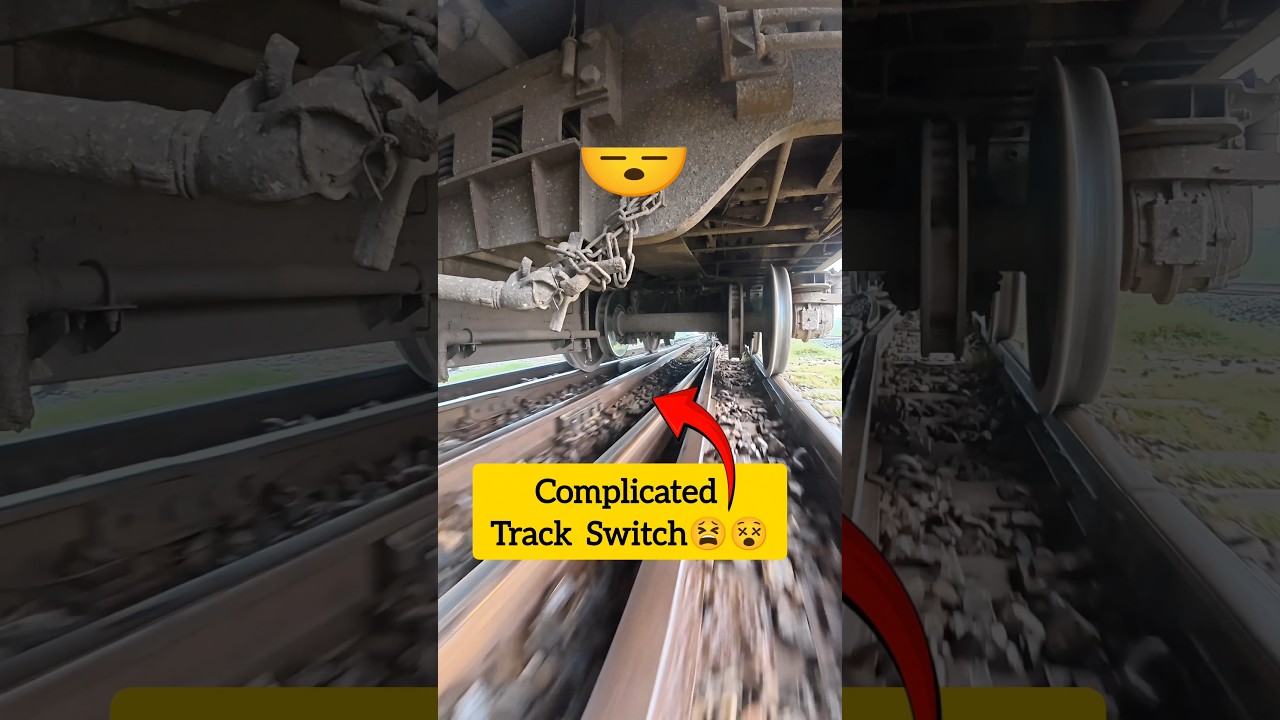
3 Line complicated track switch 😵😫
Автор: Journey By Train
Загружено: 2025-08-20
Просмотров: 2500936
Описание:
3 Line complicated track switch 😵😫 #trackswitch #shortsfeed #railfanning #train #trainwheels
trains, model railway, railroad enthusiasts, model railroading, track maintenance, train switches, train operations, train spotting, railroad engineering, complex track, railroad, model trains, railway systems, train mechanics, train enthusiasts, track switching, shortsfeed, railfanlife, trackmaintenance, traintrivia, railroadfun, railroadtricks, trainswitch, trackswitching, trainobsessed
Train wheel vibration and track changes are critical areas of study in railway engineering and maintenance, as they can significantly impact train safety, performance, and overall service reliability. Below are some important aspects to consider regarding train wheel vibration and track change:
Train Wheel Vibration
1. **Causes of Vibration**:
**Imbalance**: Unequal weight distribution in the train wheels or axle can lead to vibrations.
**Track Irregularities**: Any defects in the track, such as misalignment, bumps, or cracks, can cause vibrations.
**Wheel Alignment**: Misalignment of the wheels or wheelsets can lead to increased wear and vibrations.
**Wear and Tear**: Over time, wheels can become worn or damaged, resulting in increased vibration during operation.
2. **Effects of Vibration**:
**Ride Quality**: Excessive vibration can affect passenger comfort and satisfaction.
**Track Wear**: Continuous vibrations can lead to accelerated wear of both the track and the train wheels, causing higher maintenance costs.
**Safety Risks**: High levels of vibration may lead to derailments or failures in the train's mechanical systems.
3. **Monitoring and Analysis**:
**Vibration Sensors**: Sensors can be installed on trains to monitor wheel and axle vibrations in real-time.
**Data Analysis**: Analyzing vibration data helps in predictive maintenance, allowing timely interventions before issues become critical.
**Use of Finite Element Analysis (FEA)**: Engineers can model vibrational patterns in trains and tracks using FEA tools to predict performance and identify potential problem areas.
Track Changes
1. **Types of Track Changes**:
**Realignment**: Adjusting the straightness or curvature of the track to improve stability and reduce vibration.
**Reinforcement**: Upgrading track supports, ballast, and other components to handle the stresses caused by high-speed trains or heavy loads.
**Surface Treatment**: Applying treatments to the track surface to reduce noise and vibrations and prolong track life.
2. **Reasons for Track Changes**:
**Wear and Tear**: Tracks degrade over time due to use, requiring renewal or refurbishment.
**Heavy Loads**: Increased freight traffic can necessitate upgrades to the rail infrastructure.
**Technological Advances**: Newer materials and construction techniques can improve the performance of rail systems.
3. **Impact of Track Changes**:
**Improved Safety**: Well-maintained tracks reduce the risk of derailments and accidents.
**Enhanced Comfort**: Smoother tracks minimize vibrations, improving passenger experience.
**Economic Benefits**: Effective track maintenance and upgrades can reduce long-term operational costs and maintenance requirements.
4. **Maintenance Practices**:
**Regular Inspections**: Scheduled inspections can detect issues before they lead to substantial problems.
**Predictive Maintenance**: Using data analytics and monitoring systems to schedule maintenance based on actual condition rather than just time intervals.
Conclusion
Understanding and managing train wheel vibrations and track changes is crucial for ensuring safe, efficient, and comfortable railway operations. Continuous monitoring, data analysis, and timely maintenance are essential strategies for maintaining optimal performance in rail systems.
Повторяем попытку...
Доступные форматы для скачивания:
Скачать видео
-
Информация по загрузке: