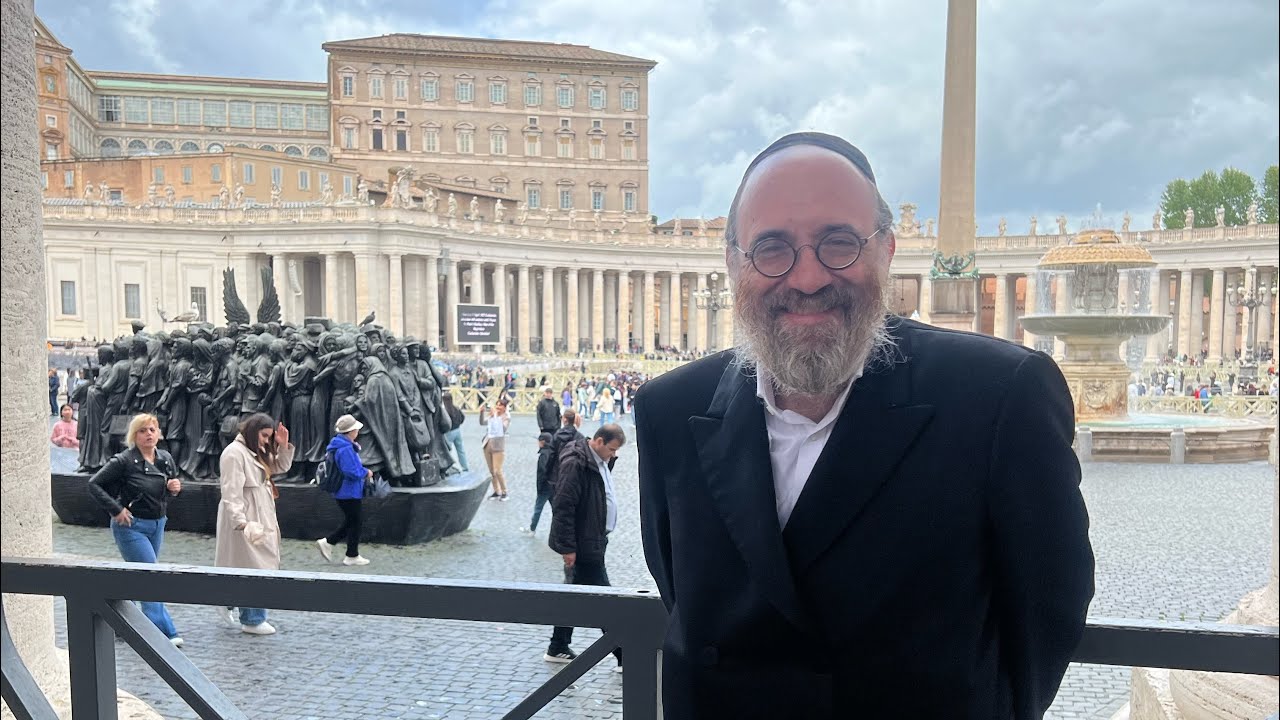
The Vatican and Mount Esau
Автор: JHeritage historical journeys
Загружено: 2025-06-30
Просмотров: 126
Описание:
Throughout Jewish biblical commentary and prophetic interpretation, the figure of Esau (Edom) represents the archetypal adversary of Jacob (Israel). Over centuries, this symbolism develops into a powerful metaphor equating Edom with Rome, and later with Christendom as a whole — culminating symbolically in the Vatican, which Jewish tradition sees as the spiritual heir to Rome’s imperial and religious legacy.
A fascinating historical thread deepens this idea: according to early Christian historians, the first followers of the Nazarene (Jesus) fled Jerusalem before its destruction in 70 CE and settled in Pella, a city located in the region historically associated with ancient Edom. This detail comes from Eusebius of Caesarea (Ecclesiastical History 3.5.3) and Epiphanius of Salamis (Panarion 29.7.7–8), who record that the Jerusalem church received a divine revelation instructing them to leave the city and take refuge in Pella, east of the Jordan.
This geographical shift gave rise to a symbolic idea found in medieval Jewish commentators: since the early Christians settled in Edomite territory, their spiritual legacy is Edom. Rabbi Abraham Ibn Ezra (12th century), in his commentary on Isaiah 63:1 — “Who is this coming from Edom, with crimsoned garments from Bozrah?” — notes:
“Some say that Rome is Edom, for the leaders of the Christian sect left Jerusalem and dwelled in Edom, in Pella.”
Later Jewish commentators reinforce this view:
Radak and Ralbag identify Rome as Edom, seeing it as the fourth empire in Daniel’s visions and the ongoing oppressor of Israel.
Don Isaac Abravanel (15th century) applies Obadiah’s prophecy — “Saviors will ascend Mount Zion to judge the Mount of Esau” — to the Vatican and the Christian kingdoms, foretelling their ultimate downfall at the time of redemption.
Medieval Christian biblical scholarship also embraced this symbolic framework. Nicholas de Lyra, a pivotal 14th-century commentator, adopted the traditional identification of Edom (Mount Esau) with Rome, understood in his era as the papal authority centered in the Vatican. In his commentary on Obadiah, de Lyra interprets the “Mount of Esau” as the Roman Empire and the seat of the papacy, portraying it as the oppressor and adversary of Israel. As one scholar summarizes:
“Nicholas de Lyra follows the common medieval tradition identifying Edom with Rome, interpreting the ‘Mount of Esau’ in Obadiah as the Roman Empire and the seat of the papacy. He portrays Edom as the persecuting power opposing Israel, a theme central to late medieval Christian biblical exegesis.”
— Reiner Smolinsky, “Nicholas de Lyra and the Prophecy of Edom,” Journal of Medieval Studies, vol. 45 (2013), p. 128.
In this framework, the Vatican stands as the final “Mount Esau,” the culmination of Edom’s prophetic enmity toward Jacob. This lens ties together geography (Pella in Edom), history (Rome’s rise), and prophecy (Isaiah, Obadiah, Daniel) into a single, enduring vision: the struggle between Esau and Jacob continues until Israel’s final redemption.
#Edom #Esau #Jacob #Israel #Rome #Vatican #Pella #JewishHistory #BiblicalProphecy #Prophets #IbnEzra #Radak #Ralbag #Abravanel #NicholasDeLyra #Obadiah #Isaiah #Daniel #TorahCommentary #JewishThought #BiblicalHistory #JewishExegesis #MedievalCommentary #Christianity #Christendom #RomeAndEdom #MountEsau #MountZion #JewishTradition #BiblicalSymbolism #JewishHeritage
Повторяем попытку...
Доступные форматы для скачивания:
Скачать видео
-
Информация по загрузке: