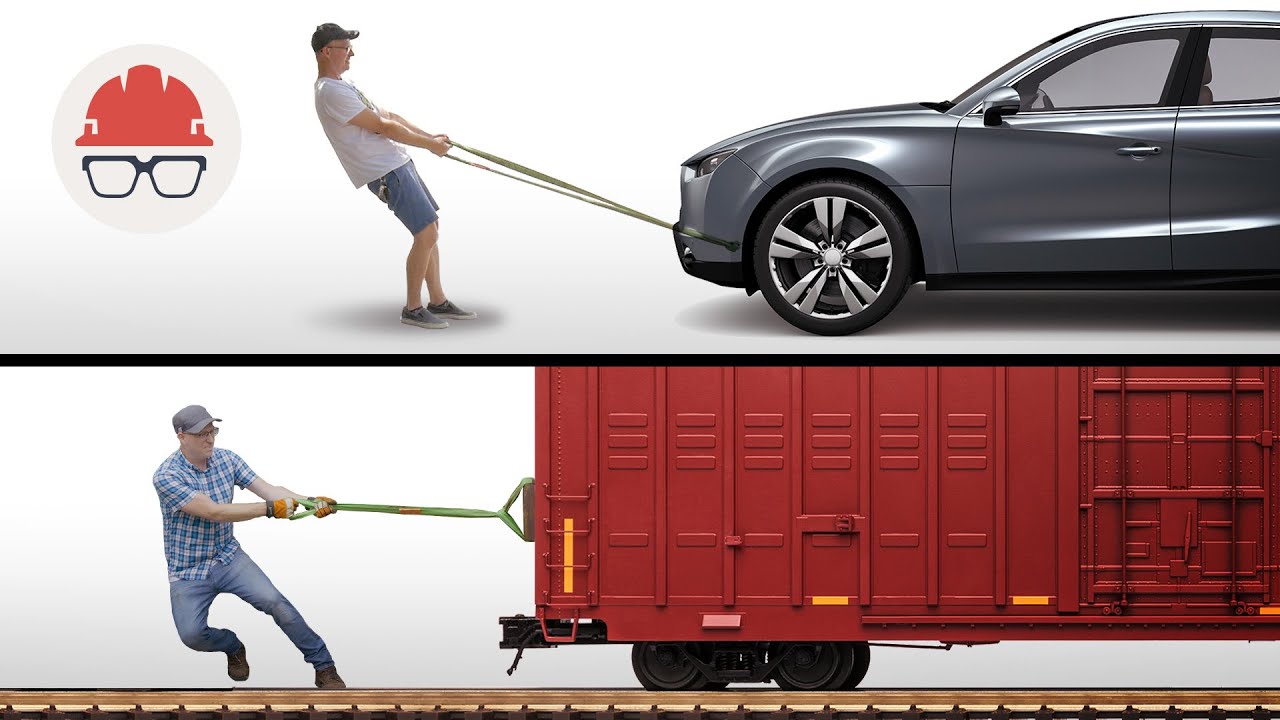
How Can FREIGHT TRAINS Haul 100 Times Their Own Weight?
Автор: Rail Systems USA
Загружено: 2026-02-16
Просмотров: 147
Описание:
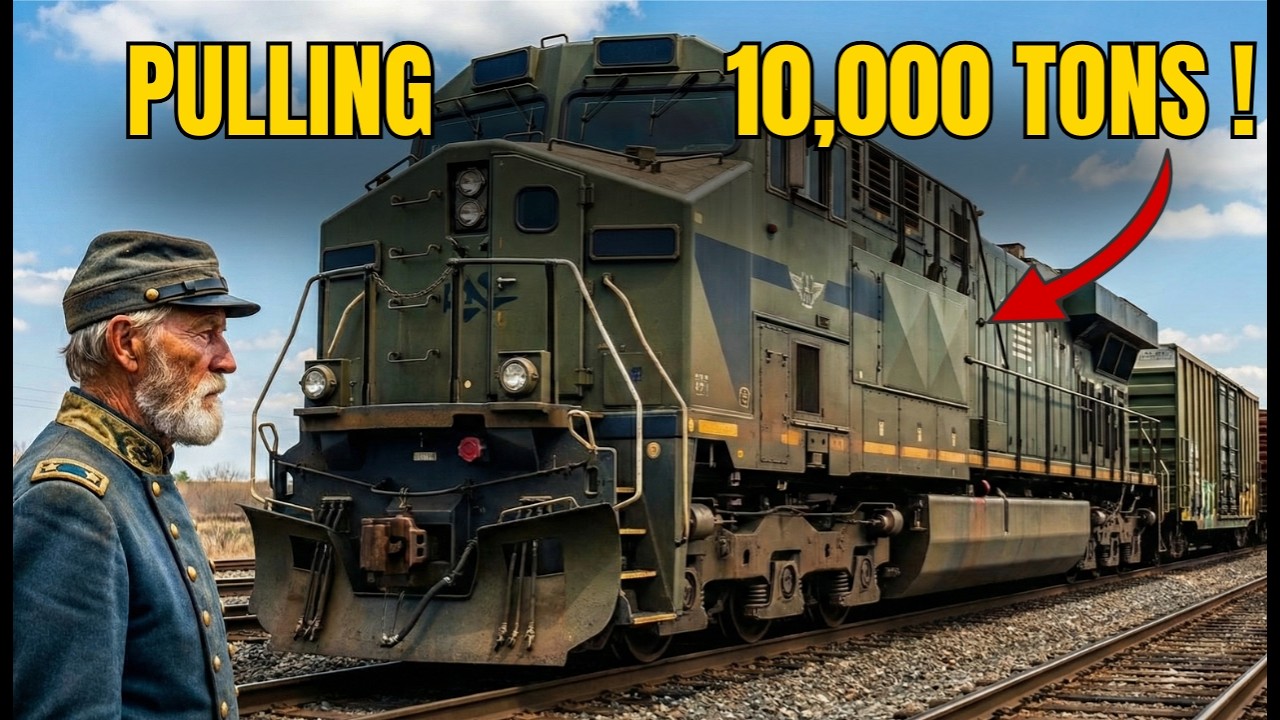
A single locomotive pulling 10,000 tons. Ten million pounds. The equivalent of 140 fully loaded tractor-trailers moving at 60 mph across terrain that would stop trucks cold.
How is this possible? The answer isn't power. It's physics.
THE STEEL ON STEEL PARADOX
Locomotives use steel wheels on steel rails—hard on hard, smooth on smooth. This should be terrible for traction. Steel on steel has a coefficient of friction around 0.25, while rubber on asphalt is 0.7 to 0.9.
But traction isn't everything. The real advantage is rolling resistance—the energy required to keep moving.
Rubber tires compress and flex, absorbing energy. Steel wheels barely deform. The contact patch is measured in square inches, creating enormous pressure but minimal deformation.
Steel on steel has a rolling resistance coefficient of 0.001 to 0.002. Rubber on asphalt is 0.01 to 0.015—ten times higher. Moving freight on rails requires one-tenth the energy of moving the same weight by truck.
THE DIESEL-ELECTRIC ADVANTAGE
Modern freight locomotives don't drive wheels directly. The diesel engine turns a generator producing electricity for traction motors on each axle. Each wheel is driven independently.
If one wheel slips, the electrical system reduces power to that motor in milliseconds while maintaining power to others. This distributed traction control allows operation closer to the adhesion limit without catastrophic wheel slip.
A modern six-axle, 4,400-horsepower locomotive produces 130,000 to 140,000 pounds of starting tractive effort—comparable to a Big Boy steam locomotive but weighing half as much.
MANAGING MASSIVE FORCES
Heavy freight trains use multiple locomotives in a consist—three or four units producing 500,000 to 600,000 pounds of combined tractive effort. Enough to move 15,000 tons on level track.
But moving isn't the only challenge. Managing drawbar pull—force transmitted through couplers—requires understanding the train as a dynamic system. In a 100-car train, several feet of slack exists across all couplings.
Too much throttle too quickly and slack runs out suddenly. Couplers slam together. The shock can break connections or derail cars. Skilled engineers apply power gently, taking up slack gradually.
Distributed power helps. Locomotives mid-train or at the rear apply force independently, reducing coupler stress and allowing smoother control over steep terrain.
THE GRADE CHALLENGE
Fully loaded freight trains maintain speed on grades up to 1%. Steeper grades require helper locomotives. The steepest mainline grades are 3-4%—Appalachian crossings, Sierra Nevada.
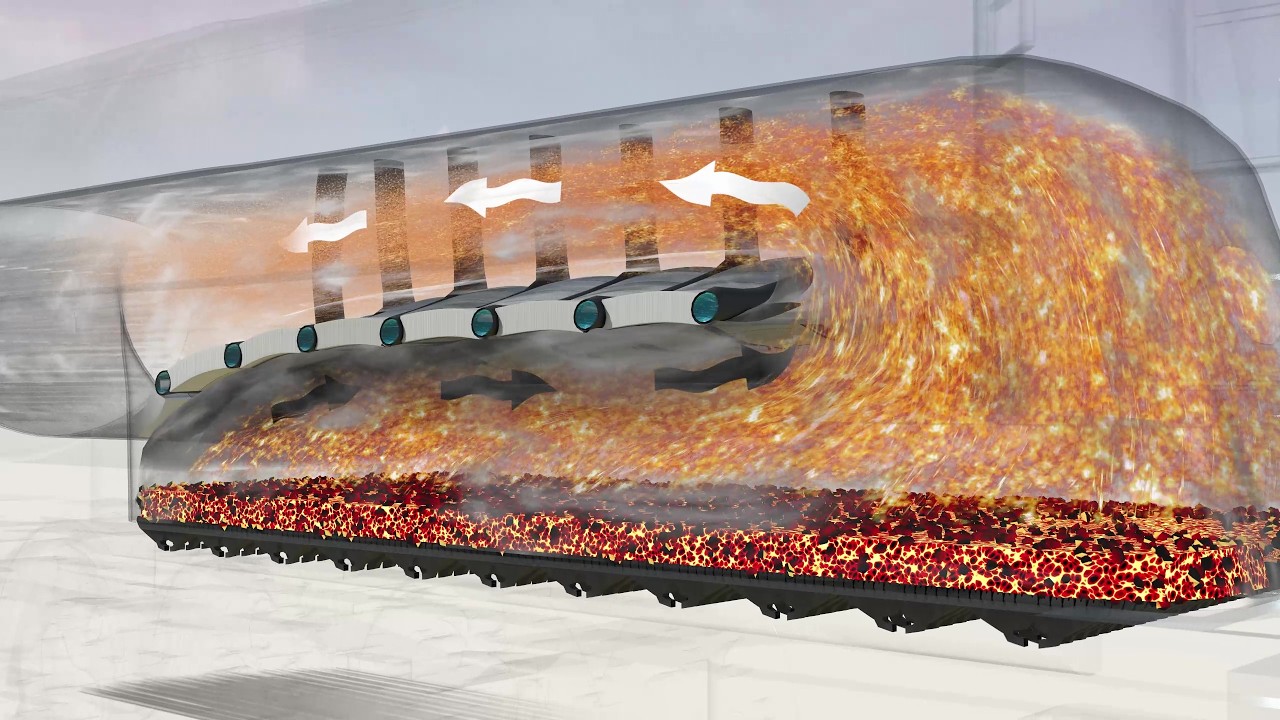
Lifting 10,000 tons up a 1% grade for one mile requires 50 million foot-pounds of work. Modern locomotives produce 3.3 million foot-pounds per minute at full throttle, but sustaining that output generates enormous heat.
THE EFFICIENCY EQUATION
A unit coal train might consist of 120 cars, each loaded with 120 tons. Total: 14,400 tons of coal plus 3,000-4,000 tons of car steel.
Energy to move cargo by rail is one-third what trucks require. Trains use 0.2 to 0.3 gallons per 1,000 ton-miles. Trucks use 0.7 to 1.0 gallons. Over 2,000 miles, the fuel savings are massive.
THE FRAGILE BALANCE
Everything depends on the contact patch—the size of a dime, carrying hundreds of tons, transmitting hundreds of thousands of pounds without slipping or failing.
The system works because it operates at the edge of failure. Friction is just high enough for traction. Rolling resistance is just low enough for movement. Locomotives are just powerful enough to overcome grades. Couplers are just strong enough to hold together.
Push too far and the system breaks. Too much throttle—wheels slip. Too steep a grade—train stalls. Too much slack action—couplers fail.
Railroad engineering is about operating within these margins. Designing routes avoiding steep grades. Training engineers to manage throttle and brakes. Installing distributed power to reduce stress. Building detection systems for wheel slip and overheating.
A locomotive can pull 100 times its own weight because the rails allow it. Because steel on steel creates the paradox of low traction and low resistance. Because the system is engineered to operate at the edge of what physics permits.
Not power. Not size. Efficiency. The art of doing more with less friction.
Rail Systems USA - Exploring the infrastructure, engineering, and history that shaped American railroads. Subscribe for deep-dive railroad documentaries.
Повторяем попытку...
Доступные форматы для скачивания:
Скачать видео
-
Информация по загрузке: