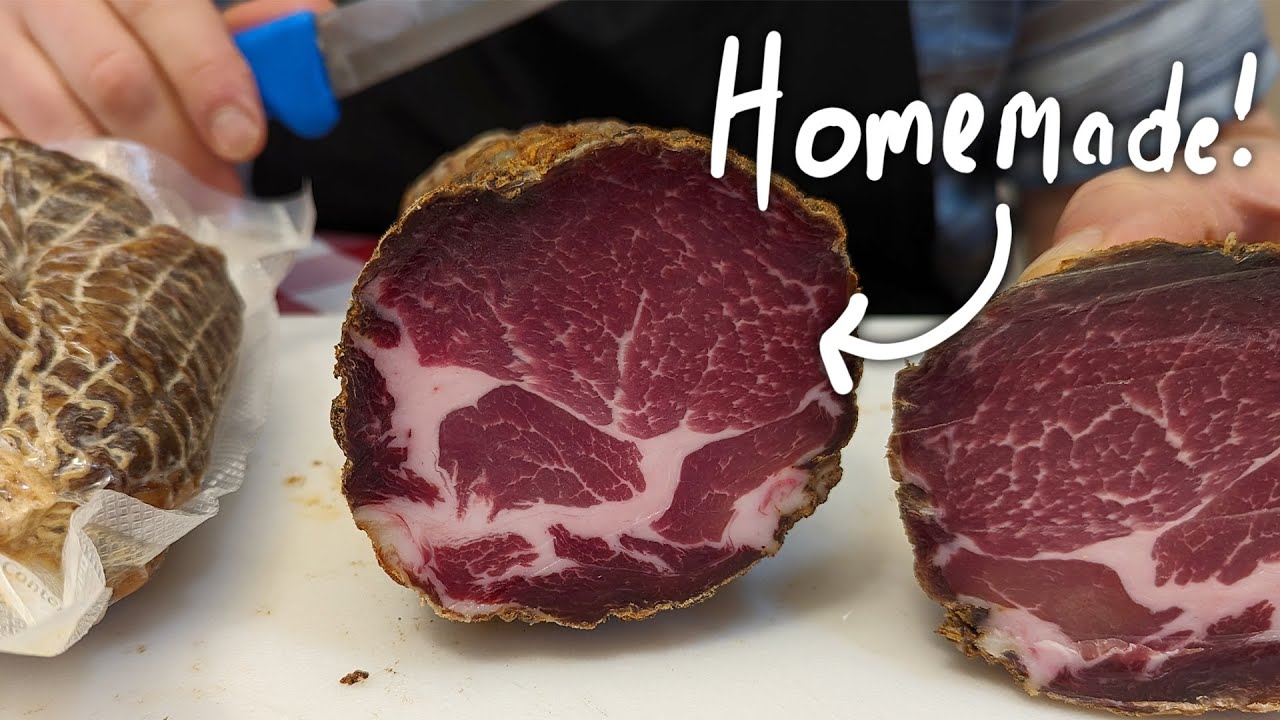
A Beginner's Guide to Home Food Preservation
Автор: Two Drs Homestead
Загружено: 2022-08-16
Просмотров: 169
Описание:
A Beginner's Guide to Home Food Preservation
The purpose of this video is to provide an introduction to home food preservation. We are covering topics such as canning, dry packing, vacuum sealing, Mylar bags, as well as curing salts including number 1 and number 2 curing salt also known as Prague powders. The most important part of food preservation is food safety. The last thing you want to do is to create unsafe conditions in the food you are preserving. Food can be served safely for long periods of time, as long as you are aware of the processes that have been developed over time to ensure freshness.
The number one concern for home food preservation is Botulinum as according to the World Health Organization foodborne botulism is a serious, potentially fatal disease. However, it is relatively rare. It is an intoxication usually caused by ingestion of potent neurotoxins, the botulinum toxins, formed in contaminated foods. Person to person transmission of botulism does not occur.
According to the CDC the bacteria that make botulinum toxin are found naturally in many places, but it’s rare for them to make people sick. These bacteria make spores, which act like protective coatings. Spores help the bacteria survive in the environment, even in extreme conditions. The spores usually do not cause people to become sick, even when they’re eaten. But under certain conditions, these spores can grow and make one of the most lethal toxins known.
The conditions in which the spores can grow and make toxin are:
• Low-oxygen or no oxygen (anaerobic) environment
• Low acid
• Low sugar
• Low salt
• A certain temperature range
• A certain amount of water
One of the key factors to consider is the water content in the food you are preserving. The following table provided by Clemson.edu offers a reference for the water content of common food items as well as the types of microorganisms that may grow.
The majority of microorganisms that cause spoilage or foodborne disease grow well in foods with a water activity (Aw) of 0.91 to 0.99. Assuming other conditions are favorable, the organism that causes botulism, Clostridium botulinum, will grow and produce toxin in foods with a water activity (Aw) above 0.93. Staphylococcus aureus grows in foods containing high levels of salt at a water activity (Aw) above 0.85 but produces staphylococcal toxin in foods with an Aw of 0.93 or higher.
It is critical to remember that “Water activity cannot be measured at home so it is important to following science-based directions for drying foods. Following science-based procedures reduces the available moisture (Aw) in foods to less than 0.60 so that microorganisms cannot grow. Storing properly dried foods in glass jars, metal cans or boxes with tightly fitted lids or moisture-vapor resistant freezer containers prevents them from re-absorbing water from the atmosphere.” And that many dry goods including rice according to the IRRI are hygroscopic. Which means that the water content can change over time depending on the humidity levels of the environment?
• When dry rice is exposed to air with high relative humidity (RH) the rice grains will absorb water from the air (re-wetting).
• When wet rice is exposed to air with low RH the rice grains will release water to the air (drying).
In this video we are referencing several key articles including the following.
University of Minnesota Extension https://extension.umn.edu/preserving-... Vacuum sealing food at home safely
IFAS Extension https://edis.ifas.ufl.edu/publication... Preventing Foodborne Illness: Clostridium botulinum
Oxygen absorbers in food preservation: a review https://pubmed.ncbi.nlm.nih.gov/25829... National Library of Medicine
Britannica https://www.britannica.com/topic/food...
Grain and air properties International Rice Research Institute (IRRI) http://www.knowledgebank.irri.org/ste...
Food Storage https://extension.usu.edu/preserve-th... Utah State University
CDC https://www.cdc.gov/botulism/general.... About Botulism
World Health Organization https://www.who.int/news-room/fact-sh... Botulism
College of agriculture forestry and life science Clemson.edu Available moisture in Foods
https://www.clemson.edu/extension/foo...
#canning #mylar #foodpreservation
Two Drs Homestead | www.TwoDrsHomestead.com | @TwoDrsHomestead | #twodrshomestead
Повторяем попытку...

Доступные форматы для скачивания:
Скачать видео
-
Информация по загрузке:




![BOOKFORGE [LiVE!] 2026 | Ep. 1 — Back to the Bench](https://imager.clipsaver.ru/_nPz2zHwrnw/max.jpg)