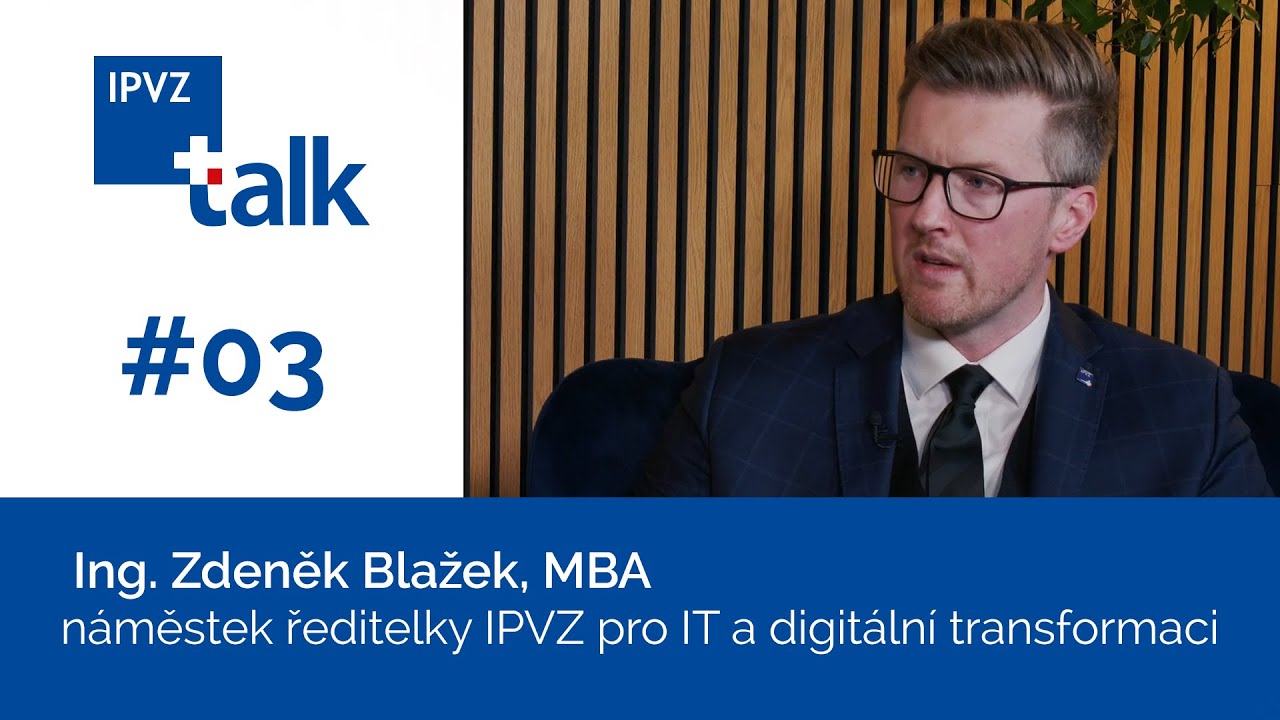
276 Vincent Mathieu — CEO of Carl Zeiss Japan
Автор: Tokyo Japan Dale Carnegie TV
Загружено: 2025-11-28
Просмотров: 7
Описание:
“Leadership is staying ahead of change without losing authenticity”.
“Trust is the real currency of sales, teams, and Japan’s business culture”.
“Zeiss’s foundation model is a rare advantage: patient capital reinvested into R&D”.
“Japan is less “risk-averse” than “uncertainty-avoidant” when decisions lack clarity and consensus”.
“Language is helpful for connection, but not the primary qualification for leading in Japan”.
Brief Bio
Vincent Mathieu is the CEO of Carl Zeiss Japan, leading a multi-division portfolio spanning semiconductors, medical devices, microscopy, industrial quality solutions, ophthalmic lenses, and imaging optics. Originally from the south of France near the Basque Country, he studied business in Toulouse, then spent several years travelling and working across Morocco, Denmark, Ireland, Chile, and South America—discovering along the way that his core strength was building trust in sales. He first came to Japan in 2001 to launch and grow a new division, learning the realities of hiring, selling, and leading without fluency in Japanese. After returning to Europe for global and country leadership roles—including navigating a corporate receivership in the UK—he was recruited to Zeiss and returned to Japan for a second stint. There, he led a turnaround in the vision care business by rebuilding the team, premium positioning, and distribution strategy, then expanded to broader regional responsibilities before taking the top role in Japan, leading a larger organisation through compliance, regulatory, structural change, and remuneration reform.
Carl Zeiss is often mistaken as “just cameras”, yet the company’s real gravity sits elsewhere: precision optics, industrial measurement, medical equipment, and the advanced semiconductor ecosystem that powers modern computing. Vincent Mathieu, CEO of Carl Zeiss Japan, uses that breadth as both a strategic advantage and a leadership test—because leading a portfolio business demands credibility across wildly different technical domains, from microscopy used by Nobel Prize-winning researchers to X-ray inspection systems supporting EV battery quality control. He also points to a structural difference that shapes Zeiss’s long-term posture: the company operates as a foundation rather than a classic shareholder-led public entity, enabling sustained reinvestment into R&D and the patience required to develop complex innovations that may run at a loss for years before they become indispensable. In semiconductors, that mindset shows up in partnerships and breakthrough optics supporting lithography and EUV pathways tied to ever-smaller chips and AI-era demand.
Mathieu’s personal story mirrors the adaptive leadership he advocates. He describes an early uncertainty about career direction, a formative period of travel and “odd jobs”, and a gradual shift into commercial roles where trust, not extroversion, became his sales engine. His first Japan assignment was a tough entry: conservative hiring conditions, limited language ability, and the slow build of distributor confidence—where one relationship took years to convert. Returning later via Zeiss, he expected a smoother “global” environment and instead found a familiar friction point: leadership without a shared language, competing internal politics, and the need to earn followership through visible effort. His approach was practical and gemba-oriented—going into the field with salespeople, learning enough Japanese to observe and debrief well, and leading by example rather than relying on title or hierarchy.
In his current role, the leadership challenge is no longer a small turnaround team but a larger organisation navigating regulatory scrutiny, compliance expectations, talent gaps, and a shift from “box-moving” to workflow and digital solutions. He frames Japan’s organisational reality as deeply sensitive to trust, transparency, and consistency—especially when change touches taboo areas such as pay. Whether the topic is performance-based remuneration, AI adoption, or organisation redesign, Mathieu returns to the same idea: leadership is change management plus authenticity. The most durable influence, in his view, comes from understanding who the leader is, then showing up coherently—because Japanese organisations may not offer immediate feedback, but they do evaluate whether words and actions match.
Q&A Summary
What makes leadership in Japan unique?
Leadership in Japan is uniquely shaped by trust, time, and social proof. Decision-making often relies on nemawashi (pre-alignment), the ringi-sho approval flow, and a preference for consensus that reduces future friction. Feedback can be indirect, and the “real signals” may appear later, after relationships deepen.
Повторяем попытку...

Доступные форматы для скачивания:
Скачать видео
-
Информация по загрузке: