Level 2, Ep2 - Indications of Gold - Mineral Assemblages – The Chain of Custody
Автор: Aurum Meum Academy
Загружено: 2025-08-29
Просмотров: 1076
Описание:
Quick 50‑second Short for geology students: watch how mineral assemblages act like a “chain of custody” that reveals gold’s origins. See quartz with pyrite + arsenopyrite for orogenic gold, chalcopyrite + magnetite for porphyry systems, and how these partnerships trace hydrothermal fluid pathways across a regional map. Perfect micro-lesson on mineral indicators, exploration targeting, and ore system interpretation—using stock footage, calm background music, and a clear Midwestern male narration.
Mineral Assemblages – The Chain of Custody
Every detective knows that one fingerprint can point to a suspect — but a complete chain of custody is what secures a conviction. In geology, the same rule applies. A single mineral may suggest gold, but assemblages of minerals provide the strongest forensic evidence. They reveal not only that gold-bearing fluids were present, but also the chemistry, temperature, and pressure that shaped the deposit.
In this Level 2 Forensic Gold Geology short, we go beyond individual suspects and examine mineral partnerships — the chain of custody that links fluid pathways to gold.
⸻
🔎 What Are Mineral Assemblages?
A mineral assemblage is a group of minerals that form together under specific geological conditions. Each mineral may tell part of the story, but the assemblage reveals the whole sequence.
• Pyrite + Arsenopyrite + Quartz → Orogenic gold systems.
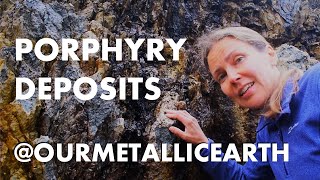
• Chalcopyrite + Magnetite → Porphyry copper-gold systems.
• Galena + Sphalerite + Carbonates → Polymetallic vein systems, sometimes carrying silver and gold.
• Oxides + Clays + Quartz → Weathering and supergene enrichment zones.
When these minerals occur together, they testify to the conditions that created them. They don’t just suggest gold — they prove the type of system where gold is most likely to occur.
⸻
🪨 Why Assemblages Matter
Prospectors often get excited when they spot pyrite or quartz. But in forensic geology, a single mineral is only preliminary evidence. Real case files rely on assemblages:
• Multiple witnesses. When several minerals testify together, the case is stronger.
• Environmental context. Assemblages reveal fluid chemistry, oxidation states, and temperature ranges.
• Deposit style. Different assemblages point to specific deposit models — orogenic, porphyry, skarn, epithermal.
This is how forensic geology builds beyond guesses. Instead of saying “there might be gold here,” you can say “the mineral assemblage proves this is an orogenic system — and here’s where the gold should be.”
⸻
🕵️ The Forensic Method
To use assemblages in the field:
1. Identify multiple minerals. Don’t stop at pyrite — look for arsenopyrite, chalcopyrite, magnetite, or alteration clays.
2. Record associations. Note which minerals occur together and in what setting (veins, alteration halos, breccia zones).
3. Match to deposit type. Use geological models to link assemblages with known systems.
4. Interpret conditions. The mineral mix reveals temperature, fluid chemistry, and depth of formation.
5. Build the case. Combine assemblages with faults, alteration, and stratigraphy to prove the gold system’s identity.
⸻
🌎 Real-World Example
At one outcrop, you find pyrite and arsenopyrite needles in a quartz vein. That’s an assemblage pointing to an orogenic gold system. A few kilometers away, you encounter chalcopyrite and magnetite together — classic evidence of a porphyry copper-gold system.
By mapping both assemblages, you reconstruct the fluid pathways and the genetic model of the mineralization. That’s not random guessing. That’s building a forensic chain of custody.
⸻
🎯 Why This Short Matters
A lone mineral clue may point you in the right direction. But an assemblage builds a case that can stand in court. Forensic gold geology relies on this principle: multiple lines of evidence, working together, reveal the truth of the system.
By mastering mineral assemblages, you’ll stop chasing single suspects and start prosecuting entire gold systems with confidence.
⸻
🚀 Expanding the Case File
This short is part of five advanced case files expanding Episode 2: Minerals as Fingerprints. Together they cover:
• Indicator minerals as known suspects
• Mineral assemblages as chain of custody
• Oxidation halos as rusty fingerprints
• Crystal habits as signed confessions
• Portable tools as your fingerprint lab
🔔 Subscribe for more: Level 2 – Forensic Gold Geology
🌐 Access member-only AI Gold Maps: http://aurummeum.com/member-map-drop
🪙 Train deeper with Aurum Meum Academy — forensic geology for real discovery.
⸻
Hashtags:
#ForensicGeology #GoldProspecting #MineralAssemblages
If this helped your mineral recognition or exploration studies, please like and share the Short! Comments welcome—what assemblage surprised you most?
#MineralAssemblages #OrogenicGold #Porphyry #GeologyShorts #ExplorationGeology #aigoldmap
Повторяем попытку...

Доступные форматы для скачивания:
Скачать видео
-
Информация по загрузке: