Rio carnival parade to highlight ongoing violence against transgender people
Автор: AP Archive
Загружено: 2025-03-04
Просмотров: 499
Описание:
(27 Feb 2025)
FOR CLEAN VERSION SEE STORY NUMBER: 4557898
RESTRICTION SUMMARY:
ASSOCIATED PRESS
Rio de Janeiro – 03 February 2025
1. Alessandra Salazary dancing
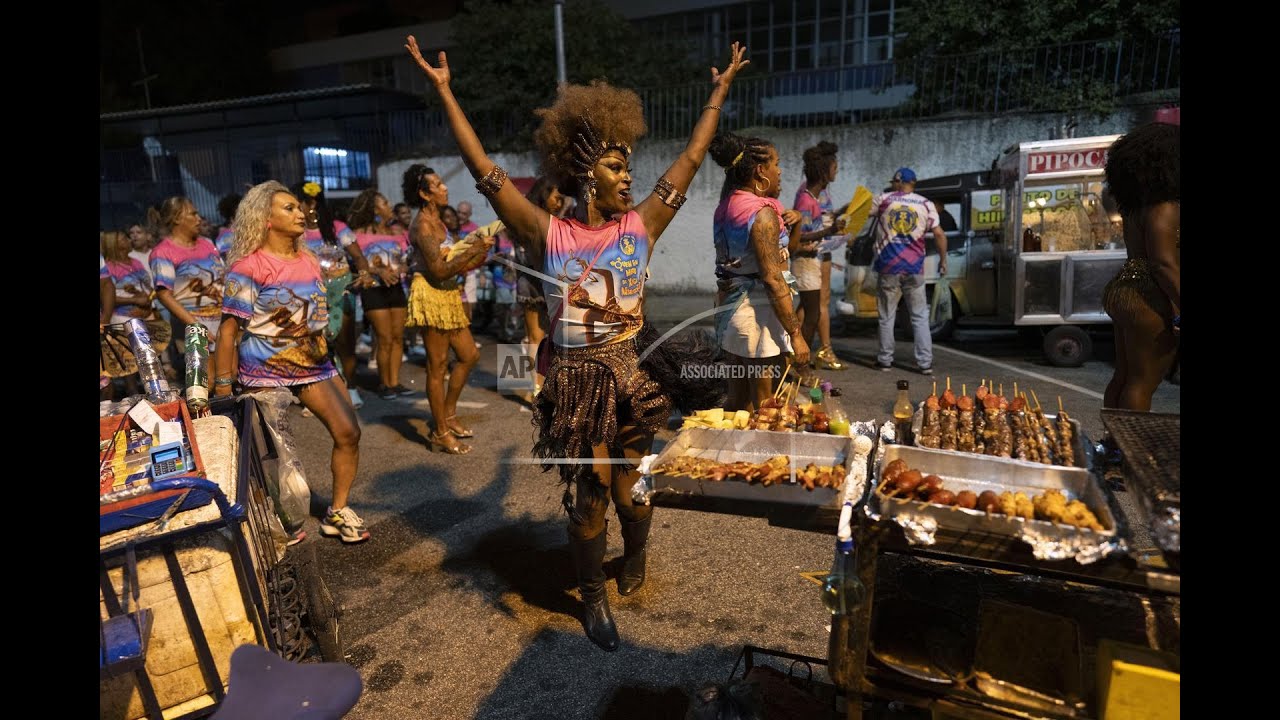
2. Group of trans women (wearing the same colorful T-shirt) dancing and singing during the rehearsal
3. Bruna Benevides dancing
4. SOUNDBITE (Portuguese) Bruna Benevides, president of Brazil's trans rights group ANTRA:
“We are seeing a strong anti-trans agenda in the world trying to reverse our rights. Direct attacks, politically motivated attacks against our existence.”
ASSOCIATED PRESS
Rio de Janeiro – 05 February 2025
5. Trans women group during a samba class at Tuiuti’s court
6. Salazary during the samba class
ASSOCIATED PRESS
Rio de Janeiro – 12 February 2025
7. SOUNDBITE (Portuguese) Jack Vasconcelos, Tuiuti's Carnival director:
“So it's very important that we bring Xica Manicongo and show her to Brazilian society and say, we have here a great historical representation of trans women and transvestites and accept that the story is beautiful.”
ASSOCIATED PRESS
Rio de Janeiro – 03 February 2025
8. Paraiso Do Tuiuti Samba School street rehearsal
9. Group of trans women taking a selfie
STORYLINE:
A Carnival parade in Rio de Janeiro will present the story of a trans woman nearly burned at the stake in the 16th century, highlighting the ongoing violence against transgender people in Brazil, which has the world’s highest reported trans homicide rate.
Born as Francisco Manicongo in what was then known as the Kingdom of Kongo, Xica Manicongo was captured and enslaved in Brazil’s northeastern Bahia state.
Authorities from the Portuguese Inquisition threatened her with execution for cross-dressing and having same-sex relations, both practices the Catholic Church deemed heretical.
To avoid death, she agreed to wear men’s clothing and use her male birth name — and so denied her identity.
She was rechristened Xica in 2010 in an effort to right the wrongs of the past.
The parade, scheduled for Tuesday night, four days after Carnival officially kicks off, is the creation of Paraiso do Tuiuti, one of Rio's 12 top-flight samba schools competing in the iconic Sambadrome.
Tuiuti hopes the tale of Xica Manicongo will dazzle millions of spectators watching from the bleachers and their homes, and serve as a wake-up call.
Jack Vasconcelos, Tuiuti's Carnival director who created its theme, said he wanted to give younger generations of trans women a sense of belonging to history.
“So it's very important that we bring Xica Manicongo and show her to Brazilian society and say, we have here a great historical representation of trans women and transvestites and accept that the story is beautiful. I think that's very beautiful,” said Vasconcelos.
Since Tuiuti embraced Vasconcelos’ proposal, the school's hundreds of members have been preparing for their performance. Like other parades, the show will feature sequined costumes and elaborate floats. One of its innovations: a section exclusively comprised of trans women.
“It’s a historical reparation,” said Alessandra Salazary, who has been attending weekly rehearsals for the past few months.
“Carnival already gave many transgender people an opportunity behind the cameras and now we're getting this opportunity to come in front of those cameras.”
The parade will feature other notable figures, including Brazil’s first trans lawmakers, Duda Salabert and Erika Hilton; Rio state lawmaker Dani Balbi and Bruna Benevides, who heads Brazil's trans rights group Antra.
The specter of violence Manicongo faced five centuries ago hasn't vanished.
Find out more about AP Archive: http://www.aparchive.com/HowWeWork
Twitter: / ap_archive
Facebook: / aparchives
Instagram: / apnews
You can license this story through AP Archive: http://www.aparchive.com/metadata/you...
Повторяем попытку...
Доступные форматы для скачивания:
Скачать видео
-
Информация по загрузке: