A Tour of My Vihuela with Clive Titmuss
Автор: Early Music Studio
Загружено: 2023-04-20
Просмотров: 2663
Описание:
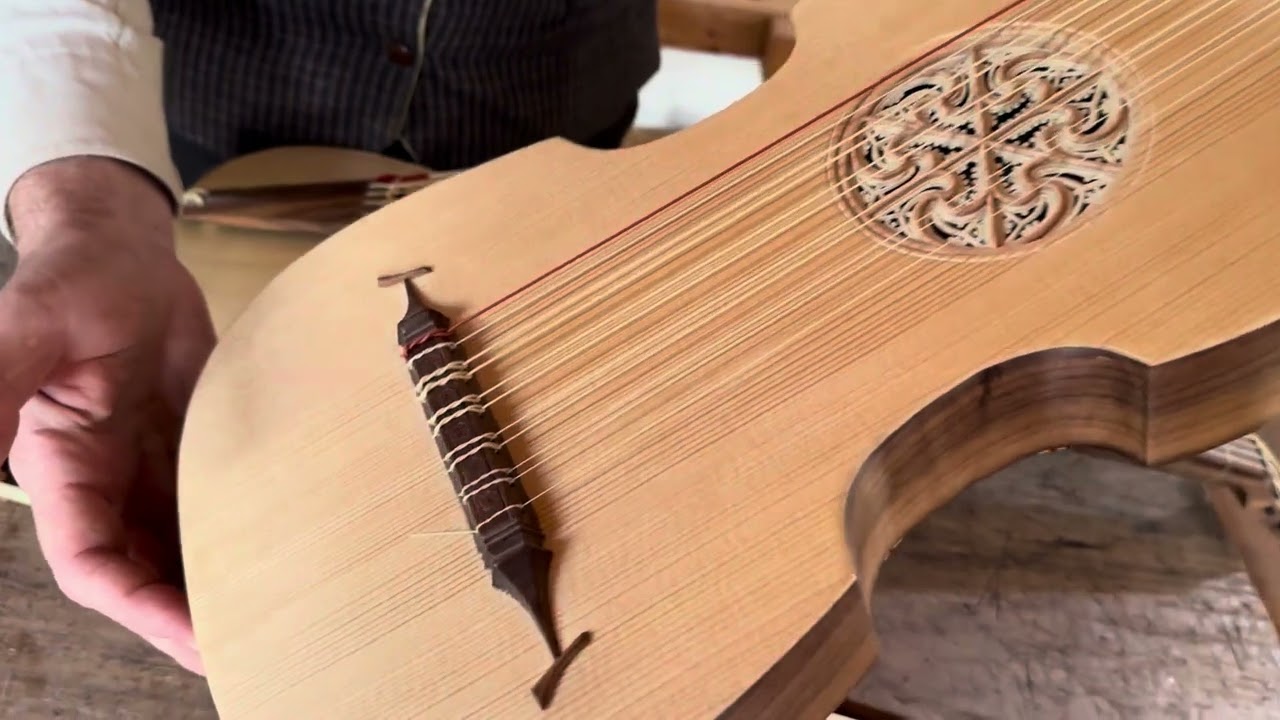
Clive talks about his vihuela and plays "Conde Claros" by Alonso Mudarra.
Vihuela: The word is a Spanish variant of the Medieval Latin root word--it is a cognate for the words viol, violin, and viola which come from Italian, and the Portuguese generic name for number of fretted instruments, violão.
English Pronunciation: It’s a choice--“bee-KWAY-lah”, which is the Spanish pronunciation, but most English speakers say "vee--HWAY--lah". Some orthographic sources, especially from Latin America, spell it "biguela", a closer reflection of the actual dialect pronunciation in the Americas.
More about the Vihuela and its music, things that may not be easily conveyed in a video:
There is a modern folk instrument played in various countries from Mexico to Chile/Argentina with the same name. This is actually a five-string or five-course guitar. Examples from Mexico show that the instrument was and is used for simple rhythmic accompaniment. Often they have very high action and only five frets. Some have tied frets, some metal with raised fingerboards. The back is often vaulted, with two large ribs. Like various Andean instruments, this model may be a wooden version of the original, made from the shell of the Armadillo.
The vihuela appears to have been a vector for music in both directions during the Spanish colonial period, about 1500-1650. Chordal dances, such as the Zarabanda, Pasacalle, and Ciacona, certainly the jig-style known as the "Canarie" originated in the New World and were brought back to the Old. These are mainly dances of the 1600's, not the style of the earlier vihuela, which is contrapuntal owing to its ecclesiastical heritage. The composers of vihuela music enlarged the repertoire with variation forms such as the Conde Claros setting by Mudarra, played here. The Tiento, a form favoured by Mudarra, Milàn and others seems to be a popular song style, found in both accompanied and instrumental versions in the sources (listed below).
The famous Quito vihuela, which is pictured in our thumbnail, is an excellent example of how ecclesiastical music was transmitted and preserved in Latin American colonies, while this style of music faded in Spain. It also shows how the traditions of the vihuela lasted longer, at least a generation, after the main period of publications in Spain, c. 1540-60. The Quito vihuela was identified as such in the late 1950s by Michael Prynne. It had been thought to be a six-course guitar, which did not actually exist until around 1770, but the decorative elements, especially the Italianate tracery, and shape indicate a much earlier date. This inconsistency was not observed. It may date from 1590-1610, based on these features, well after the period of publications, c. 1536-1560.
Two other sources which mention the vihuela are actually keyboard music--Obras de Musica para Tecla, Harpa y Vihuela... of Antonio Cabezon, 1578, and Libro de cifra nueva para Tecla, Arpa y Vihuela, the keyboard (organ) book by Venegas de Henestrosa, which transmits a number of pieces "de vihuela" (of or from the vihuela) in New Keyboard Tablature. Only a few from either book may actually be played on the vihuela as written. The vihuela traditions are used as models for keyboard setting—they are transcriptions.
Juan Bermudo published a treatise, 1555, which talks about the vihuela and is a source for the techniques. Mudarra includes several fantasies in which he specifies which technique that he wishes the player to use: "dos ded[os]" (two fingers), "ded[illo]" (probably thumb and index). He is inconsistent in his notation, but seems to like thumb/index for louder passages in the higher register, and he uses the two finger technique in the lower, or for softer passages.
Among the sources, Luis Milan's El Maestro is the earliest, published 1536 and he sets the principle of “consonances et redoubles”, chords and diminutions, which establishes the textures seen in later books.
Alonso Mudarra's Tres Libros en cifra de Vihuela, 1546 are mainly variation forms and fantasias;
Luis de Narvaez' Los seys libros del Delphin de música de cifras para tañer vihuela,1538) has a mixture of intabulations and variations;
Enriquez de Valderrabano has piece for two vihuelas a tone or a fourth apart in his 1547 work Libro de música de vihuela intitulado Silva de Sirenas;
Miguel de Fuellana's Libro de música para vihuela intitulado Orphenica Lyra 1554 is mainly intabulations of vocal works with rubrication for the sung voice, while his fantasias mainly eschew the diminution style of his contemporaries.
The Poema Harmonico of Francisco Guerau, for five-course guitar, published in 1694, seems to be a continuation of the vihuela tradition into the later period of that instrument’s Spanish literature.
Most of these sources are now available on IMSLP (International Music Library Petrucci). https://imslp.org/wiki/Main_Page
Please leave a comment because we love to hear from you!
Повторяем попытку...

Доступные форматы для скачивания:
Скачать видео
-
Информация по загрузке: