Heating the Giant: Why Fire and Hammer Beat Wrenches on Broken Machinery
Автор: Interesting Tasty Farm
Загружено: 2026-03-16
Просмотров: 11580
Описание:
*Fire as the Final Tool*
Heavy equipment operating in remote environments faces enemies that workshops never see: constant moisture, abrasive dust, and the immense pressures that cold-weld metal surfaces together over time. When a pin seizes in its bore or a bearing welds itself to a shaft, no amount of penetrating oil or hydraulic force will break the bond. The video shows the solution that mechanics have used since the first iron machines failed in the field: controlled heating, which expands the outer component faster than the inner, breaking the corrosion seal and creating clearance for extraction.
• **Differential Expansion Physics**: Steel expands approximately 0.7% per 100°C temperature increase. Heating the outer component—the hub, the bearing race, the nut—causes it to grow radially, opening the gap between it and the inner shaft. The inner part, still cool, remains smaller, creating momentary clearance.
• **Corrosion Fracture**: Rust and galling create mechanical bonds between surfaces that resist straight-line pull. The rapid expansion from heating fractures these bonds at the microscopic level, turning a solid connection into a loose fit.
• **Impact Delivery**: The sledgehammer isn't just brute force—it's a precisely delivered shock wave that travels through the metal, propagating cracks in the corrosion layer and encouraging the expanded part to slide. The worker's swing timing, just as heat peaks, maximizes effect.
• **Oxy-Fuel vs. Field Expedient**: In a shop, mechanics use oxy-acetylene torches for controlled heating. In the forest, they build fires, using whatever fuel exists—wood, charcoal, even diesel-soaked rags—to achieve the same result with materials at hand.
• **Cool-Down Strategy**: After the hammer breaks the bond, the team may quench the heated part with water, shrinking it rapidly to increase clearance. This thermal shock can free components that resisted initial heating alone.
Heavy equipment engineers note that this method carries risks. Uneven heating can warp components, and quenching may create micro-cracks that lead to future failure. But in rescue situations, the choice is often between a damaged part and a stranded machine—and getting the machine moving again justifies the gamble.
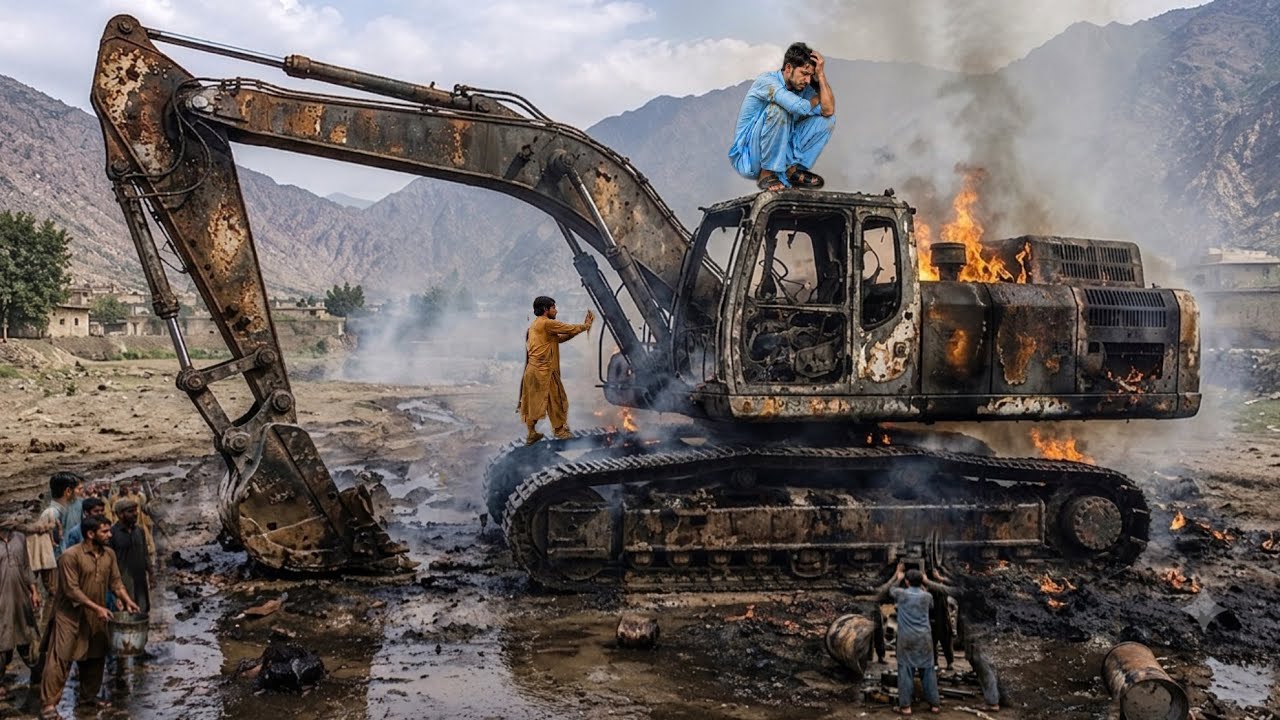
The video's setting—a clearing surrounded by trees, the disabled vehicle listing on uneven ground—shows the reality of remote breakdowns. No tow trucks can reach here, no replacement parts will arrive this week. The crew must fix what's broken with what they have, or abandon the machine to the forest.
As the hammer blows land, the crew watches for movement—the slight rotation that signals success, the shift that means they've won. When it comes, they step back, letting the part cool enough to handle before extraction begins. The fire dies down, its work done.
In the final frames, the freed component lies on the ground, still radiating heat. The team gathers around, planning the next step—perhaps installing a replacement, perhaps reassembling with grease and prayer. The machine that was dead an hour ago now has a chance to move again, to haul its load to market, to earn another day's wages. Fire and hammer, the oldest tools, saved it—because sometimes, when modern solutions fail, you go back to what always worked.
Повторяем попытку...

Доступные форматы для скачивания:
Скачать видео
-
Информация по загрузке: