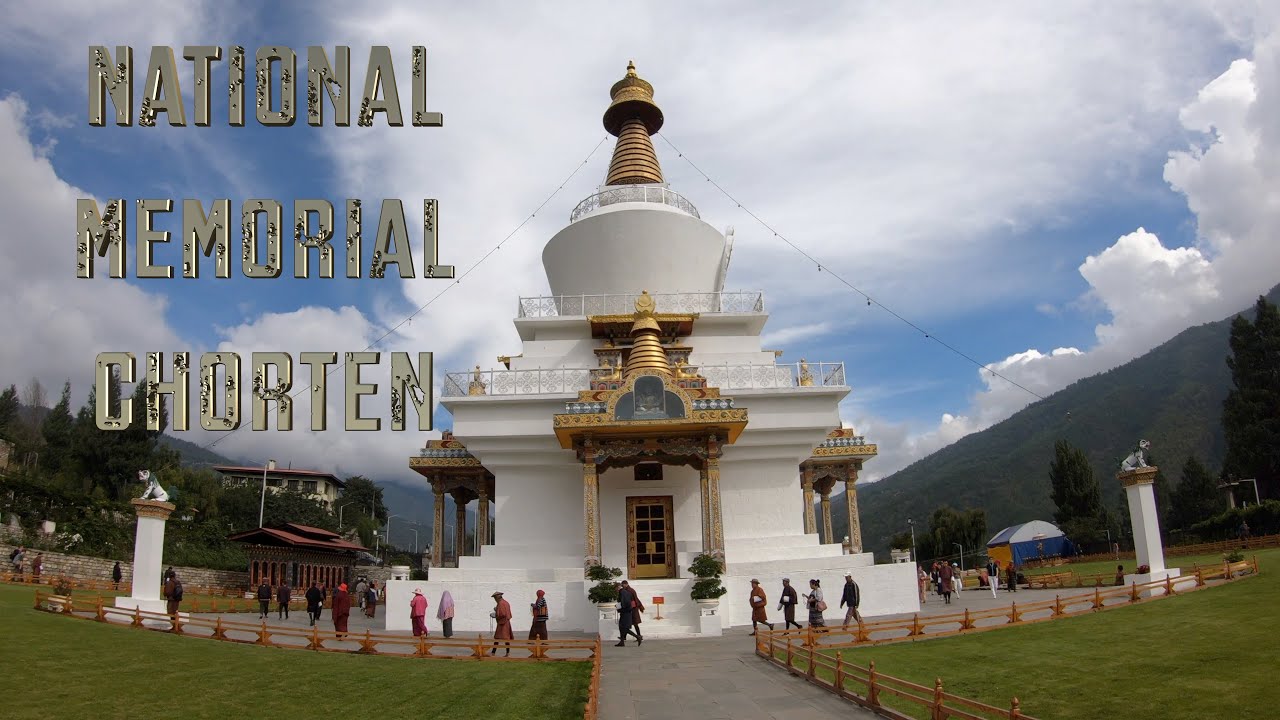
National Memorial Chorten in Thimphu, Bhutan
Автор: Bigfoot Journeys
Загружено: 2020-06-11
Просмотров: 1720
Описание:
Our last day in Thimphu, Bhutan we visited The National Memorial Chorten, which was built in memory of Third Druk Gyalpo and is dedicated to World Peace. The chorten is a large white structure crowned with a golden spire.
It is beautifully situated close to the center of Thimphu city and is one of its most iconic monuments. We enjoyed joining the local Bhutanese people circumambulating the Chorten and spinning prayer wheels. Chorten literally means ‘Seat of Faith’ and Buddhists often call such monuments, the ‘Mind of Buddha’. The Chorten is an extraordinary example of Buddhist architecture and artwork with its gorgeous paintings and intricate sculptures. This stupa is unlike others as it does not enshrine human remains. Only the Druk Gyalpo’s photo in a ceremonial dress adorns a hall in the ground floor. When he was alive, Jigme Dorji wanted to build "a chorten to represent the mind of the Buddha" The interior contains three floors, combined, these three floors form the esoteric teachings of the Nyingmapa sect. All of the texts were once hidden by Padmasambhava and were rediscovered by tertöns in the 19th, 12th and 14th centuries respectively. Enjoying accompanying the faithful. The Memorial Chorten in Thimphu is for many Bhutanese the focus of their daily worship. A Chorten or Stupa is a religious focal point in the landscape, and they are believed to have a positive effect on the people who live nearby or pass through the area. Throughout the day people circumnavigate the Chorten, many carrying prayer beads. Others, mainly the older generations sit and twirl the giant prayer wheels at the entrance. Buddhist prayer beads or malas are a traditional tool used to count the number of times a mantra is recited, breaths while meditating, counting prostrations, or the repetitions of a buddha's name. They are similar to other forms of prayer beads used in various world religions and therefore the term "Buddhist rosary" also appears. Conventional Buddhist tradition counts the beads at 108, signifying the mortal desires of mankind. I got to get me a set of those Prayer Beads. Here is a quick video of me joining the faithful in spinning prayer wheels at the Memorial Chorten in Thimphu, Bhutan. In Buddhism, a prayer wheel is made of a hollow metal cylinder, often beautifully embossed, mounted on a rod handle and containing a tightly wound scroll printed with a mantra. Prayer wheels come in many sizes: they may be small, attached to a stick, and spun around by hand, medium-sized and set up at monasteries or temples, or very large and continuously spun by a wind or water mill. Prayer wheels are used primarily by the Buddhists of Tibet, Bhutan and Nepal, where hand-held prayer wheels are carried by pilgrims and other devotees and turned during devotional activities. According to Tibetan Buddhist belief, spinning a prayer wheel is just as effective as reciting the sacred texts aloud. This belief derives from the Buddhist belief in the power of sound and the formulas to which deities are subject. For many Buddhists, the prayer wheel also represents the Wheel of the Law (or Dharma) set in motion by the Buddha. What an incredible experience with Gate 1 Travel.
Повторяем попытку...
Доступные форматы для скачивания:
Скачать видео
-
Информация по загрузке: