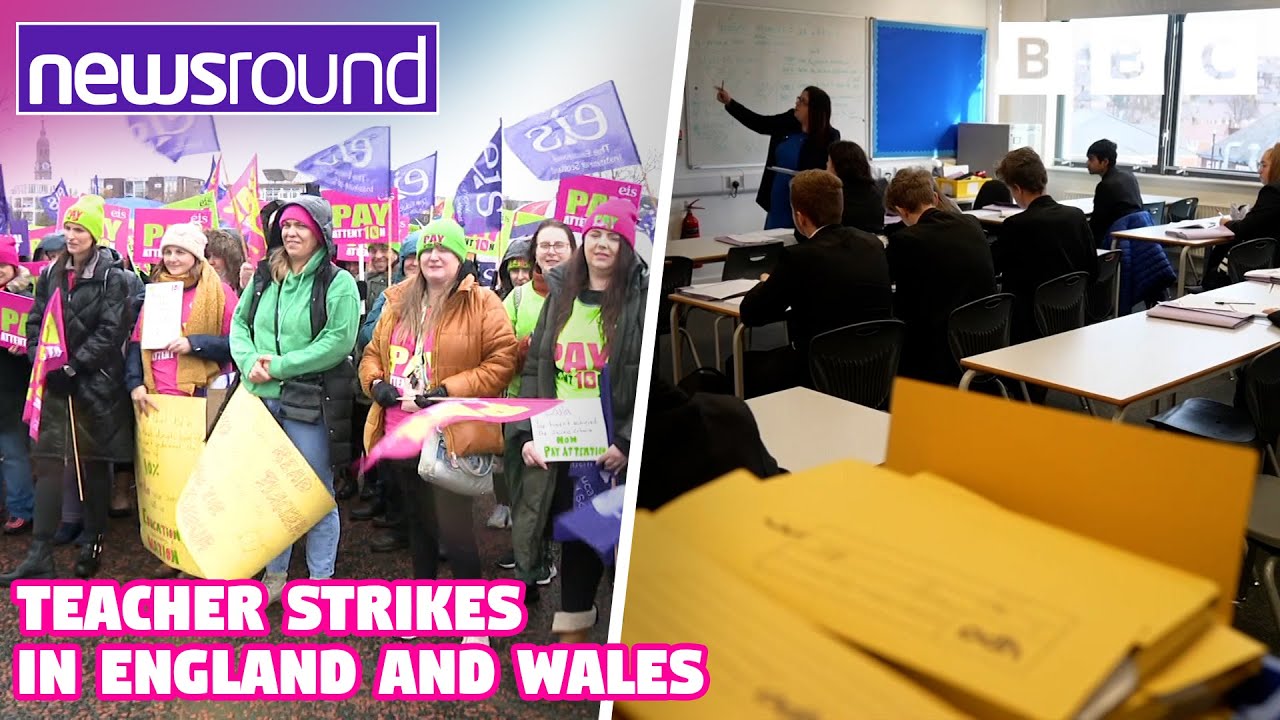
School Strikes: When are Teachers Striking in England and Wales? | Newsround
Автор: BBC Newsround
Загружено: 2023-01-17
Просмотров: 4602
Описание:
#Newsround #strike #teacherstrike #schools #wales #england
Welcome to the official BBC Newsround YouTube channel. Subscribe here ➡️.➡️ ➡️ https://bit.ly/3bYidJ3
Teachers in England and Wales will go on strike over pay, meaning some schools are likely to close temporarily in February and March.
Last week the largest education union in the UK, the National Education Union (NEU) asked more than 300,000 teachers and support staff to vote in a ballot on whether to take industrial action - more than 90% have voted in favour of striking.
Unions, sometimes known as trade unions, represent workers by negotiating and taking action over things like working conditions or pay.
Education Secretary Gillian Keegan argues that this isn't the time for strikes, and said she plans to meet teachers' representatives later this week.
When are teachers striking in England and Wales?
The NEU, which has 300,000 members has announced seven days of action in February and March.
Strikes by teachers who are members of the NEU will happen regionally and nationally on the following days:
1 February: All schools in England and Wales
14 February: All schools in Wales
28 February: North and north-west England, Yorkshire and Humber
1 March: East Midlands, West Midlands, and the NEU's eastern region
2 March: South-east and south-west England, and London
15 and 16 March: Two-day strike of all schools in England and Wales
However, the unions has said that any individual school will only be affected by a maximum of four days.
Head teachers will not strike in England after less than half of heads votes, which isn't enough to call a strike, although in Wales, head will strikes as enough members voted in favour.
School support staff in England and Wales also voted in favour of striking but in England not enough voted in favour, so they won't be taking part.
Will schools close if teachers strike?
Head teachers are expected to take "all reasonable steps" to keep schools open for as many pupils as possible during a strike, according to Department for Education guidance.
However, it's likely that many schools will close temporarily as a result of the strike action.
The NEU is required to give two weeks' notice of industrial action - such as a strike - to give schools and parents time to prepare.
It's thought that for many schools, children will have return to online lessons at home, similar to how work was done during the pandemic.
In England, it's up to head teachers if a school has to close and there are no minimum staffing rules on whether a school should or shouldn't stay open.
Headteachers are also responsible in Wales, but have to discuss plans with local authorities.
The Department for Education has advised that schools should open for exam groups and prioritise pupils with special educational needs and disabilities.
Adding that there is an expectation on headteachers "to take all reasonable steps to keep the school open for as many pupils as possible."
Why are teachers striking?
The strikes are about pay - how much money teachers are paid to do their job.
Most teachers in England and Wales had a 5% pay rise in 2022. In Northern Ireland many teachers have been offered 3.2% increases for the last school year and this school year.
But unions argue that inflation - which sees the cost of things, like food and fuel go up - is above 10%.
That means wages aren't increasing by the same amount as inflation and it's harder for people to afford things that they used to buy.
In Scotland, unions have asked for a 10% increase in wages, but politicians and councils have said a 10% pay rise is unaffordable.
The current offer in Scotland is a 5% pay rise that also includes up to 6.85% for the lowest-paid staff.
But the EIS - Scotland's largest teaching union - dismissed the deal as "insulting".
What does the government say about teacher strikes?
Downing Street wants teachers to discuss their concerns rather than "withdraw education from children".
"We would continue to call on teachers not to strike given we know what substantial damage was caused to children's education during the pandemic and it's certainly not something we want to see repeated" the Prime Minister's spokesman said.
"We would hope they would continue to discuss with us their concerns rather than withdraw education from children."
What are teachers unions saying about the strikes?
The National Education Union (NEU), the UK's largest teaching union, said it wants a "above-inflation pay rise" to help teachers tackle the cost of living crisis.
To watch the daily bulletins head to the BBC iPlayer and to get involved with votes and have your say on a news story head over to the Newsround website ➡️ https://www.bbc.co.uk/newsround
For daily news bulletins visit the BBC iPlayer ➡️ https://www.bbc.co.uk/iplayer/episode...
Повторяем попытку...
Доступные форматы для скачивания:
Скачать видео
-
Информация по загрузке: