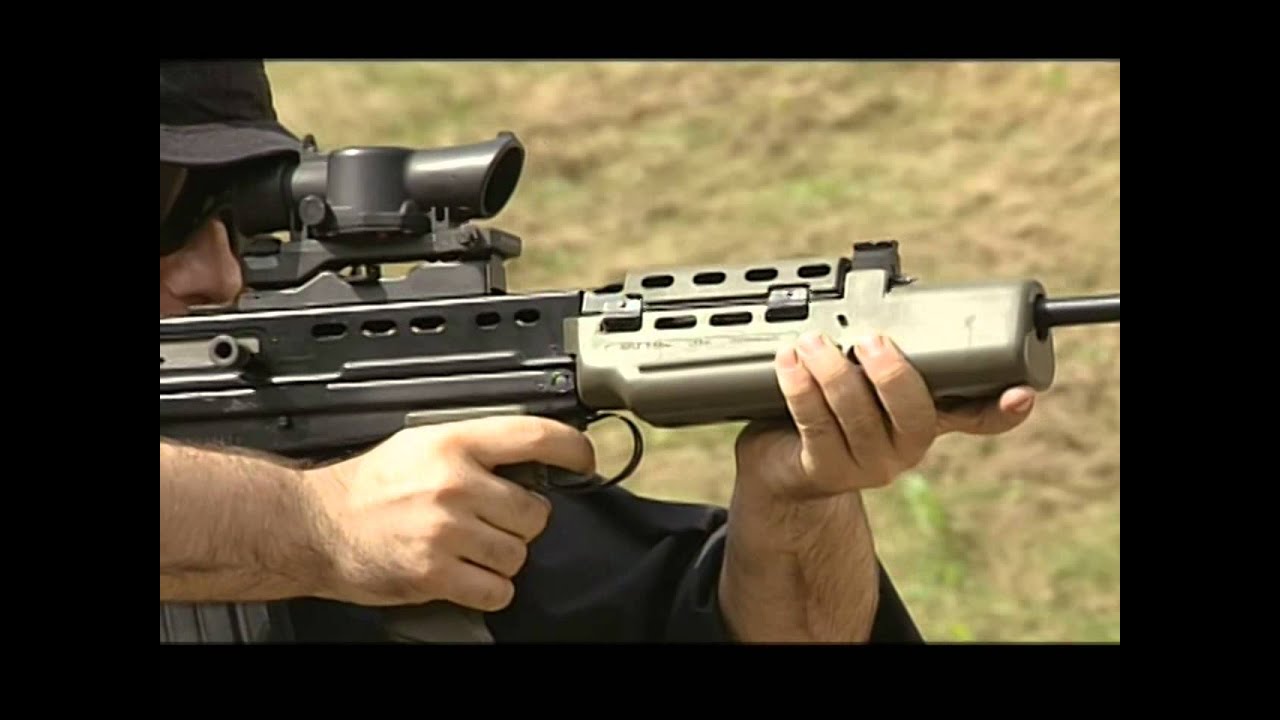
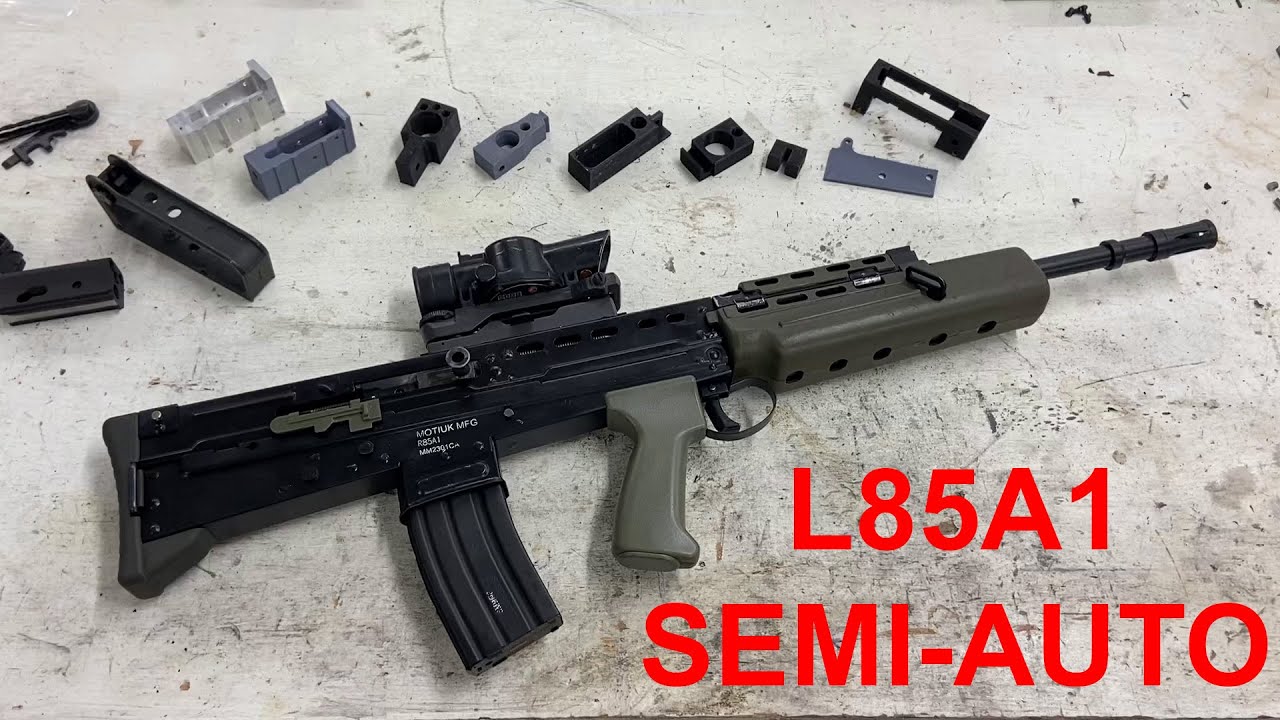
Shooting The L85A1
Автор: sasty73
Загружено: 2011-04-08
Просмотров: 289378
Описание:
The SA80 (Small Arms for the 1980s) is a British family of 5.56mm small arms. It is a selective fire, gas-operated firearm. SA80 prototypes were trialled in 1976 and production was completed in 1994.
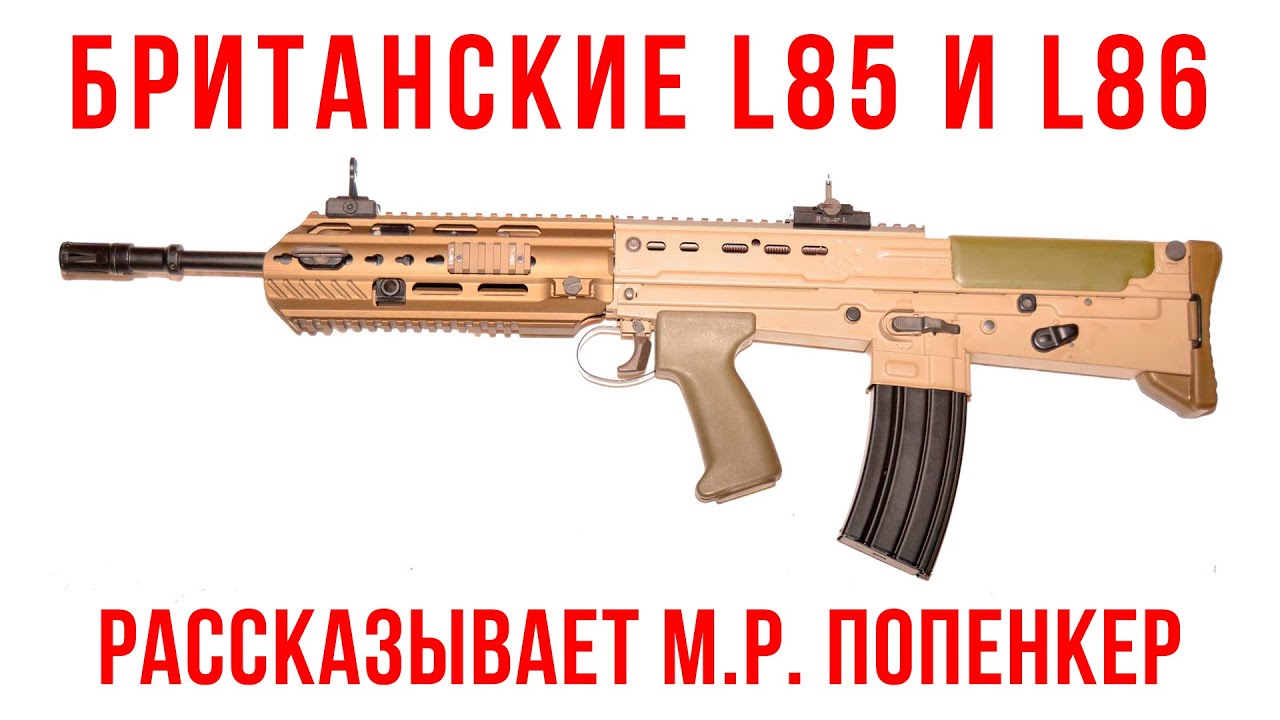
The L85 rifle variant of the SA80 family has been the standard issue service rifle of the British Armed Forces since 1987, replacing the L1A1 variant of the FN FAL. The improved L85A2 remains in service today. The remainder of the family comprises the L86 Light Support Weapon, the short-barrelled L22 carbine and the L98 Cadet rifle. The SA80 was the last in a long line of British weapons (including the Lee-Enfield family) to come from the national arms development and production facility at Enfield Lock. Its bullpup configuration stems from a late-1940s programme at Royal Small Arms Factory Enfield to design a new service rifle which was known as the EM-2, which though similar in outline, was an entirely different weapon.
Development
The system's history dates back to the late 1940s, when an ambitious program to develop a new cartridge and new class of rifle was launched in the United Kingdom based on combat experience drawn from World War II. Two 7mm prototypes were built in a bullpup configuration, designated the EM-1 and EM-2. When NATO adopted the 7.62x51mm rifle cartridge as the standard calibre for its service rifles, further development of these rifles was discontinued (the British Army chose to adopt the 7.62mm L1A1 SLR semi-automatic rifle, which is a license-built version of the Belgian FAL). In 1969, the Enfield factory began work on a brand new family of weapons, chambered in a newly-designed British 4.85x49mm intermediate cartridge. While the experimental weapon family was very different from the EM-2 in internal design and construction methods, its bullpup configuration with an optical sight was a clear influence on the design of what was to become the SA80. The system was to be composed of two weapons: an individual rifle, the XL64E5 rifle and a light support weapon known as the XL65E4 light machine gun. The sheet metal construction, and the design of the bolt, bolt carrier, guide rods, gas system and the weapon's disassembly showed strong similarities to the SAR-87, which was under joint-development by Sterling Armaments Company of Dagenham and Chartered Industries of Singapore. In 1976, the prototypes were ready to undergo trials. However, after NATO's decision to standardize ammunition among its members, Enfield engineers re-chambered the rifles to the American 5.56x45mm M193 cartridge. The newly redesigned 5.56mm version of the XL64E5 became known as the XL70E3. The left-handed XL68 was also re-chambered in 5.56x45mm as the XL78. The 5.56mm light support weapon variant, the XL73E3, developed from the XL65E4, was noted for the full length receiver extension with the bipod under the muzzle now indicative of the type.
Further development out of the initial so-called "Phase A" pre-production series led to the XL85 and XL86. While the XL85E1 and XL86E1 were ultimately adopted as the L85 and L86 respectively, a number of additional test models were produced. The XL85E2 and XL86E2 were designed to an alternate build standard with 12 components different from E1 variants, including parts of the gas system, bolt, and magazine catch. Three series of variants were created for "Environmental User Trials". XL85E3 and XL86E3 variants were developed with 24 modified parts, most notably a plastic safety plunger. The E4's had 21 modified parts, no modification to the pistol grip, and an aluminium safety plunger, unlike the E3 variants. Lastly, the E5 variants had 9 modified parts in addition to those from the E3/E4 variants
Повторяем попытку...

Доступные форматы для скачивания:
Скачать видео
-
Информация по загрузке: