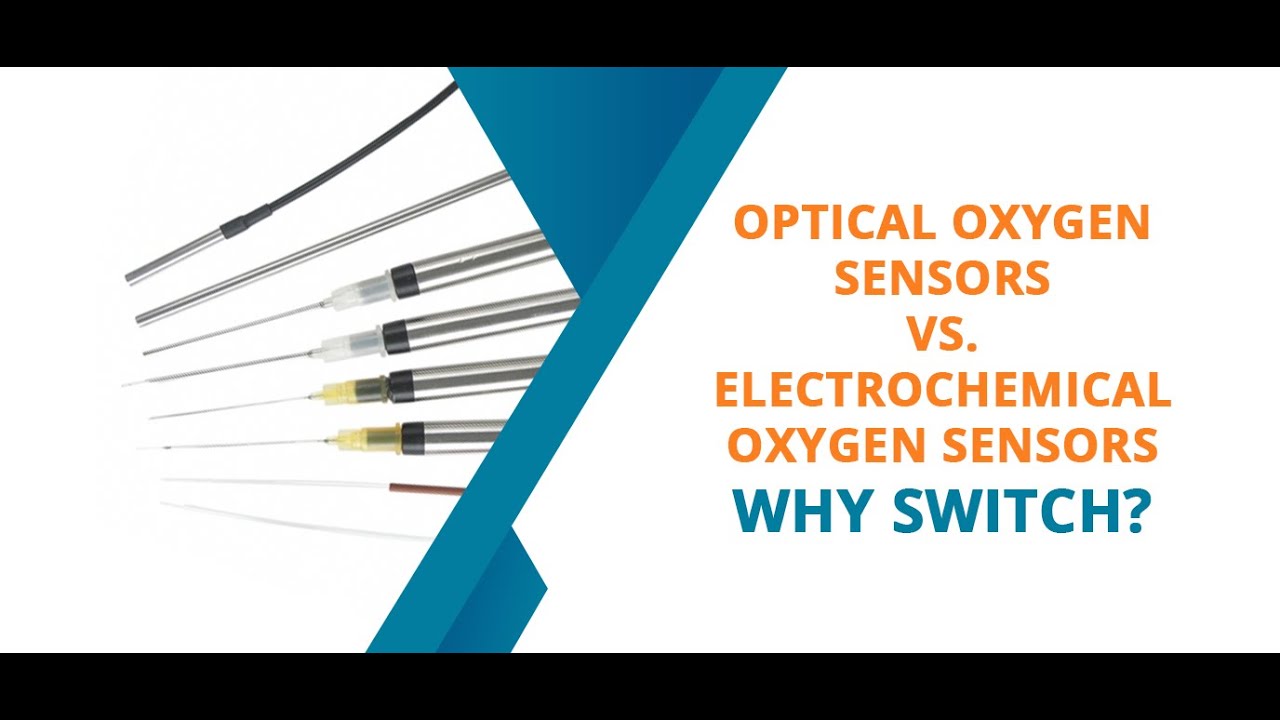
Optical Oxygen Sensors vs Electrochemical Oxygen Sensors - Why Switch?
Автор: Ohio Lumex
Загружено: 2020-06-23
Просмотров: 1545
Описание:
You can learn more about PyroScience Optical Sensors (Brough to you by: Ohio Lumex) by visiting us at https://www.ohiolumex.com/optical-sen...
Video Transcript:
Hi there! I’m Nadia Savelyeva, one of the product managers here at Ohio Lumex. We are a Top Distributor for the PyroScience optical sensors in the United States and Canada since the year 2015. In this presentation, I am going to give a brief overview of two alternative oxygen measurement technologies and illustrate the advantages that optical sensors offer in comparison to their electrochemical counterparts.
Capable of accurately measuring oxygen at low levels, PyroScience optical oxygen sensors are an effective and affordable alternative to the traditional electrochemical sensors.
That is why optical sensors are quickly becoming the popular go-to solution in many fields where oxygen measurement is a key parameter.
In the last decade, these sensors have been widely utilized in the laboratories, various process environments, as well as many field measurement applications around the world.
Our optical oxygen sensors are based on the principle of fluorescence quenching and rely on the light intensity measurement versus chemical reaction & electrical signal measurement.
In electrochemical sensors, oxygen permeates through the sensor membrane and undergoes a chemical reduction reaction, which produces an electrical signal proportional to the concentration of oxygen in the sample. During this type of measurement, oxygen gets consumed in the process, which means that more sample is required to continue testing.
On the other hand, no oxygen consumption occurs in the optical sensor. Here, the polymer membrane contains a special luminescent dye that glows bright when exposed to a light source in the absence of oxygen.
When oxygen molecules are present in the sample, they collide with the dye molecules and quench their luminescence before transmitting back to the detector. This effect is called “quenching.” The more oxygen in the sample, the less light is getting back.
Because the electrochemical sensors consist of electrodes and require polarization to operate, certain types need several minutes of warm-up time before testing can begin.
In comparison, there is no such downtime with optical sensors. They readily perform detection upon start, providing unprecedentedly low response times from a few seconds down to fractions of a second in special cases.
Thanks to the versatile design of optical technology, these sensors can easily be miniaturized, opening opportunities to many applications not attainable using electrochemical sensors.
The possibility of contactless and long-term field measurements are other unique attributes of optical sensors.
When it comes to maintenance there are quite a few components that electrochemical sensors require to be taken care of. For example, the electrolyte solution periodically runs out and needs refilled. On top of that, the sensor membranes wear out requiring replacement. In addition, electrochemical sensors must be calibrated before every use. With optical sensors, the only cause of maintenance stems from the luminescence dye potentially bleaching out and degrading with time. In our experience, these sensors last from a million to a few million data points depending on type.
In conclusion to this presentation, let’s look at this summary that compares the two sensing technologies.
As you have seen in the previous slides, optical sensors require no warm-up time to operate which allows the user to start testing withing seconds compared to minutes in electrochemical sensors.
Due to the technological benefits, optical sensors offer higher accuracy and resolution as well as require minimal to no maintenance and calibration. Contactless measurement through transparent glass or plastic is a unique feature that is only possible with an optical sensor. Furthermore, they involve no sample consumption or stirring sensitivity which are apparent disadvantages of their electrochemical counterparts. When it comes to size, optical sensors can be customized and miniaturized into micro and mini probes which is a limitation of the electrochemical sensors. And most importantly, when it comes to lifetime, in our experience, the optical sensors can last up to several years whereas their electrochemical opponents need to be replaced within months.
This concludes my presentation. I hope that you learned some new and helpful information here, and if you have any further questions feel free to reach out to me by phone or email displayed on this slide.
I thank you for your attention, have a great rest of the day, and happy oxygen testing.
#opticaloxygensensor #dissolvedoxygen #opticalsensor #oxygensensor
Повторяем попытку...
Доступные форматы для скачивания:
Скачать видео
-
Информация по загрузке: