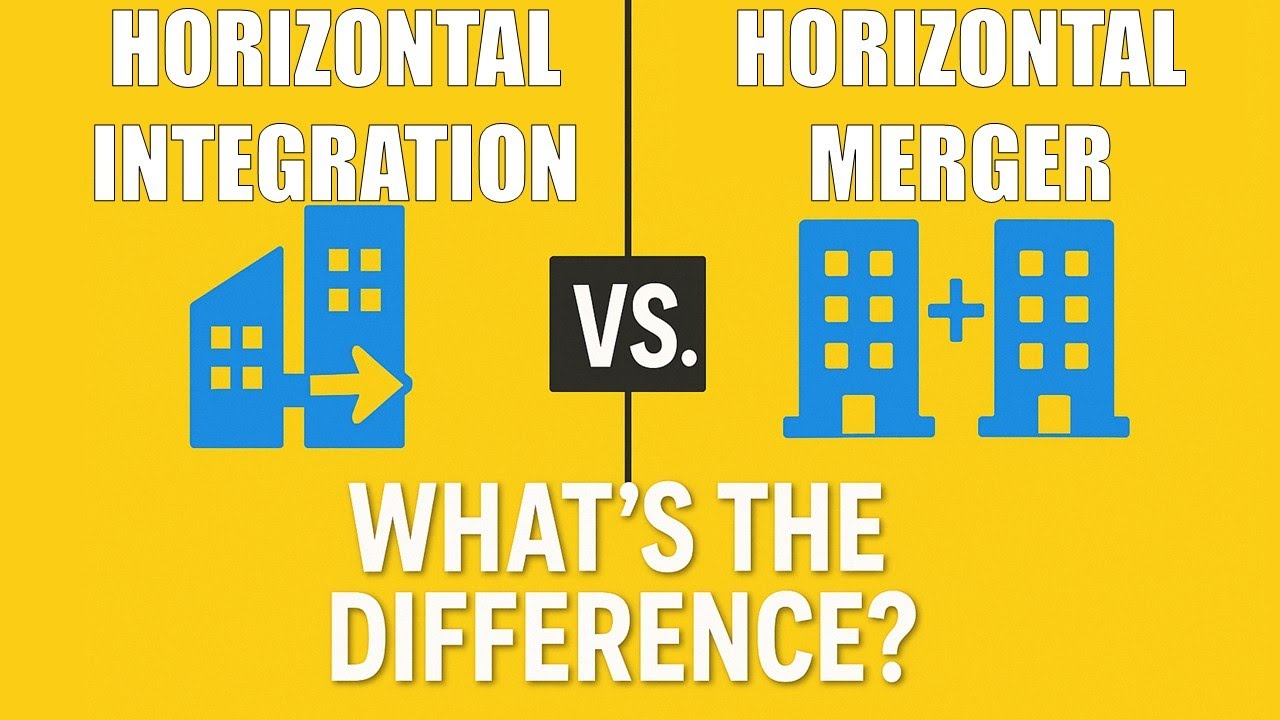
Horizontal Integration vs Horizontal Merger || The Difference Between Them
Автор: FST Study
Загружено: 2025-08-26
Просмотров: 92
Описание:
Horizontal Integration vs. Horizontal Merger. These two concepts sound similar, but they’re not the same. By the end of this video, you’ll be able to clearly understand the difference, see real-world examples, and know why businesses use them.
Part 1: The Basics
First things first—what do we mean by horizontal in business terms?
Horizontal strategies happen when companies operate at the same level of the value chain. In other words, they’re in the same industry and at the same stage of production. For example, two clothing brands, or two airlines.
Part 2: What is Horizontal Integration?
Horizontal Integration is a strategy. It’s when a company expands by acquiring or merging with another company at the same stage of production.
The main goal? To increase market share, reduce competition, and benefit from economies of scale.
📌 Example: Think about Facebook acquiring Instagram in 2012. Both were social media platforms. Facebook wanted to integrate horizontally to capture Instagram’s user base and dominate the social networking space.
So, horizontal integration is about the bigger strategy of expansion and control.
Part 3: What is a Horizontal Merger?
Now, a Horizontal Merger is more specific. It’s one type of horizontal integration.
It refers to the actual legal merger of two companies in the same industry, combining into one entity.
📌 Example: In 1998, Exxon and Mobil merged to form ExxonMobil—one of the largest oil companies in the world. That was a horizontal merger.
So remember: all horizontal mergers are horizontal integration, but not all horizontal integrations are mergers. Sometimes integration can be through acquisitions, partnerships, or even hostile takeovers.
Part 4: Key Differences
Let’s highlight the differences:
Scope
Horizontal Integration = Overall growth strategy.
Horizontal Merger = A specific legal transaction under that strategy.
Form
Integration can happen through acquisitions, mergers, alliances.
A merger is strictly two firms becoming one.
Examples
Integration: Facebook buying Instagram.
Merger: Exxon + Mobil.
👉 Simple way to remember: Integration is the strategy; merger is one method.
Part 5: Pros and Cons
Why do companies use these approaches?
✅ Advantages:
Larger market share.
Reduced competition.
Cost efficiencies.
Stronger bargaining power.
❌ Disadvantages:
Possible legal issues like antitrust lawsuits.
Risk of monopoly.
Integration challenges between company cultures.
Thank you so much for watching this video and don't forget to like and subscribe.
Повторяем попытку...
Доступные форматы для скачивания:
Скачать видео
-
Информация по загрузке: