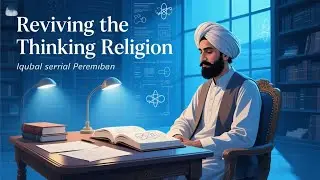
Last | Iqbal's Reconstruction of Islamic Thought: Can Islam Embrace Modernity? Philosophy Breakdown
Автор: Parenting Epic Reads
Загружено: 2025-06-15
Просмотров: 12
Описание:
Chap4 | Iqbal's Reconstruction of Islamic Thought: Can Islam Embrace Modernity? Philosophy Breakdown
1. Introduction: Iqbal’s Vision for Islamic Revival
Context: Early 20th century—Muslim societies facing colonialism, intellectual stagnation, and challenges from modernity.
Iqbal’s Goal: Reconcile Islamic theology with modern philosophy and science to revive Islam’s dynamic spirit.
Core Argument: Islam must evolve through critical thinking (ijtihad), not blind imitation (taqlid).
2. Knowledge & Religious Experience
Critique of Static Faith: Religion isn’t just ritual; it’s a living, experiential truth.
Role of Intuition: Combines reason (aql) and spiritual insight (kashf)—drawing from Bergson’s "élan vital" and Rumi’s Sufism.
Science vs. Religion: Both seek truth; Islam welcomes scientific inquiry (unlike medieval European Church opposition).
3. Reinterpreting Islamic Doctrines
God in Islam: Not a distant ruler but an active, creative force—closer to a "Self" (Khudi, ego) in relation to humanity.
Prayer (Salah): A tool for self-development, not mere compliance.
Free Will: Humans as co-creators with God, rejecting fatalism.
4. Human Ego & Immortality
Philosophy of the Self (Khudi): Eternal soul evolves through struggle, love, and action (inspired by Nietzsche’s "will to power" but rooted in Rumi).
Immortality: Not passive heaven but eternal growth—critique of otherworldly Sufism.
5. Islamic Civilization’s Decline & Revival
Historical Critique: Muslim empires collapsed due to rigid orthodoxy, rejecting ijtihad.
Solution: Learn from Europe’s Renaissance—adapt modernity without Western materialism.
6. Ijtihad: The Engine of Progress
Reopening the Gates: Islamic law (Sharia) must evolve via independent reasoning.
Democracy & Islam: Compatible if grounded in moral principles (anti-dictatorship, anti-theocracy).
7. Is Religion Possible? (Modern Challenges)
Secularism’s Threat: Religion remains vital if it embraces change.
Final Appeal: Islam must lead a global ethical revival—unity of spirit and intellect.
8. Conclusion: Iqbal’s Legacy
Impact: Influenced Islamic modernists (e.g., Fazlur Rahman) and Pakistan’s intellectual foundation.
Relevance Today: Balances tradition/reform, counters extremism, and bridges Islam/West.
Key Themes to Highlight in Narration:
Dynamic Islam vs. Static Tradition
Human Agency & Divine Will
Critique of Colonialism + Muslim Complacency
Sufism + Western Philosophy Fusion
#IslamicPhilosophy #MuslimModernism #IqbalStudies #ReligiousReform #IslamAndModernity #PhilosophyOfReligion #IslamicEnlightenment #Sufism #Ijtihad #PostcolonialThought
#PhilosophyBooks #Theology #ComparativeReligion #IntellectualHistory #MuslimThinkers #PhilosophyOfScience #IslamicEpistemology #ModernistIslam #criticalthinking
#AllamaIqbal #MuhammadIqbal #IqbalPoetry #IqbalLegacy #Khudi #ReconstructionOfThought #IqbalianPhilosophy #PoetOfTheEast
#EastWestDialogue #InterfaithHarmony #ReligionAndScience #SpiritualRevival #GlobalPhilosophy #AbrahamicStudies #FaithAndReason
Повторяем попытку...

Доступные форматы для скачивания:
Скачать видео
-
Информация по загрузке:

![Quick Hilchos Niddah Review - 2 [What Makes a Women a Niddah]](https://image.4k-video.ru/id-video/5_xXCK5jOz4)