Make A Basic Weight For Landbased Shark Fishing
Автор: FishingVesselSpotter
Загружено: 2021-12-16
Просмотров: 270
Описание:
This video covers the most basic “go-to” weight for landbased shark fishing 🦈🏖️🎣
When you’re landbased shark fishing, you’re almost always fighting the ocean as much as you’re fighting the fish. You’ll deal with crashing surf, sideways sweep, rip currents, and tide changes that can drag your bait all over the place. The best way to keep your bait in one spot is simple…
…literally tie it to a rock 🪨💪
It’s old school, it’s cheap, and it works. A rock weight helps your bait stay planted so your lines don’t swing into each other and turn the beach into a knot festival. Below are a few pointers that can save you a ton of time, trouble, and tangles—and ultimately help you land more sharks.
Tips For Making A Basic Weight For Landbased Shark Fishing 🧠🪨
Make sure you are using a rock that is between 10–15 lbs ⚖️
Trust us, you’ll be happy you picked a big rock. The last thing you want is one bait getting pushed in by heavy surf, washing down the beach, and tangling every rod you have out.
A heavy rock does 3 things:
✅ Keeps your bait from sliding in toward shore
✅ Reduces line swing (less tangles)
✅ Holds position better when waves are pounding
If you’re fishing extreme surf, a big inlet, or a place with ripping current, don’t be afraid to go heavier. Bigger water = bigger rock 🌊➡️🪨
Save Time & Knots… Go Heavy On Your Mono 🧵✅
When tying your rock, we recommend using at least 125 lb test mono. If you go too light, you’ll end up snapping it, re-tying constantly, and stacking knots on knots.
Why heavy mono helps:
✅ Fewer knots needed
✅ Less breakage when casting/dragging in surf
✅ Easier to handle with wet hands at night
✅ More confidence when a big fish loads up
With 125 lb test, you can usually secure the rock with one solid knot and be done with it—simple and reliable.
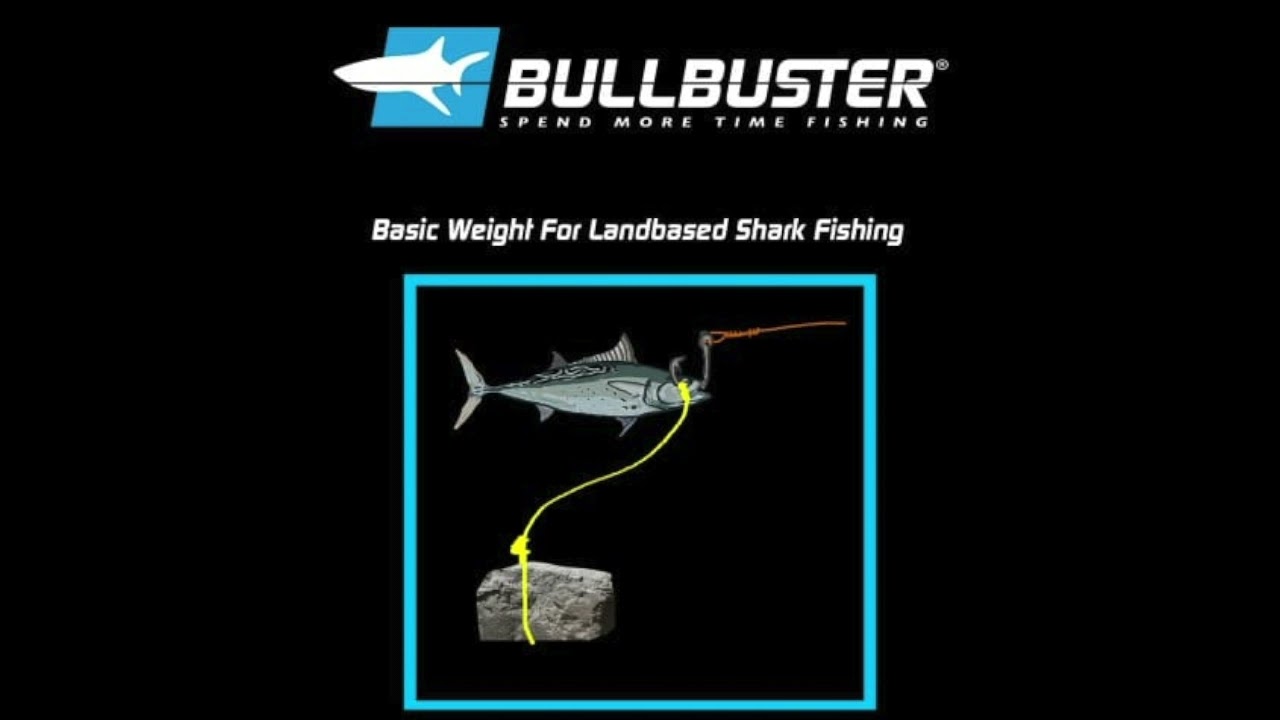
Give Yourself About 5 Feet Of Mono Between The Rock & The Hook 📏🎣
This spacing matters more than people think. You want the shark to be able to pick the bait up and move with it before it feels the full tension of the rock.
That 5-foot “buffer zone” helps because:
✅ The bait looks more natural in the wash
✅ The shark can turn and eat without instant resistance
✅ You get better hook-ups vs quick drop bites
Too short and the shark feels the anchor right away. Too long and your bait can wander too much. Around 5 feet is a great starting point for most beach situations.
Tie The Line Connecting Your Rock Directly To Your Hook 🔗🪝
This is a key detail. Tie the mono that’s attached to the rock directly to your hook (or right into your hook rig connection). Because the second a real shark picks up that bait and moves, it’s going to cut the rock free.
That’s the point ✅
The rock is there to HOLD your bait in place until the moment a shark commits. Once it commits and moves off, the rock drops off and you’re fighting the fish—not dragging an anchor.
Don’t stress about the shark towing the rock around. In most cases it won’t. The only time you might see weird stuff is with something like a nurse shark, and if that happens… you probably won’t care anyway 😅
Quick Recap 🧠✅
🪨 10–15 lb rock (heavier if surf/current is extreme)
🧵 125 lb mono to save time and knots
📏 ~5 feet between rock and hook for better bites
🔗 Tie rock line directly to the hook so it drops off on pickup
If you want, tell me what beach conditions you fish (heavy surf vs calm, inlet vs open beach), and I’ll recommend a rock size range + mono length that fits your exact setup 🦈🏖️
Повторяем попытку...
Доступные форматы для скачивания:
Скачать видео
-
Информация по загрузке:


