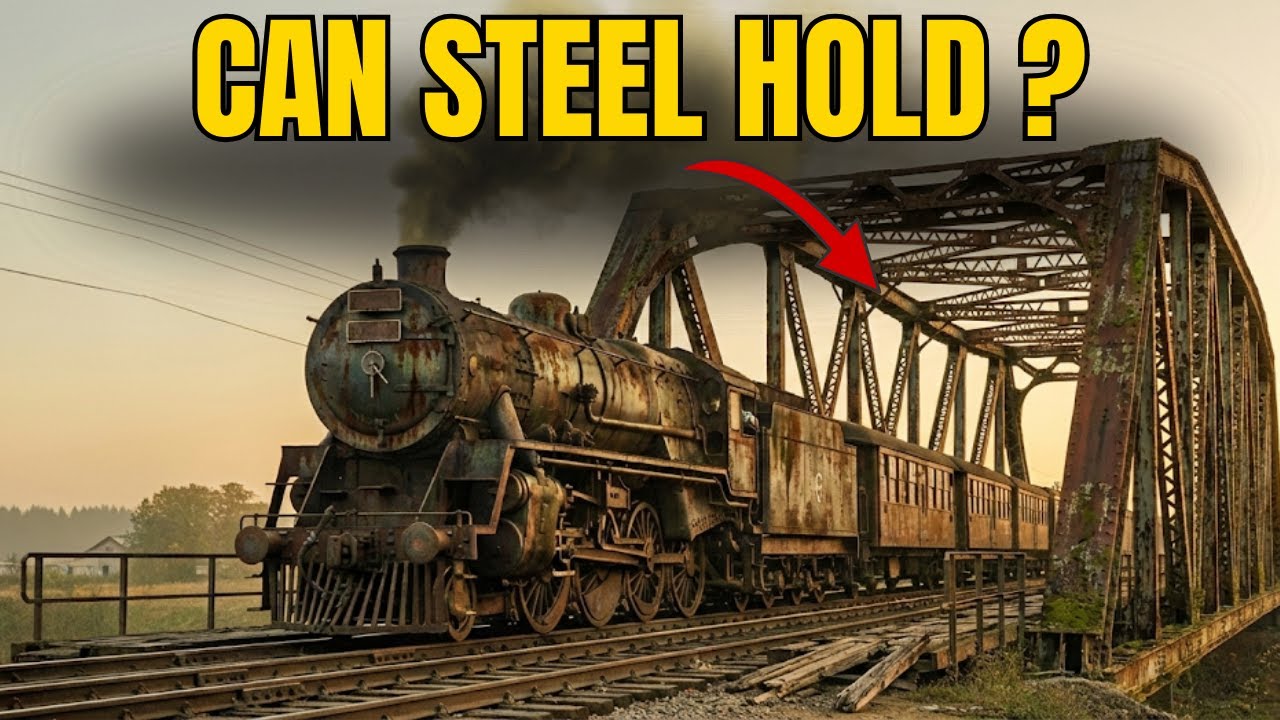
They Said This Bridge Would NEVER Hold... Then 50 Trains Crossed DAILY (Eads Bridge 1874)
Автор: Rail Systems USA
Загружено: 2026-01-25
Просмотров: 16
Описание:
1867. Engineers said it was impossible. Steel had never been used for a major bridge—the material was unreliable, would fail under load, and the entire project was a disaster waiting to happen. James Buchanan Eads ignored them and built it anyway. Within a year, 50 trains crossed his bridge every day.
This is the story of the Eads Bridge—America's first major steel bridge—and how one engineer changed bridge construction forever.
WHAT HAPPENED:
Mississippi River at St. Louis: 1000+ feet wide, impossible to bridge
Engineering establishment formally opposed using structural steel
James Eads designed revolutionary steel arch bridge despite opposition
Pneumatic caissons sunk 95 feet deep—deeper than ever attempted
14 workers died during construction, hundreds injured
Center arch span: 520 feet—longest steel arch ever built
Budget tripled from $4.5M to $13.5M amid skepticism
July 4, 1874: Bridge opened, carrying trains both directions simultaneously
Within decade, steel became standard for all major bridges
THE PROBLEM:
St. Louis was losing commercial dominance to Chicago because freight had to transfer between trains and ferries to cross the Mississippi. The city desperately needed a railroad bridge, but the river's width (1000+ feet), powerful current (8 mph during floods), and unstable riverbed (sand/gravel 100+ feet deep) made construction seemingly impossible.
THE STEEL CONTROVERSY:
In 1867, structural steel was untested for bridges. The Bessemer process was only 15 years old. The American Society of Civil Engineers formally opposed steel construction. Insurance companies refused to underwrite steel bridges. Banks hesitated to finance. Newspaper editorials questioned whether St. Louis was wasting millions on a structure that would collapse.
Eads responded with data. He built test rigs, conducted destructive testing, documented performance, and published results showing steel's superior strength compared to wrought iron.
THE CONSTRUCTION:
Foundations required pneumatic caissons—pressurized chambers where workers excavated riverbed down to bedrock. The east pier went 86 feet deep. The west pier reached 95 feet below water surface, establishing a depth record. Workers entered through airlocks, spent hours under pressure, then faced decompression sickness if they ascended too quickly. 14 men died. Another 100 suffered permanent injuries.
The bridge featured three steel arches. The center arch stretched 520 feet between supports—the longest steel arch ever attempted. Total structure required 2000+ tons of steel. Eads rejected shipment after shipment until manufacturers delivered the quality he demanded.
THE FINAL CLOSURE:
September 1873: The two halves of the main arch approached center. If calculations were off by inches, sections wouldn't align. Temperature changes caused thermal expansion. Wind put lateral loads on the incomplete structure. Connecting sections had to align within quarter-inch tolerance.
On a cool morning when thermal expansion was minimal, workers made the final connection. The arch held. The structure became self-supporting. Engineers had calculated correctly. The steel performed as Eads promised.
OPENING DAY:
July 4, 1874. Parade of locomotives crossed from both directions simultaneously. Crowds gathered on riverbanks, many expecting collapse. The bridge held without visible deflection. Within weeks, regular traffic began. Within months, 50+ trains crossed daily.
THE IMPACT:
St. Louis reclaimed its position as major transportation hub. Freight that bypassed the city now moved through it. Shipping costs dropped. Railroad companies extended lines across bridge into Missouri.
More importantly: the engineering establishment studied the Eads Bridge and incorporated its lessons into new design standards. Insurance companies revised policies. Within a decade, steel became standard for major bridge construction. The Brooklyn Bridge (1883) used steel cables. Railroad bridges across America shifted from iron to steel.
LEGACY:
Eads Bridge still stands. 150+ years after completion, it continues carrying MetroLink light rail and vehicular traffic. The steel critics said would fail has outlasted dozens of newer structures. Modern engineering confirms: properly designed steel structures can last indefinitely with correct maintenance.
LOCATION: St. Louis Missouri, Mississippi River
SUBSCRIBE to Rail Systems USA for documentaries on American railroad history, engineering innovations, bridge construction, and visionaries who transformed transportation infrastructure.
TECHNICAL: James Buchanan Eads (1820-1887) spent 20 years as salvage diver and riverboat engineer before designing the bridge. His practical experience with Mississippi River hydraulics informed design decisions that academic engineers questioned.
© 2025 Rail Systems USA
Повторяем попытку...
Доступные форматы для скачивания:
Скачать видео
-
Информация по загрузке: