IB Chemistry SL & HL R 3 2 7 Secondary Cell Lead Acid , Lithium ion , Ni Cd battery
Автор: IBWORLDWIDE ACADEMY
Загружено: 2025-11-01
Просмотров: 6
Описание:
Secondary cells (Reactivity 3.2.7)
A battery is a series of two or more electrochemical cells, typically enclosed
in a single container. In a primary electrochemical cell, ultimately the reaction
materials will be consumed, and the reaction is not reversible. Either the anode, the electrolyte, or both, need to be replaced, or the battery will be thrown away.
Typically, the anode (negative electrode) is oxidized and can no longer be used.
As previously discussed, the ions travelling through the solution and salt bridge can polarize the cell, which causes the chemical reaction to stop. Polarization can also cause a build-up of hydrogen bubbles on the surface of the anode. These can increase the internal resistance of the cell and reduce its electrical output.
Primary cells do not operate well under high-current demands, such as in flash photography or electric cars, but are suitable for low-current household devices.
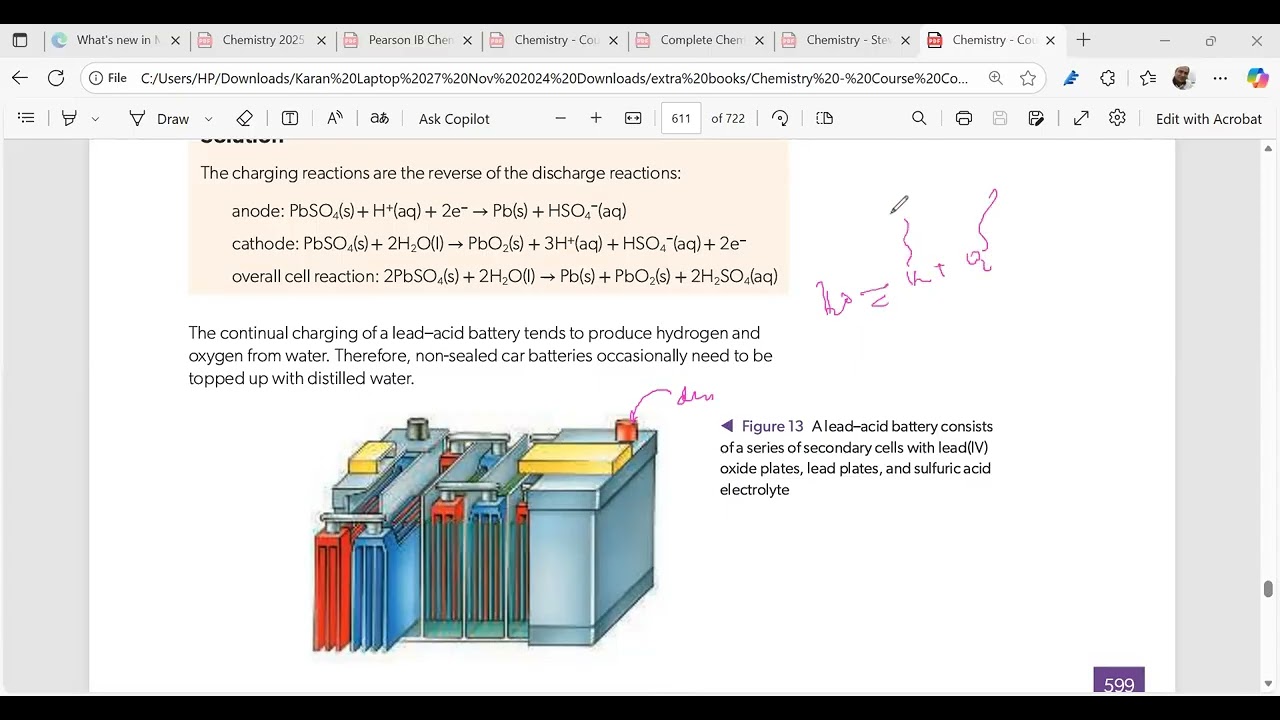
In a secondary cell, or a rechargeable cell, the chemical reactions that generate electricity can be reversed by applying an electric current to the cell. Secondary cells can satisfy higher current demands than primary cells but have a higher rate of self-discharge. For example, batteries in cell phones are made of secondary cells that can be recharged using electrical energy. When you purchase a replacement battery for a phone, you need to charge it before use because it will have self-discharged during the storage and transportation.
Повторяем попытку...
Доступные форматы для скачивания:
Скачать видео
-
Информация по загрузке: