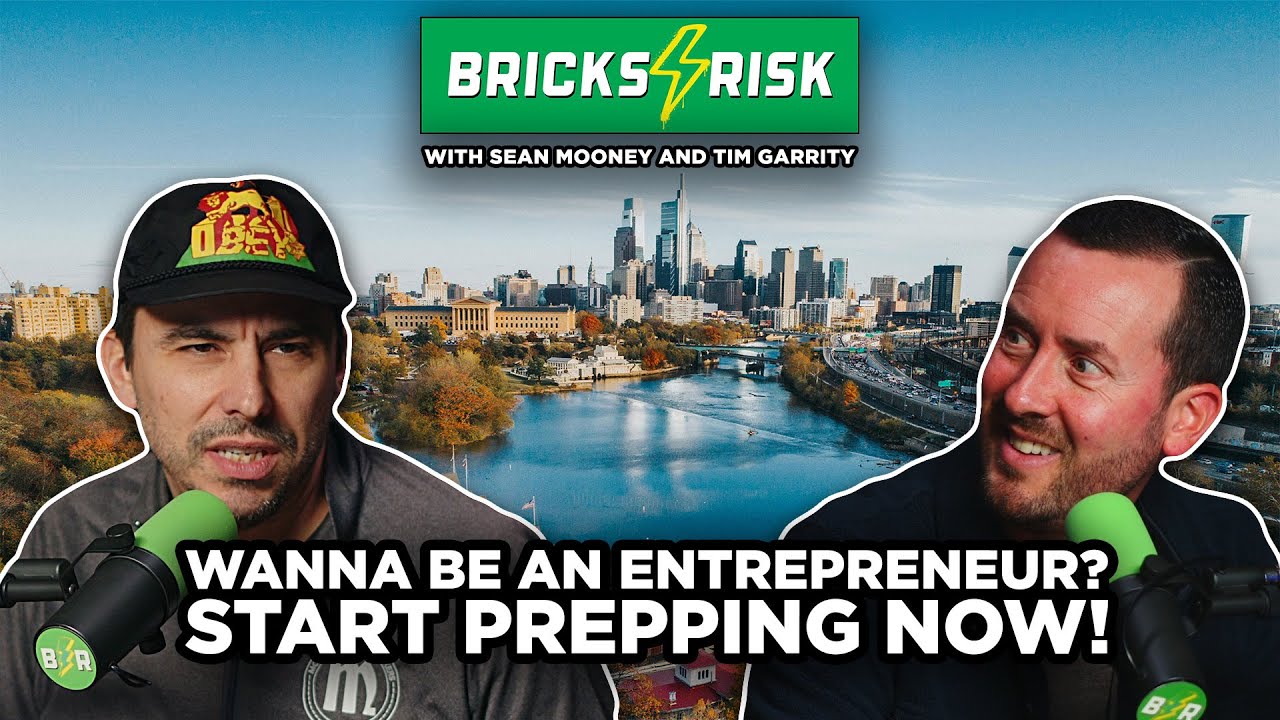
If You're Serious About Becoming an Entrepreneur, Start Prepping Now | Episode 110
Автор: Bricks & Risk Podcast
Загружено: 2026-02-03
Просмотров: 10
Описание:
Have you ever had the idea of ditching your 9 to 5 and starting your own business? This conversation is about what it actually takes to prepare for entrepreneurship, particularly in commission-based industries like insurance and residential real estate. Rather than romanticizing business ownership, Tim and Sean walk through the unglamorous but critical realities of getting started, emphasizing experience, patience, sacrifice, and long-term commitment.
The conversation begins with a foundational question: when someone says they want to “get into” insurance or real estate, what should they actually do first? Sean is clear that the first step is not starting an agency. Instead, he stresses the importance of finding footing by working inside the industry—whether at an agency, carrier, or underwriting role—before ever considering ownership. The goal early on is exposure, education, and understanding how the business truly operates. Without that baseline experience, independence becomes risky and often premature.
From there, the discussion moves into how new entrants should spend their time once inside an organization. Sean outlines a simple but disciplined framework: divide time roughly into thirds—networking, learning the business, and marketing or personal visibility. This structure ensures that people aren’t just performing tasks, but actively building relationships, knowledge, and long-term leverage at the same time.
A major theme throughout the episode is expectation management, particularly around income. Both hosts emphasize that commission-based careers rarely provide quick financial comfort. In insurance, Sean explains that it often takes three to five years before someone earns income they truly feel proud of, with the first few years focused almost entirely on building a book of business and renewal base. Only later does compounding take hold.
That naturally leads to the fork-in-the-road moment many professionals face around year five: continue working within an agency or brokerage with fewer responsibilities, or step out on their own and accept greater risk and workload. Neither path is framed as “right” or “wrong,” but the decision requires honest self-awareness about risk tolerance, ambition, and lifestyle goals.
When the conversation shifts to real estate, Tim draws parallels while highlighting how the industry has evolved. He explains that advice varies widely depending on age, life stage, and financial reality. Younger agents may gravitate toward teams or big-box environments for structure and activity, while others prefer the autonomy of starting solo from day one. What matters most is understanding why someone chooses a path—not just following what sounds safe or popular.
Tim challenges the assumption that teams are always the best starting point. While they can provide activity and learning, they often slow the development of an individual’s personal brand. In contrast, solo agents are forced to build identity, reputation, and visibility immediately. With the rise of virtual brokerages, Zoom-based training, and on-demand education, many of the traditional benefits of teams can now be accessed without being physically tied to an office.
Personal branding emerges as one of the most important takeaways of the episode. Tim argues that an agent’s name and reputation will always outlast any brokerage or team affiliation. As technology, AI, social media, and consolidation reshape the industry, personal brand becomes the most durable asset. Brokerages may be sold, rebranded, or acquired, but an individual’s reputation and relationships remain portable.
The hosts discuss how this shift has flipped traditional brokerage models on their head. Where brokerages once led with their brand and agents followed, today successful models empower agents to lead with themselves, using the brokerage as a support layer rather than an identity. This change has accelerated as offices become less central and remote work becomes the norm.
The episode also explores scenarios where individuals already have influence—such as podcasters, media personalities, or professionals with large networks—entering real estate. In these cases, Tim strongly advises against immediately joining teams that may restrict autonomy or redirect existing influence. Instead, he advocates for collaborative learning while preserving independence, allowing people to convert existing trust into business without being boxed into rigid systems.
Financial reality is addressed bluntly near the end of the episode. In real estate especially, most people should expect to struggle financially for at least the first two years. Team structures often reduce income through splits, meaning agents must do significantly more volume to earn the same money as solo operators. While teams can accelerate learning, they often delay full income potential and personal brand growth.
Повторяем попытку...
Доступные форматы для скачивания:
Скачать видео
-
Информация по загрузке: