HUMAN RIGHTS AND VULNERABLE GROUPS: CHILDREN AND MINORITIES
Автор: Law Concept Maze (LCM)
Загружено: 2020-09-08
Просмотров: 3104
Описание:
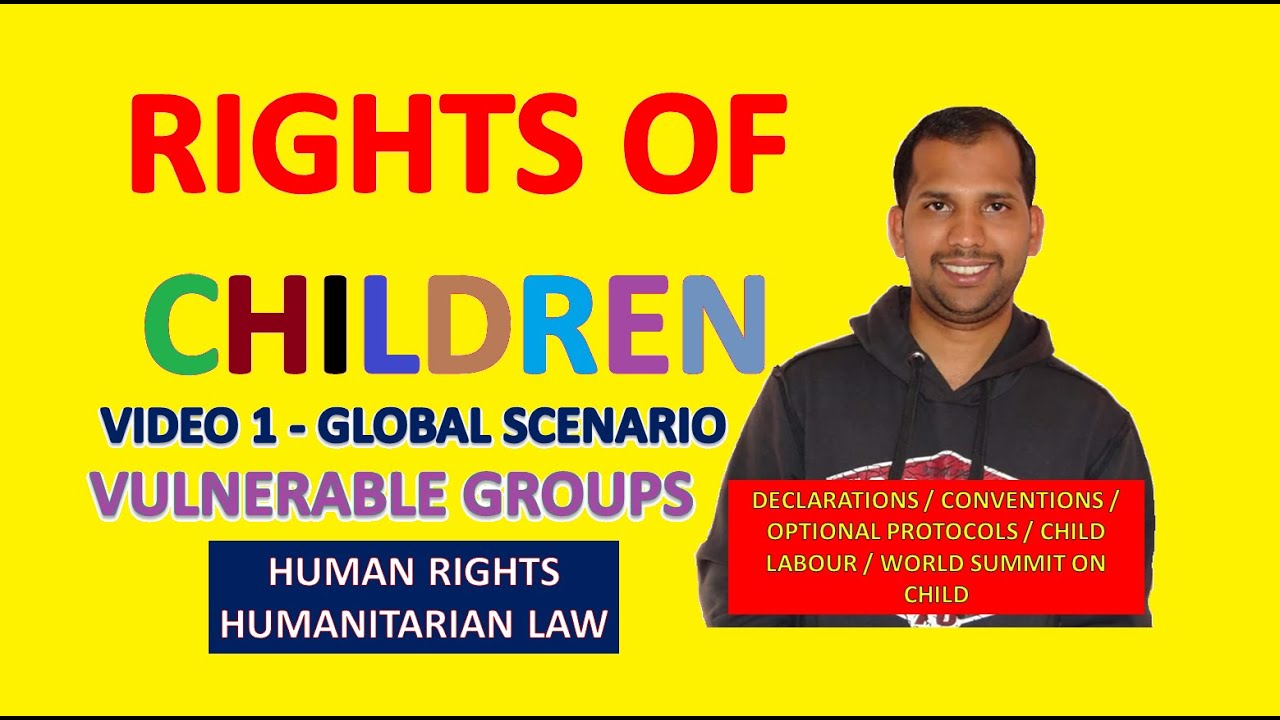
Children are the most intricate, delicate and frangible aspect of human rights wherein the subjects concerned are not in a position to demarcate, delineate and validate the contents of their rights. The United Nations Convention on the Rights of the Child (UNCRC) is a legally-binding international agreement that applies to every child, be in any corner of the world. This Convention was adopted by the United Nations in November 1989 and every country, with the exception of the United States, has ratified it. This Convention has played a critical role in catalysing progress for children by setting the minimum standards and overarching principles by which every society should treat every child.It sets out the civil, political, economic, social, health and cultural rights of children in its Preamble and 54 Articles. In order to carry out the process of monitoring and implementation of the provisions of the Convention, Article 43 established the Committee on the Rights of the Child as conglomerate of Ten experts. In Article 4, the States Parties shall undertake all appropriate legislative, administrative, and other measures for the implementation of the rights recognized in the Convention and with regard to economic, social and cultural rights, States Parties shall undertake such measures to the maximum extent of their available resources and, where needed, within the framework of international co-operation.
It has two primary optional protocols which were adopted in 2000. The First Optional Protocol restricts the involvement of children in military conflicts, and the Second Optional Protocol prohibits the sale of children, child prostitution and child pornography. A third optional protocol, which was not discussed in the lecture, relating to communication of complaints was adopted in December 2011 and it came into effect on 14 April 2014.
The term minority as used in the United Nations human rights system usually refers to national or ethnic, religious and linguistic minorities, pursuant to the United Nations Minorities Declaration. All States have one or more minority groups within their national territories, characterized by their own
national, ethnic, linguistic or religious identity, which differs from that of the majority population. In 1992 the General Assembly adopted the United Nations Minorities Declaration by consensus (resolution 47/135). It is the main reference document for minority rights. It grants to persons belonging to minorities. In 1992 the General Assembly adopted the United Nations Minorities
Declaration by consensus (resolution 47/135). It is the principal reference document for minority rights. The following link provides a reference guide that shall be helpful in understanding the nuances of the discussion.
https://www.ohchr.org/Documents/Publi...
Повторяем попытку...

Доступные форматы для скачивания:
Скачать видео
-
Информация по загрузке: