Guitar in Fourth Gear Perfect Fourths Tuning Part 10 Triads Practice for Tone, Clarity & Intonation
Автор: TorusHeadStudios
Загружено: 2026-01-12
Просмотров: 8
Описание:
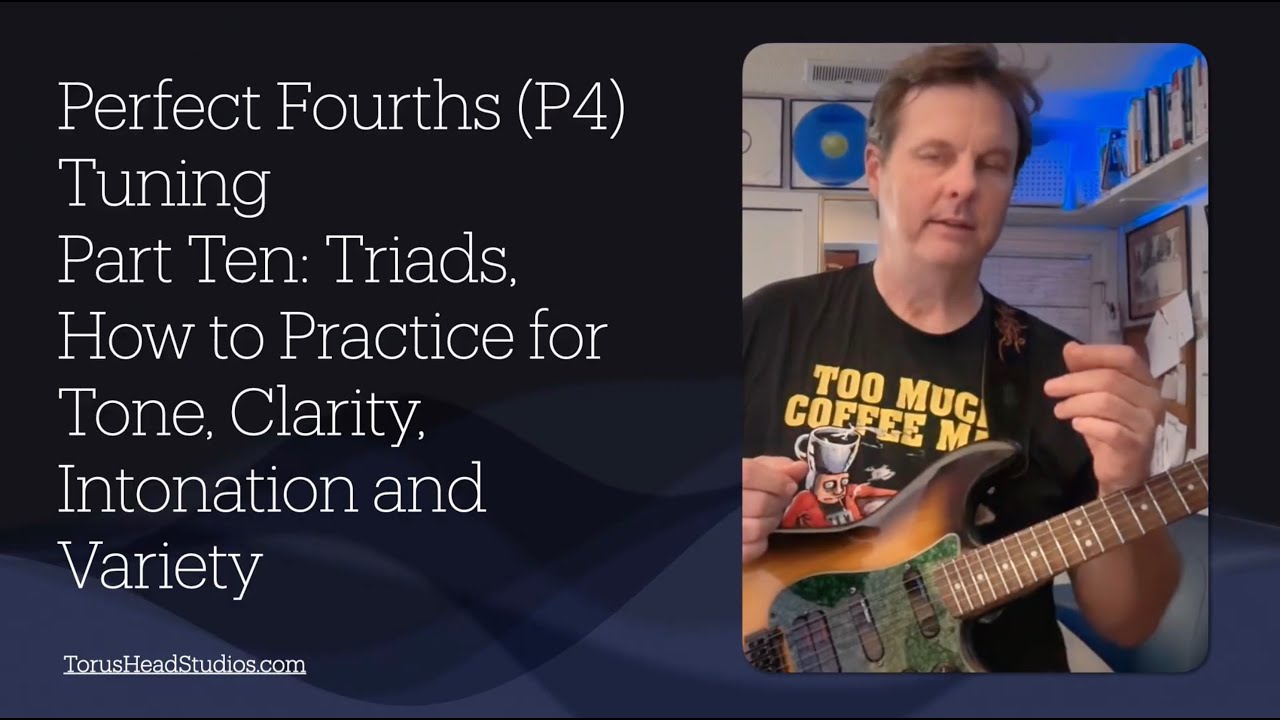
In this video, I continue the Perfect Fourths Tuning series with Part 10: Triads and Practice for Tone, Clarity, Intonation, and Variety.
Rather than focusing on speed or metronome drills, this session explores a slower, more deliberate approach to practice—one that emphasizes sound quality, physical awareness, and musical exploration. Using triads in perfect fourths tuning, I walk through how practicing slowly can dramatically improve tone, clarity between notes, intonation, and expressive variety across the fretboard.
This kind of practice is especially valuable for adult guitarists, players returning to the instrument, or anyone looking to reconnect with guitar as a creative and meditative activity—not just a technical one.
You’ll learn how small adjustments in finger pressure, hand position, picking approach, amp tone, and fretboard position can completely change how a note or chord sounds. Over time, this approach leads to better control, cleaner playing, and greater confidence—especially when improvising or playing in unfamiliar areas of the neck.
📄 PDFs and triad worksheets are linked in the description
📚 I also reference my books on perfect fourths tuning and triads, which I’ll be covering in more detail in upcoming videos
⸻
TABLE OF CONTENTS
0:01 – Introduction: Perfect Fourths Tuning Part 10
0:06 – Triads as a Practice Tool
0:10 – Practice Goals: Tone, Clarity, Intonation, and Variety
0:17 – What Perfect Fourths Tuning Is
0:34 – Tuning the Guitar Down vs Up
1:05 – PDFs and Triad Resources
1:11 – Why Practice as an Adult Guitarist
1:25 – Practice as Meditation and Relaxation
1:40 – Mental Focus and Shutting Off Mental Chatter
2:02 – Practice Beyond Metronome Drills
2:14 – Practicing at a Different Pace
2:58 – Small Daily Practice Sessions Add Up
3:30 – Why This Practice Is About Sound, Not Speed
3:45 – Playing Extremely Slowly for Better Tone
4:02 – Finger Placement and Sustain
4:17 – Learning from Single Notes
4:35 – Giving Yourself Permission to Practice This Way
5:16 – First-Principles Practice and Honest Self-Assessment
5:29 – Adapting Technique After Injury
5:55 – Why Good Tone Comes Before Speed
6:11 – Long-Term Improvement Mindset
6:49 – Slow, Deliberate Triad Practice
7:46 – The Four Core Focus Areas Explained
8:00 – Body Position, Guitar Angle, and Comfort
8:49 – Right-Hand Techniques and Picking Variety
9:08 – Separating Practice from Performance
9:42 – Exploring Sustain and Resonance
9:46 – Defining the Four Core Goals
10:40 – Tone: Single Notes and Noise Control
11:15 – Same Note, Different Positions, Different Sound
12:18 – Amp Tone, Pickups, and Gain Structure
13:23 – Right-Hand Attack, Muting, and Dynamics
14:04 – Clarity: Making All Notes Ring Cleanly
14:54 – Fixing Problem Chords and Weak Positions
15:52 – How Amp Tone Changes Clarity Requirements
16:28 – Note Choice and Voicing Variety
17:36 – Consistent Shapes Across the Neck
17:55 – Intonation: Playing in Tune with Yourself
18:12 – Hearing and Fixing Beating Between Notes
18:39 – Light Touch and Finger Pressure
19:24 – Why Slow Practice Improves Intonation
20:02 – Posture, Setup, and Instrument Factors
21:24 – Adjusting for Different Neck Positions
21:45 – Practicing Triads Up the Neck
22:40 – Tempo, Tone, and Variation Experiments
23:30 – Breaking Out of Familiar Fretboard Zones
24:19 – How Position Changes Sound and Feel
24:35 – Creating Variety Within Triads
25:23 – Exploratory vs Performance Practice
25:35 – Upcoming Videos and Book Overview
26:07 – Closing Thoughts
Повторяем попытку...
Доступные форматы для скачивания:
Скачать видео
-
Информация по загрузке: