Battery EVs are NOT the future!
Автор: Paripakvata by Surya Teja
Загружено: 2021-10-24
Просмотров: 99
Описание:
#telugu #Suryateja #EV #battery #electric #fcev #hydrogen #car #automobile #future #technology #science
This video explains (in TELUGU) why battery electric vehicles may not be the future of mobility in India. If you like the content, please like, share and subscribe to this channel.
Chapters:
00:00 1. Introduction
00:38 2a. Environmental
01:36 2b. Charging time
02:05 2c. Range
02:31 2d. Battery Degradation
03:06 3. What is future?
04:04 4. Why is it not happening?
Video content:
1. Introduction:
Hi everyone.....Electric vehicles are futuristic and there is no doubt about it. Though Electric vehicles rule the world for next 30-40 years, they are not the ultimate solution in far future, particularly in India. If you feel this is wrong or are curious to know the reason, watch this video till the end. What are the problems with battery EVs? What is the possible future? If future is something else, why cannot we see something like that now?, are the points that we are going to discuss in this video.
2. Problems with Battery EVs:
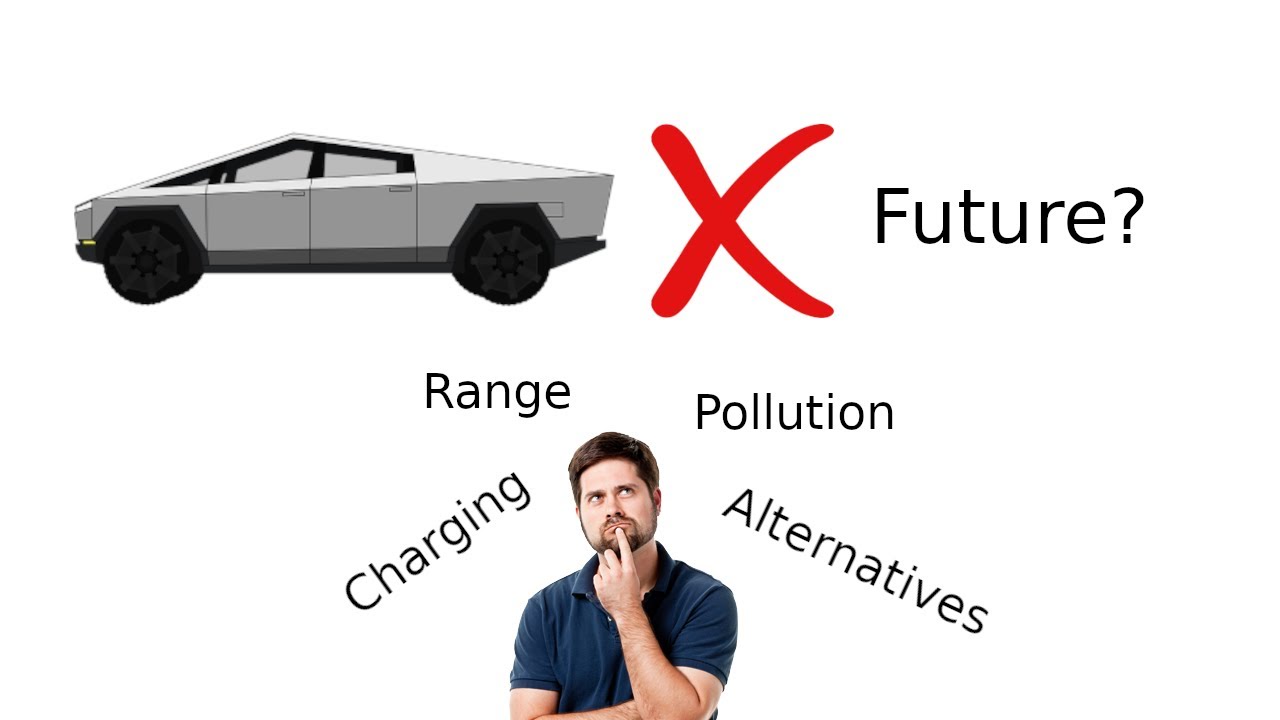
Let's discuss disadvantages of battery EVs despite their large no.of advantages. These disadvantages are broadly 4 categories. Environmental, charging time, range and battery degradation
2a. Environmental:
Battery EVs are not as eco friendly as we think ! Though there won't be pollution from burning fossil fuels, electricity needed to charge it, may innately cause pollution ! And it changes from country to country. For example, coal contributes to 70% of electricity production in India ! And this production of electricity by burning coal, will damage the environment. So, it is in a way, shifting pollution from car engine to thermal power plant. EVs are relatively better, but not completely eco friendly. Even the mining for Lithium (major constitute of battery) also causes pollution. Moreover, recycling of battery is currently not an attractive business,which leads to just 5% batteries getting recycled, in most of the countries. That implies, remaining 95% batteries are damaging the environment. This is changing so slow. Even the reuse of batteries at solar power or generators, it is going to take a lot of time for this changeover.
2b. Charging time:
Petrol just takes 2 minutes for refill, but even a most advanced technology, takes 30 minutes to charge a BEV. To address this issue, idea of battery swapping was tried, but replacing our battery with another, which is in exact condition, is highly impossible. Advancement in technology many never solve this issue of charging time. There needs a lot of infrastructure for many people to use this charging facility.
2c. Range:
It is defined as the distance that you can travel for one single charge. Due to advancement in technology, range has improved a lot, leaving no room for improvement. Because, to increase the range, either battery should be packed so powerful or fill the car with more number of batteries. Both are difficult. Batteries are packed so powerful these days and increasing number of batteries will increase overall weight, thus decreases the performance.
2d. Battery degradation:
All the above discussed problems are general to BEVs. But battery degradation is specifically tough to solve in India. Battery generally degrades for two reasons: Time and Temperature. Even though car is sitting idle, battery keeps on degrading. This is called calendar degradation. High temperature degrades battery so fast. Suppose the battery is considered to be replaced after its range reduces by 20-30%, the life of battery in cold countries is around 10 years, whereas in hot climate, it is 3-4 years ! Then
3. What's the future?
The answer is Hydrogen vehicle/Fuel Cell Electric Vehicle. So many discuss about BEVs but less is spoken about FCEV. If you want a detailed video regarding FCEV or it's comparison with BEVs, please comment. To say it briefly, hydrogen is filled in FCEV just like petrol in ICE. It combines with Oxygen in the air, to produce electricity, car runs on that electricity. Waste is just pure water ! Because it can be filled in 2min just like petrol, it solves the issue of charging time. Since it is more energy dense, it decreases the range anxiety. There won't be a problem like battery degradation. In terms of environment, though electronic waste like lithium is absent, it's only electricity that is used to produce hydrogen and the means of electricity production again decides its impact on the environment.
4. Why it's not happening?
There is not even a single hydrogen filling station for public in India. Since hydrogen is inflammable like petrol, infrastructure is tough to build. There's no country to act as an example, for policy makers, Because other developed countries doesn't have hot climate like ours, Even population is less. Till a risk taking bureaucrat arrives, BEVs are going to be just a bridging technology !
Повторяем попытку...
Доступные форматы для скачивания:
Скачать видео
-
Информация по загрузке: