The Psychology of People Who Rewatch the Same Movies and Shows
Автор: Clear Cut Psychology
Загружено: 2026-03-12
Просмотров: 15
Описание:
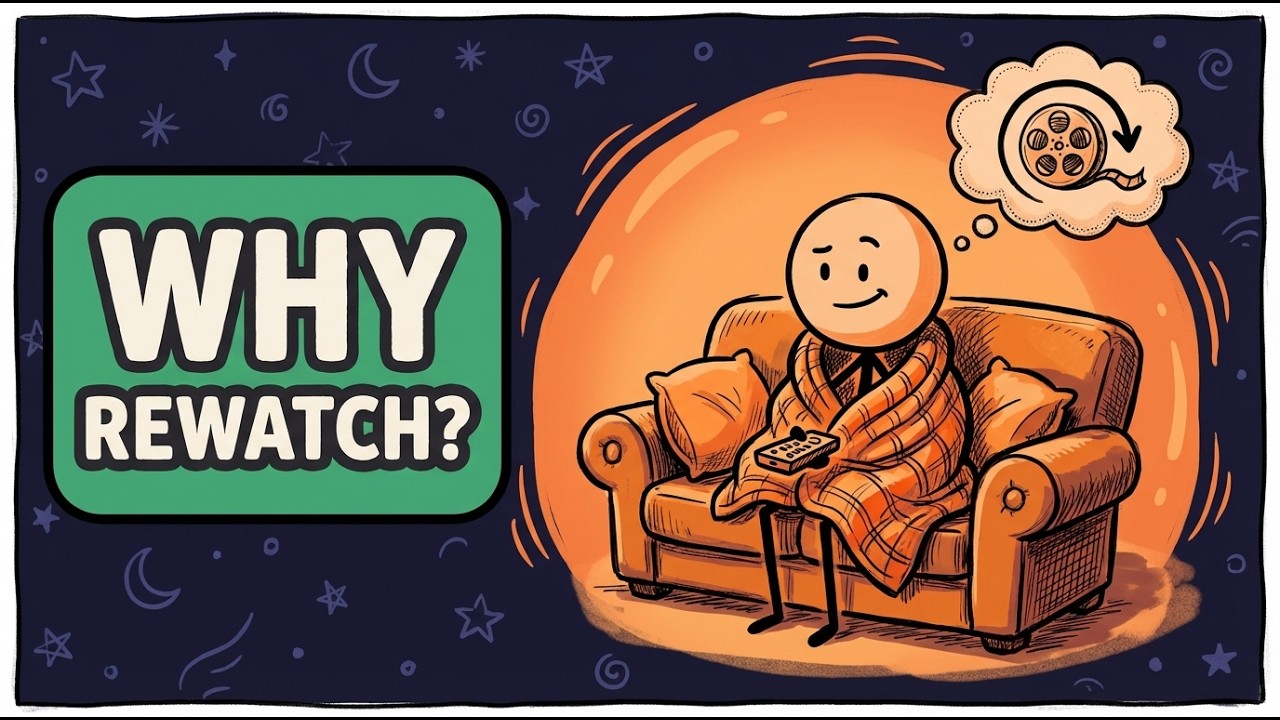
Why does your brain choose to rewatch a show it has already seen — sometimes three, four, five times — instead of starting something new? The obvious answer is comfort. The real answer involves predictive coding, cortisol regulation, and a neurological trade-off that most people never think about.
When you press play on something familiar, your brain does not shut down. It shifts into a completely different operating mode. Instead of spending energy on prediction errors — the constant work of figuring out what happens next — it enters a low-threat processing state where it can regulate stress, consolidate emotional memories, and restore a sense of control. Researchers at the University of Buffalo found that people are significantly more likely to rewatch content after high-stress days. Not because they are lazy. Because their nervous system is choosing the most efficient recovery tool available.
Karl Friston's predictive coding framework explains the mechanism: your brain is a prediction machine. When it already knows what happens next, the cognitive load drops dramatically. The prefrontal cortex relaxes. Cortisol levels decrease. The experience becomes neurochemically closer to meditation than to entertainment.
But there is a line — and this video draws it clearly. Rewatching can be the smartest thing your brain does for self-regulation. It can also become a way to avoid the discomfort of anything unfamiliar. Same couch. Same show. Two completely different mechanisms underneath.
In this video:
Why the brain treats familiar narratives as a stress regulation tool — not escapism, but active recovery
Predictive coding theory — how knowing what comes next changes your brain chemistry in real time
The cortisol connection: research showing that rewatching spikes after stressful days
Nostalgia as a neurological event — what actually fires in the brain when a familiar scene plays
The honest line between healthy self-regulation and avoidance of the new
Why this habit reveals more about your nervous system than your taste in movies
📍 Key research:
Predictive coding framework — Karl Friston
Cortisol and narrative familiarity — University of Buffalo (2012)
Nostalgia as self-regulation — Wildschut et al. (2006)
Repetition and cognitive load — Kahneman, Thinking Fast and Slow
🔗 Related videos:
← Previous: "The Psychology of People Who Love Staying Home"
→ Next: "The Psychology of People Who Don't Post Anything on Social Media"
⏱ Timestamps:
00:00 — The question nobody thinks to ask
01:15 — What your brain is actually doing during a rewatch
03:00 — Predictive coding: when knowing the ending is the point
04:30 — Cortisol and the stressful-day connection
05:45 — Nostalgia is not a feeling — it is a mechanism
06:45 — The line between regulation and avoidance
08:00 — A new frame for an old habit
💬 What is the show or movie you have rewatched the most? Drop it in the comments — curious to see if there is a pattern.
🔔 Subscribe — next video covers what happens when you quit social media entirely. The dopamine story is even stranger.
#psychology #rewatching #neuroscience #brain #nostalgia #predictivecoding #thesilentstickman
Повторяем попытку...
Доступные форматы для скачивания:
Скачать видео
-
Информация по загрузке: