Why Roman Concrete Lasts 2,000 Years While Ours Fails
Автор: Medieval Pathway
Загружено: 2026-03-01
Просмотров: 71
Описание:
🏛️ Why Roman Concrete Lasts 2,000 Years While Modern Concrete Crumbles In 50
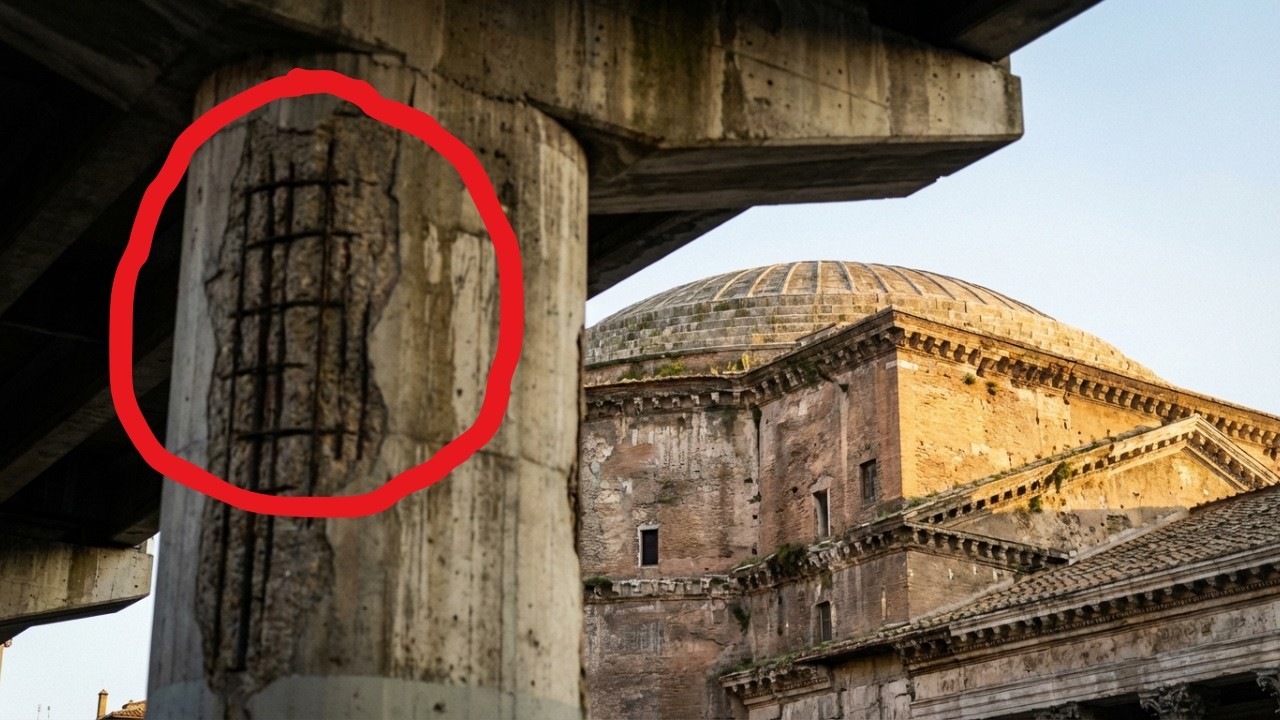
The Pantheon (126 AD): 1,898 years old, unreinforced concrete dome, zero structural repairs. I-35W Bridge Minneapolis (1967): collapsed after 40 years despite steel reinforcement. Roman concrete = volcanic ash (pozzolana) + quicklime + self-healing lime clasts. Modern concrete = Portland cement + rebar + designed for 50-year lifespan. 2023 MIT study revealed hot mixing created distributed repair mechanism. Seawater makes Roman concrete stronger through tobermorite crystal formation. We didn't forget the formula. We chose different economics.
⏱️ TIMESTAMPS:
0:00 - Pantheon vs I-35W Bridge (1,898 Years vs 40 Years)
1:00 - Pozzolana Chemistry (Volcanic Ash vs Portland Cement)
2:15 - Pozzolanic Reaction Mechanism
3:00 - 2023 MIT Study (Hot Mixing Discovery)
4:00 - Lime Clasts Self-Healing (Water + Quicklime = Repair)
5:00 - Seawater Paradox (Tobermorite Crystal Growth)
6:15 - Modern Concrete Degradation in Seawater
7:00 - Engineering Choice (Permanence vs Profit)
🏛️ ROMAN CONCRETE CHEMISTRY:
Pozzolana composition: 45-55% SiO₂, 15-20% Al₂O₃, 8-12% CaO
Pozzolanic reaction: Reactive silica + Ca(OH)₂ → C-S-H gel
Hot mixing temperature: 200-300°C local spikes from quicklime
Lime clast function: Distributed quicklime reserves for self-healing
Crack healing: 0.6mm cracks sealed in 14 days (MIT data)
Tobermorite formula: Ca₅Si₆O₁₆(OH)₂·4H₂O
Strength gain in seawater: 20-30% over 2,000 years (UC Berkeley 2017)
📚 MODERN CONCRETE DATA:
Portland cement: Invented 1824, manufacturing temp 1,450°C
Primary compounds: C₃S (tricalcium silicate), C₂S (dicalcium silicate)
Strength curve: 70% at 7 days, 95% at 28 days, static afterward
Design lifespan: 50-100 years (typical infrastructure)
Marine concrete: 50-75 years with protective measures
I-35W collapse: 2007 after 40 years, 13 fatalities
Failure mode: Chloride attack → rebar corrosion → expansion → cracking
🔬 RESEARCH CITED:
MIT 2023 study: Hot mixing and lime clast mechanism
UC Berkeley + Italian researchers 2017: Tobermorite formation
American Mineralogist publication: Portus Cosanus analysis
Pantheon dome: 43m diameter, unreinforced, 126 AD construction
Sebastos harbor Israel: 25 BC, underwater concrete intact
⚠️ DISCLAIMER: Educational content about materials science and historical construction techniques.
🔔 SUBSCRIBE - Next: Medieval weaponry (peasant weapons defeating armor).
#RomanConcrete #Concrete #CivilEngineering #MaterialsScience #AncientRome #StructuralEngineering #Pantheon #Construction #Engineering #History
Повторяем попытку...
Доступные форматы для скачивания:
Скачать видео
-
Информация по загрузке:





![Почему взрываются батарейки и аккумуляторы? [Veritasium]](https://imager.clipsaver.ru/a3-3R9zwyGY/max.jpg)