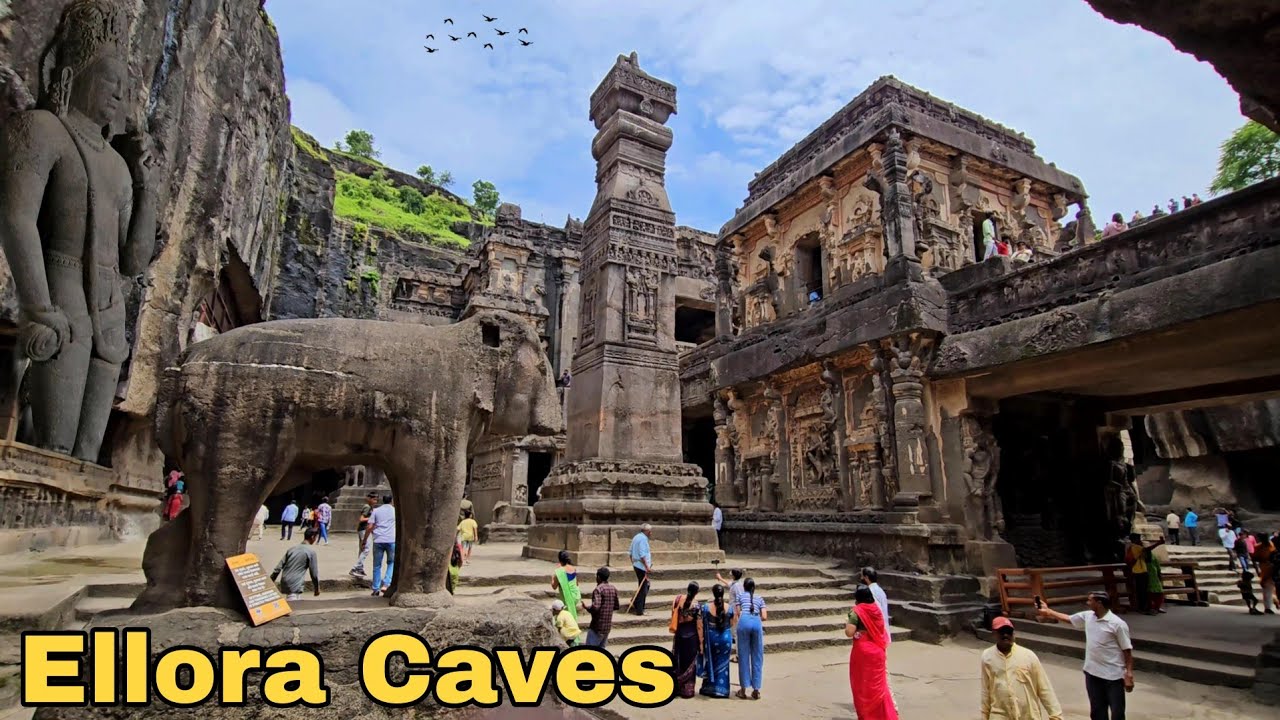
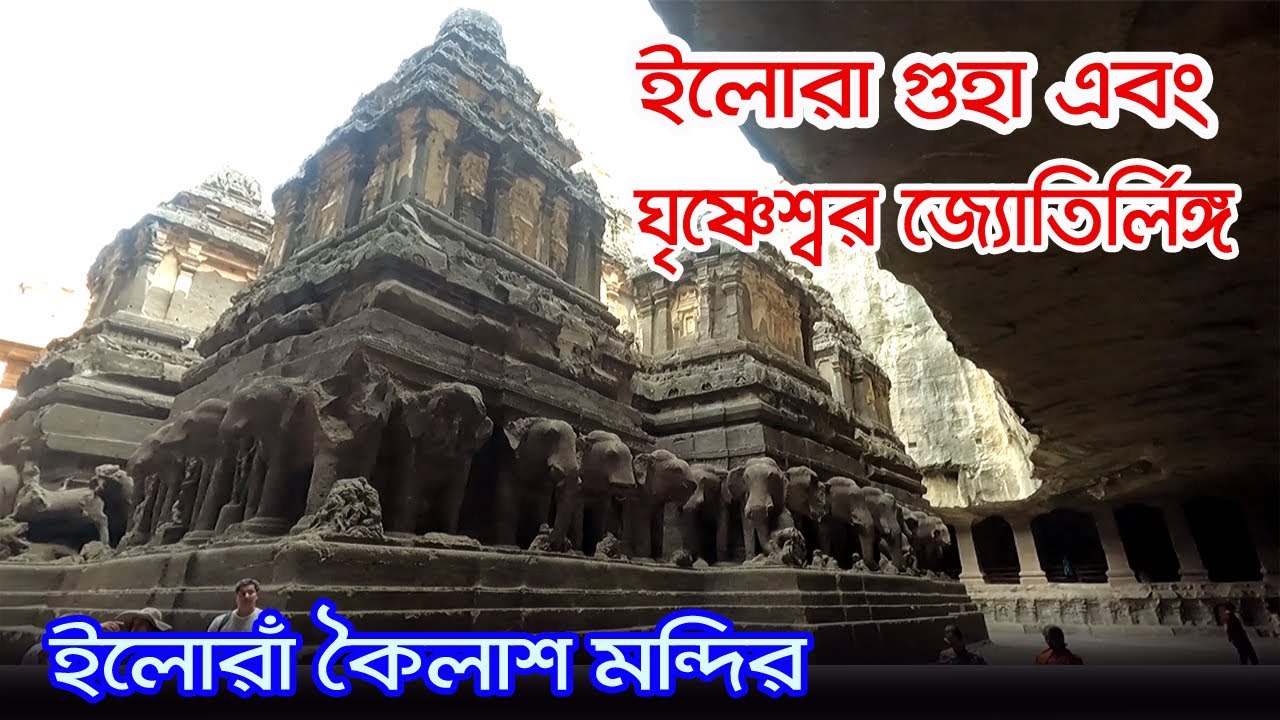
Kailasa Temple Ellora Caves , Aurangabad |UNESCO World Heritage Site
Автор: WORLD TRAVEL WITH ATUL
Загружено: 2025-02-27
Просмотров: 35
Описание: The Kailash (IAST: Kailasa) or Kailashanatha (IAST: Kailāśanātha) is a Hindu temple is the largest of the rock-cut Hindu temples at the Ellora Caves in Chhatrapati Sambhaji Nagar district, Maharashtra of Maharashtra, India. A megalith carved into a cliff face, it is considered one of the most remarkable cave temples in the world because of its size, architecture, and sculptural treatment.[1] It has been called "the climax of the rock-cut phase of Indian architecture".[2] The top of the structure over the sanctuary is 32.6 metres (107 ft) above the level of the court below.[3] Although the rock face slopes downwards from the rear of the temple to the front, archaeologists believe it was sculpted from a single rock . The Kailasa temple (Cave 16) is the largest of the 34 Hindu, Buddhist, and Jain cave temples and monasteries known collectively as the Ellora Caves, ranging for over two kilometres (1.2 mi) along the sloping basalt cliff at the site.[5] Most of the excavation of the temple is generally attributed to the eighth century Rashtrakuta king Krishna I (r. c. 756 – 773), with some elements completed later. The temple architecture shows traces of Pallava and Chalukya styles. The temple contains a number of relief and free-standing sculptures on a grand scale equal to the architecture, though only traces remain of the paintings which originally decorated it. Kailasa (Kaliash) temple lacks a dedicatory inscription, but there is no doubt that it was commissioned by a Rashtrakuta ruler.[7] Its construction is generally attributed to the Rashtrakuta king Krishna I (r. 756–773 CE), based on two epigraphs that link the temple to "Krishnaraja" (IAST Kṛṣṇarāja):[7][8]The Vadodara copper-plate inscription (c. 812–813 CE) of Karkaraja II (a ruler of a Rashtrakuta branch of Gujarat) records the grant of a village in present-day Gujarat. It mentions Krishnaraja as the patron of Kailasanatha, and also mentions a Shiva temple at Elapura (Ellora). It states that the king constructed a temple so wondrous that even the gods and the architect were astonished.[8] Most scholars believe that this is a reference to the Kailasanatha Shiva temple at Ellora.[9]The Kadaba grant of Govinda Prabhutavarsha similarly appears to credit Krishnaraja with the construction of the temple.[7]However, the attribution of the temple to Krishna I is not completely certain because these epigraphs are not physically connected to the caves, and do not date Krishnaraja's reign.[8] Moreover, the land grants issued by Krishna's successors do not contain any references to the Kailasa temple .[9]The Kailasa temple features the use of several distinct architectural and sculptural styles.. According to the Virupaksha temple inscriptions, the Chalukyas brought the Pallava artists to Pattadakal after defeating the Pallavas. Dhavalikar theorizes that after defeating the Chalukyas, Krishna must have been impressed by the Virupaksha Temple located in their territory. As a result, he brought the sculptors and architects of the Virupaksha Temple (including some Pallava artists) to his own territory, and engaged them in the construction of the Kailasa temple at Ellora.[21]If one assumes that the architects of the Virupaksha temple helped construct the Kailasa temple at Ellora, the construction of a massive temple during the reign of a single monarch does not seem impossible. The architects already had a blueprint and a prototype, which must have significantly reduced the effort involved in constructing a new temple. Moreover, quarrying a monolithic temple would have actually involved less effort than transporting large stones to build a new temple of similar size. Assuming that one person can cut around 4 cubic feet of rock every day, Dhavalikar estimated that 250 labourers would have managed to construct the Kailasa temple at Ellora within 5.5 years.[20] The presence of non-Rashtrakuta styles in the temple can be attributed to the involvement of Chalukya and Pallava artists.[22] #kailashtemple #elloracaves #ajantacaves #ellora #aurangabad #maharashtratourism #maharashtra #unescoworldheritage #caves #ajantaellora #india #history #ajanta #ajantaelloracaves #incredibleindia #travelphotography #travel #photography #cave #lusianans #temple #ig #bhfyp #ellyn #jelita #arrafi #moristtermurah #harharmahadev #ums #sambhajinagar #maharastra #mahakal #unnes #jyotirling #ghrishneshwar #maritza #clicks #heritage #ancientindia #mozbuetermurah #nabtikori #kailash #templesofindia #ancient #ramayana #vedas #losttemple #lostinhistory #angkortemples #proudtobebhartiya #samveda #bharatvarsh #rigveda #findtemples #shreemadbhagavadgita #upnishad #dharma #shastra #bharatiyasanskruti #templesofsouthindia
Повторяем попытку...

Доступные форматы для скачивания:
Скачать видео
-
Информация по загрузке:

![Ajanta and Ellora Caves – A marvel of Indian Architecture – [Hindi] – Infinity Stream](https://imager.clipsaver.ru/6SbRU946uF0/max.jpg)
![Храм для горнорабочих? Каср Эль Сагха ▲ [by Senmuth]](https://imager.clipsaver.ru/idIHTABbs9M/max.jpg)