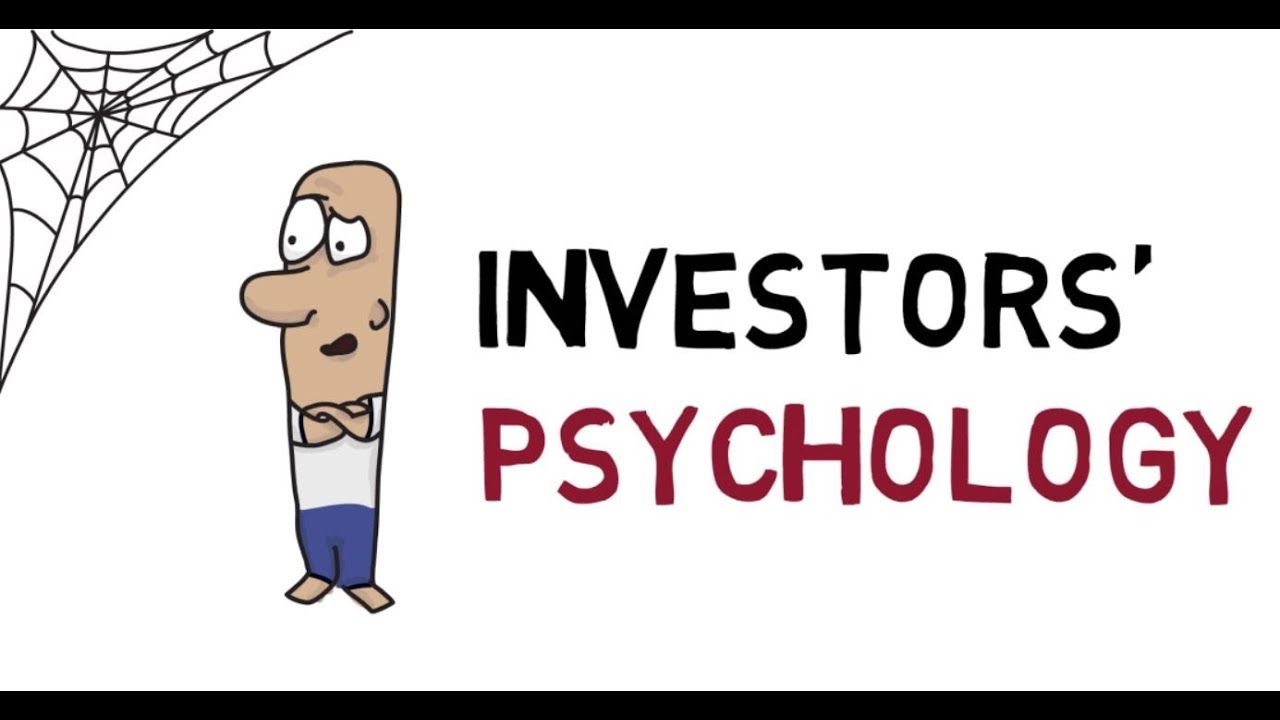
Investors' Psychology Explained
Автор: SAMT AG Switzerland
Загружено: 2018-05-05
Просмотров: 11149
Описание:
Professional Wealth Manager https://en.samt.ag/user-registration
Investor’s Psychology
A plethora of information exists about markets and securities; how the market is doing, which stocks are in trouble, trade wars, Elon Musk! But, in comparison, we don’t pay that much attention to dysfunctional psychology in decision-making that leads investors in the wrong direction.
In this video we look at eight psychological traps that investors should look out for.
1. Over confidence
Over confidence is… why I don’t ask you a few questions first;
Are you a good driver? Compared to other drivers on the road, are you above average, average or below average?
If over confidence is not a stimulus behind your answer, one third of you would answer above average, one third would say average and one third would choose below average.
But overconfidence is usually a stimulus. In a study, when these questions were asked to participants, 82 percent rated themselves as above average drivers. Obviously, many of them were mistaken.
This is the definition of overconfidence; exaggerating one’s ability to perform a certain task. Research shows that overconfident traders trade more frequently than their less confident counterparts. The overconfident lot believes that they are more capable than others of stock-picking, and know the best times to enter and exit a position.
However, Terrence Odean, a professor of finance at the Columbia University, proves in his research that overconfident traders generate lower yields than the market.
2. Anchoring
Anchoring refers to using irrelevant information to evaluate, or to find something unknown. In the context of investing, it means being a slave to your preconceived opinions about an investment, and strengthening your ‘opinion’ by relating it to irrelevant factors. For example, if you like a company, you might think it’s a buy, simply because you like it. So you pick and choose information and news about the company that confirm your bias. So the numbers or the financial reports might be telling a different story but you’re anchored by your opinions. Emotional attachments to securities can damage your financial health.
3. Sunk Cost
A sunk cost is simply a cost that has been incurred. Money spent. So sometimes what happens is that an expense doesn’t sit well with an investor so he keeps trying to recover this cost. In a way he tries to protect his previous decisions, which can prove disastrous for future investments. This happens to those people who have a really hard time accepting that they’ve made a bad decision. Accepting a loss becomes excruciating. The thing is, when there is a big hole in your boat and the water is gushing in instead of bailing, jump the ship.
A related behavior regarding attachment to sunk cost is to seek out opinions that validate your bad decisions. Say, you bought stocks of a really bad company. Objective analysis shows evidence about its failing financial health. But you keep a circle of friends that advise you to stick with the same stocks.
4. The Ostrich affect
It’s similar to what it sounds like, you bury your head in the sand instead of facing danger. It’s also called the blindness trap, where you shut out market realities instead of confronting the losses. What an investor is really doing here is postponing to address the situation. It’s an excuse to remain inactive. Say, you bought the stocks of the company some time ago, but now the company is facing a big scandal. If you avoid reading about the scandal on purpose, you might be the ostrich.
5. Fallacy of Relativity
Your life experiences and your financial situation are unique. What applies to someone else doesn’t mean it applies to you too. It’s a good thing to be aware of what other investors are doing but you need to be watchful. If you see a friend making a small fortune by investing in high-risk investments, it doesn’t mean that you should too. He might have a bigger risk appetite and can afford a big loss, you on the other hand might not be that risk tolerant. Invest in those securities that you can manage, psychologically and financially.
6. Stuck in the past
Sometimes an investor relies too much on the past, to the point where he speculates and tries to predict market movements, acting as if there’s no uncertainty in the market. The only thing certain in the market is uncertainty; crashes, panic selling, bubbles, misconduct, all of these events create uncertainty. If you start believing that you can predict the future because you have studied the past, that’s over confidence or delusional behavior. When enough investors are overconfident it is known as irrational exuberance. When such likeminded investors flock the market, a correction becomes inevitable. If the market has been riding the bull for the past decade, it does not mean that it will stay like that forever.
Повторяем попытку...
Доступные форматы для скачивания:
Скачать видео
-
Информация по загрузке: