दवा ट्रेडमार्क Deceptive Similarity in Indian Pharmaceutical Trademark Law - जीवन और मृत्यु
Автор: Law EN Watch Hindi
Загружено: 2026-01-26
Просмотров: 1
Описание:
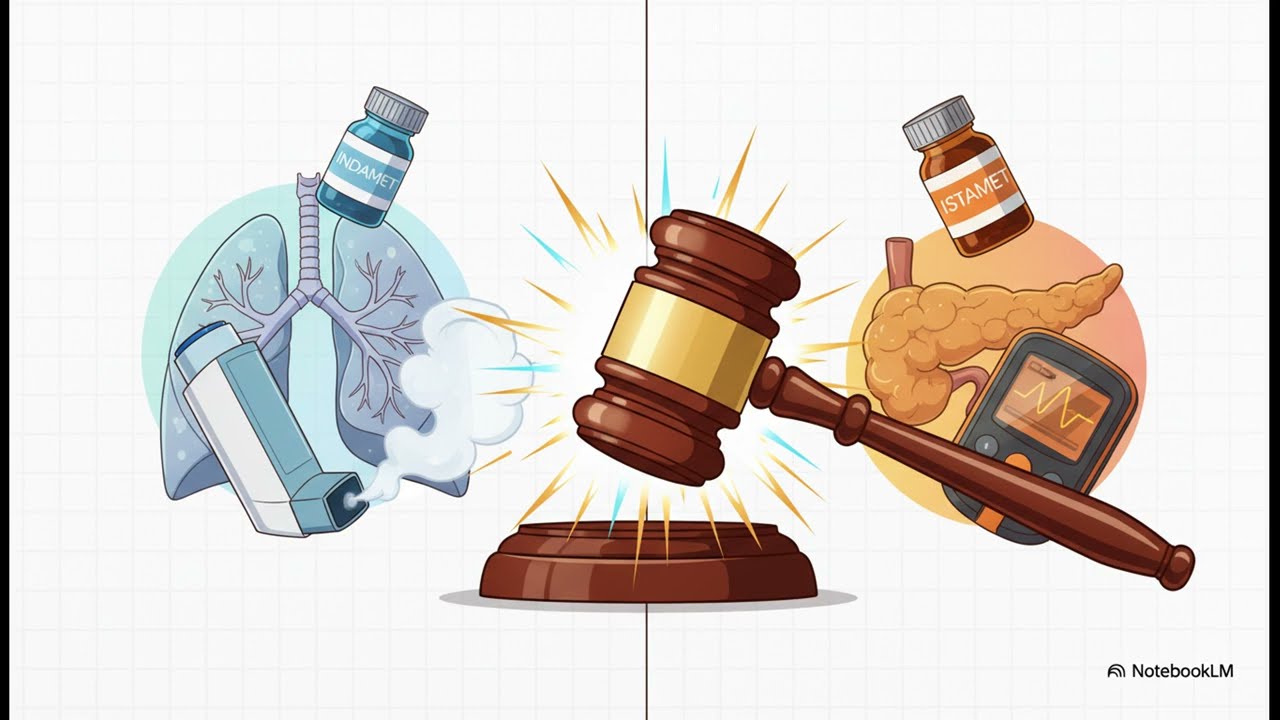
The provided sources examine the legal and medical challenges associated with deceptively similar trademarks in the Indian pharmaceutical industry. They highlight the prevalence of Look-Alike Sound-Alike (LASA) medications, which create significant risks of pharmacy errors, patient harm, and even death. Legal analysis reveals that while the Trade Marks Act of 1999 prohibits confusingly similar marks, a lack of coordination between the Trade Marks Registry and drug regulators often allows dangerous brand overlaps to persist. Courts in India, notably in the landmark Cadila Healthcare case, have increasingly prioritized public safety over commercial interests by applying stricter scrutiny to medicinal branding. Experts suggest that a more unified regulatory framework, combining pharmacological expertise with intellectual property law, is essential to protecting vulnerable consumers. Ultimately, the texts argue that pharmaceutical trademarks serve as vital health identifiers rather than mere tools for market competition.
The legal significance of the Cadila Healthcare Ltd. vs. Cadila Pharmaceutical Ltd. (2001) ruling lies in its establishment of a specialized, more stringent framework for assessing trademark infringement and "passing off" in the pharmaceutical industry. The Supreme Court of India recognized that because confusion regarding medicinal products can have fatal consequences, the legal standards applied to ordinary consumer goods are insufficient for pharmaceuticals.
The following points detail the specific legal impacts of this landmark decision:
1. Adoption of "Exacting Judicial Scrutiny"
The ruling mandated that courts must apply exacting judicial scrutiny when there is a possibility of confusion over marks on medicinal products. This is because the potential harm—ranging from ineffective treatment to death—is far more dire than confusion over ordinary products. This stricter approach is required even if the drugs are sold under prescription or dispensed by trained professionals, as doctors and pharmacists are not infallible.
2. Lesser Quantum of Proof
In a major shift, the Court held that public interest supports a lesser degree of proof of confusing similarity for medicinal products compared to non-medicinal ones. This is encapsulated in the famous judicial observation: "Drugs are poisons, not sweets.". Consequently, even the slightest probability of confusion in medicinal marks requires the use of such marks to be restrained.
3. The "Cadila Factors" for Deceptive Similarity
The Supreme Court formulated a comprehensive, non-exhaustive checklist to be considered when deciding the question of deceptive similarity in a passing off action for pharmaceutical products:
• The nature of the marks: Whether they are word marks, label marks, or composite marks.
• The degree of resemblance: Phonetic, visual, and conceptual similarity.
• The nature of the goods: Their character and performance relative to the rival product.
• The class of purchasers: Their education, intelligence, and the degree of care they are likely to exercise.
• The mode of purchase: How orders are placed (e.g., verbal requests in high-pressure hospital settings).
• Any other surrounding circumstances relevant to the dissimilarity of the marks.
4. Overruling the S.M. Dyechem Precedent
The Cadila ruling significantly corrected Indian trademark jurisprudence by disagreeing with the decision in S.M. Dyechem Ltd. vs. Cadbury (India) Ltd.. The Dyechem case had suggested that dissimilarity in essential features or script was more important than phonetic similarity. The Supreme Court in Cadila held that this was incorrect, affirming that phonetic similarity must be applied strictly, regardless of differences in the way words are written or the peculiarity of the script.
5. Consideration of the Indian Socio-Economic Context
The ruling highlighted that English legal principles regarding trademark dissimilarity cannot be applied in their entirety to India. The Court emphasized that a large percentage of the Indian population is illiterate or semi-literate and may not know English or the specific language of the trademark. Therefore, different words with slight spelling differences might sound phonetically identical to an ordinary consumer, necessitating a broader interpretation of "likelihood of confusion" to prevent medication errors.
6. Regulatory and Policy Impact
The ruling underscored a critical gap in coordination between the Trade Marks Registry and the Central Drugs Standard Control Organization (CDSCO). The Court observed that before granting permission to manufacture a drug under a brand name, authorities should be satisfied that no confusion will occur. This has led to ongoing calls for a unified, interdisciplinary regulatory strategy that combines trademark approval with medication safety measures
Повторяем попытку...
Доступные форматы для скачивания:
Скачать видео
-
Информация по загрузке: