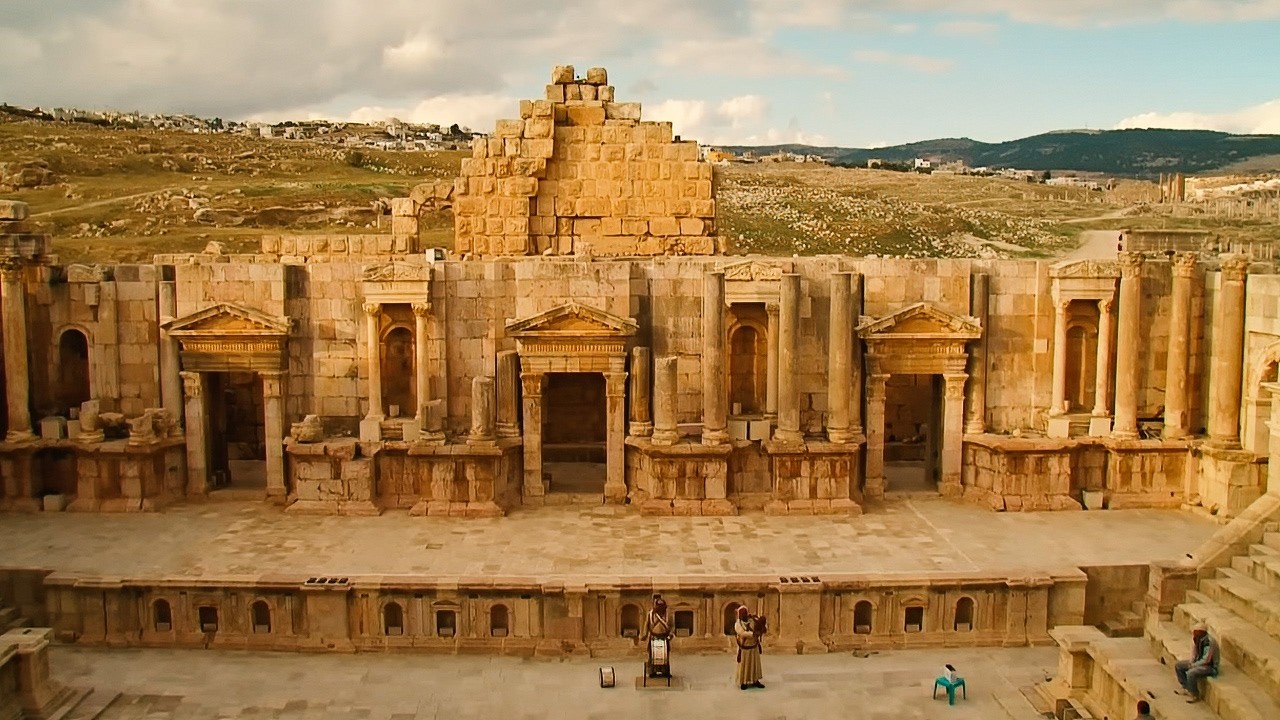
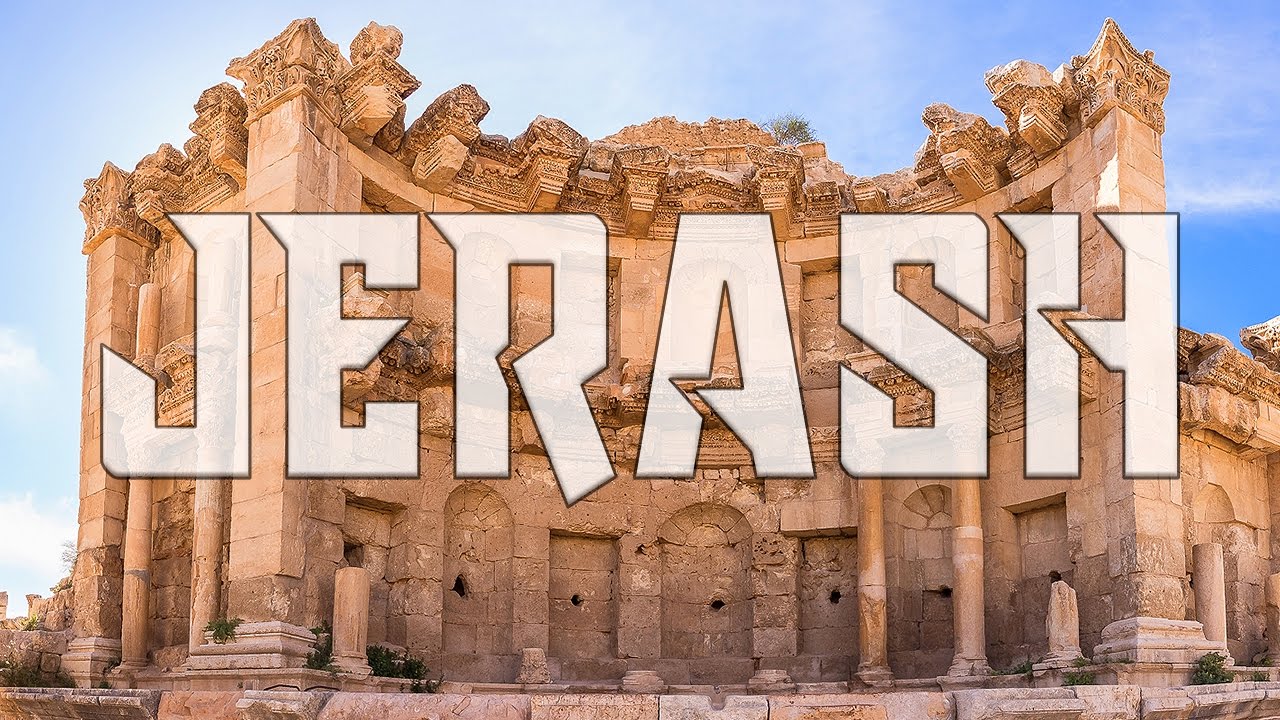
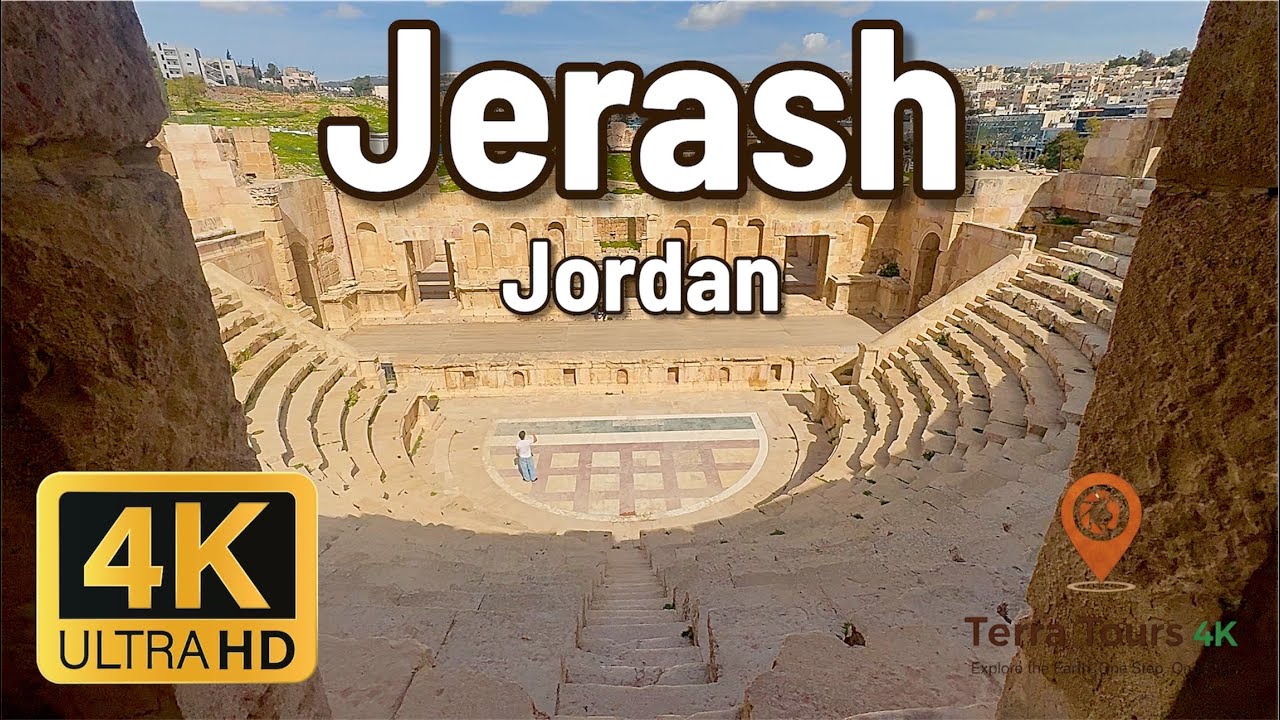
The ruins of Jerash, Jordan, 6 December 2021. جرش ، الأردن | A world-renowned Roman city!
Автор: Страсть к путешествиям I Ad Astra Jean Dar
Загружено: 2022-10-08
Просмотров: 5137
Описание:
Jerash is noted for its fine Roman and Byzantine ruins, which rank among the largest and best preserved in the world.
Watch my other videos from Jordan: • Jordan | Jordania 🇯🇴
Archaeologists have found ruins of settlements dating back to the Neolithic Age. Moreover, in August 2015, an archaeological excavation team from the University of Jordan unearthed two human skulls that date back to the Neolithic period (7500 - 5500 BCE) at a site in Jerash, which forms solid evidence of inhabitance of Jordan in that period especially with the existence of ‘Ain Ghazal Neolithic settlement in Amman. The importance of the discovery lies in the rarity of the skulls, as archaeologists estimate that a maximum of 12 sites across the world contain similar human remains. Evidence of settlements dating to the Bronze Age (3200 - 1200 BCE) have also been found in the region.
Jerash is the site of the ruins of the Greco-Roman city of Gerasa, also referred to as Antioch on the Golden River. Ancient Greek inscriptions from the city support that the city was founded by Alexander the Great and his general Perdiccas, who allegedly settled aged Macedonian soldiers there during the spring of 331 BCE, when he left Egypt and crossed Syria en route to Mesopotamia. However, other sources, namely the city’s former name of Antioch on the Chrysorrhoas, point to a founding by Seleucid King Antioch IV, while still others attribute the founding to Ptolemy II of Egypt.
After the Roman conquest in 63 BCE, Jerash and the land surrounding it were annexed to the Roman province of Syria, and later joined the Decapolis league of cities. The historian Josephus mentions the city as being principally inhabited by Syrians, and also having a small Jewish community. In AD 106, Jerash was absorbed into the Roman province of Arabia, which included the cities of Philadelphia (modern day Amman), Petra and Bostra. The Romans ensured security and peace in this area, which enabled its people to devote their efforts and time to economic development and encouraged civic building activity.
The city finally reached a size of about 800,000 square meters within its walls. Beneath the foundations of a Byzantine church that was built in Jerash in AD 530 there was discovered a mosaic floor with ancient Greek and Hebrew-Aramaic inscriptions. The presence of the Hebrew-Aramaic script has led scholars to think that the place was formerly a synagogue, before being converted into a church. Jerash was invaded by Persian Sassanids in AD 614. Few years later, the Byzantine army was defeated in the battle of the Yarmouk river by the invading Muslim forces and the territories became part of the Umayyad Caliphate.
The city flourished during the Umayyad Caliphate. It had numerous shops and issued coins with the mint named “Jerash” in Arabic. It was also a center for ceramic manufacture; moulded ceramic lamps had Arabic inscriptions that showed the potter’s name and Jerash as the place of manufacture. The large mosque and several churches that continued to be used as places of worship, indicated that during the Umayyad period Jerash had a sizable Muslim community that co-existed with the Christians. In 749 a devastating earthquake destroyed much of Jerash and its surroundings.
In the early 12th century a fortress was built by a garrison stationed in the area by the Zahir ad-Din Toghtekin, atabeg of Damascus. Baldwin II, King of Jerusalem, captured and burned the fortress in 1121–1122. Although the site of the fortification has often been identified with the ruins of the temple of Artemis, there is no evidence of the creation of a fortification in the temple in the 12th century. The location of this fort is probably to be found at the highest point of the city walls, in the north-eastern hills.
Small settlements continued in Jerash during the Mamluk Sultanate, and Ottoman periods. This occurred particularly in the Northwest Quarter and around the Temple of Zeus, where several Middle Islamic/Mamluk domestic structures have now been excavated.
https://www.jeandar.net
Music: Jean Dar - Ad Astra
Album: Rays of Light
https://www.jeandar.com
Повторяем попытку...

Доступные форматы для скачивания:
Скачать видео
-
Информация по загрузке: