Selo moje ispod Romanije (romanijska kajda) – Pale, BiH
Автор: Balkan Polyphony
Загружено: 2026-01-21
Просмотров: 49
Описание:
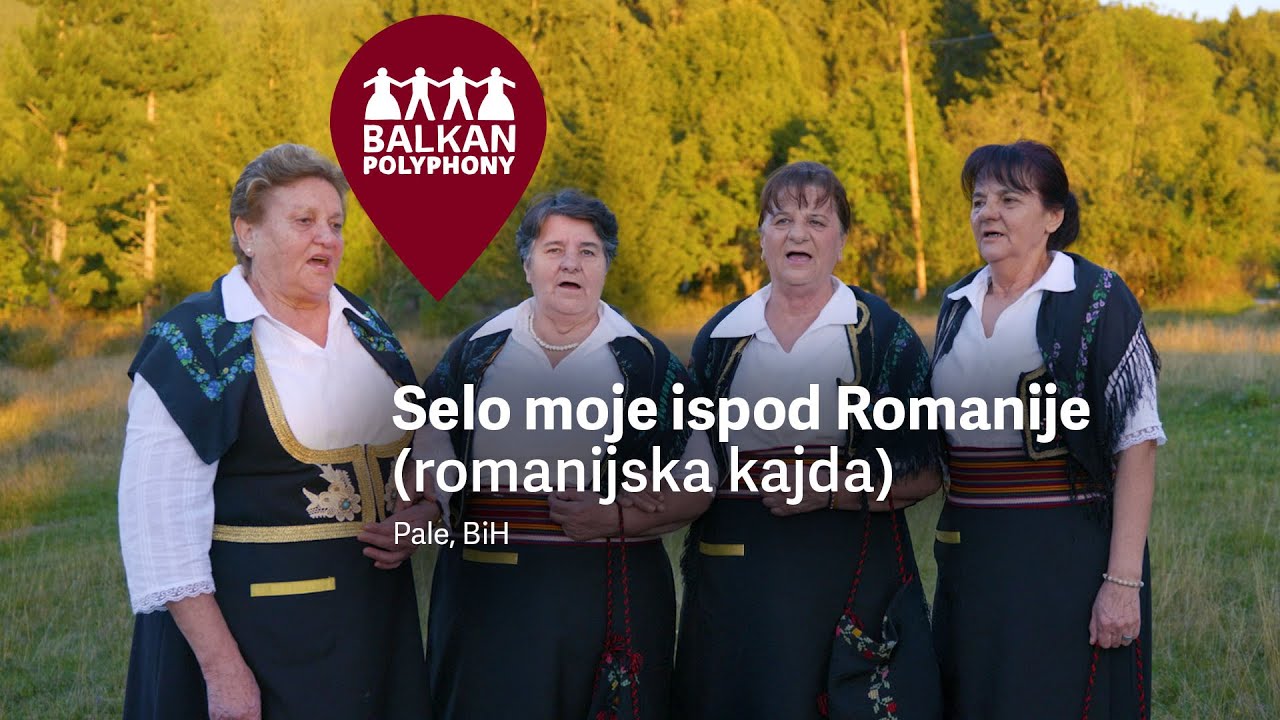
Ženska izvorna grupa KUD-a „Romanijska vrela”
Mira Simanić – Lead Voice (počinje)
Stana Pandurević, Mila Lopatić,
Ilinka Petrović – Second Voice (pratnja)
Lyrics (SR)
Selo moje ispod Romanije
U tebi je živjet' najmilije
Volim pjesmu in veselje svako
To je mene odgojilo, majko
Lyrics (ENG)
My village below Romanija
You are the best place to live
I love songs and all kinds of fun
That's what raised me, mother
Romanija is a historical and cultural region in eastern Bosnia and Herzegovina, stretching around the Romanija mountain range, between Sarajevo and the Drina Valley. Ethnographically, this area is primarily associated with the Serb population, with a strongly preserved pastoral culture, traditional forms of social organization, and a distinct sense of local identity. Musically, Romanija is renowned for its archaic forms of epic singing, performed to the accompaniment of the gusle — a single-stringed string instrument traditionally associated with epic poems about historical and legendary characters and events important to a certain community. Traditional music is raw, slow-rhythmic, and narrative in nature, strongly linked to collective memory and oral tradition. To this day, Romanija folklore plays an important role in local holidays, family gatherings, and festivals, serving as a living testament to the culture(s) of the Balkans.
Romanijska kajda, also known as ‘romanijsko pjevanje’, is a distinctive style of traditional folk singing originating from the Romanija region in eastern Bosnia and Herzegovina, strongly associated with the Serbian mountain culture of that region. The term ‘kajda’ refers to a song in Turkish, and is not so much a specific melody as a method of melodic delivery — a recognizable musical idiom of the region. Musically, romanijska kajda is characterized by a narrow ambitus, a slow tempo, and a distinctive, "drawn-out" melodic phrasing, often with distinct accentuation at the ends of lines. The singing can be monophonic or very simple heterophony, and the intonation can seem crude or "archaic." This style is closely linked to the speech and rhythm of the language, giving it a narrative, almost recitative character. Romanijsko pjevanje is performed both a cappella and in combination with gusle, where it serves as a vehicle for epic lyrics – songs about heroes, battles, honor, family origins, and local history. Unlike the more ornate singing styles from other parts of the Balkans, Romanijsko kajda is sparse, serious, and intensely emotional, well-reflecting the harsh realities of mountain life.
—
About us – Balkan Polyphony is a field research project that collects traditional music from the Balkan area. We are not interested in any ideologies, we don’t take sides in any historical conflicts. What interests us is traditional culture and its musical intricacies.
—
Our Partners: National Museum Zadar, Ethnological Department; CreArt; Academy of Arts, University of Banja Luka
Повторяем попытку...
Доступные форматы для скачивания:
Скачать видео
-
Информация по загрузке: