Charles Ives - Sonata for Violin & Piano, No. 3
Автор: pelodelperro
Загружено: 2014-03-01
Просмотров: 58739
Описание:
Sonata, for violin & piano No. 3, S. 62 (K. 2C6), (1913-14)
I. Adagio
II. Allegro [12:04]
III. Adagio [15:58]
Timothy Fain, violin
Jeremy Denk, piano
Between about 1902 and 1916, Charles Ives, in his mid-thirties and early forties, at the peak of his composing career, completed four sonatas for violin and piano. More than any other similar cluster of his compositions in a single genre, these sonatas all seem to be citizens of the same musical world. Each has three movements; each includes one or more movements in "cumulative" musical form; each is tinged with the music of American Protestant hymnody and ends with a finale based on a hymn-tune; and all are comparatively "easy" pieces (by Ives's standards).
Nevertheless, each sonata has its own characteristics. Ives accepted the traditional fast-slow-fast pattern of movements in Sonatas 1 and 4, but Sonatas 2 and 3 are slow-fast-slow, a non-traditional, Ivesian pattern first tried out in his Third Symphony. Sonatas 1 and 3 are basically abstract, with no specific extra-musical movement titles. Sonata 2, however, has such titles ("Autumn," "In the Barn," and "The Revival"), and Sonata 4 is subtitled "Children's Day at the Camp Meeting."
A word about the "cumulative form" that crops up in so many movements of these sonatas (the first and last movements of Sonatas 1 and 2 and all the movements of Sonatas 3 and 4). The term was introduced by the Ives scholar J. Peter Burkholder, in his magisterial study All Made of Tunes: Charles Ives and The Uses of Musical Borrowing (1995). Such pieces begin with subtle suggestions and developments of musical fragments that hint at a pre-existent melody, then gradually work toward a culmination in which the "borrowed" melody is revealed in its simple entirety, usually with climactic effect. Essentially, Ives invented this musical form, which is the one he favored in his maturity.
Ives offered characteristically picturesque comments about three of the sonatas. Of the Third Sonata: "An attempt to suggest the feeling and fervor - a fervor that was often more vociferous than religious - with which the hymns and revival tunes were sung at the camp meetings held extensively in New England in the '70s and '80s. The tunes used or suggested are Beulah Land, There'll Be No More Sorrow, and Every Hour I Need Thee. The first movement is a kind of magnified hymn of four different stanzas, all ending with the same refrain. The second movement may represent a meeting where the feet and body, as well as the voice, add to the excitement. The last movement is an experiment: the free fantasia is first; the working-out develops into the themes, rather than from them; the coda consists of the themes for the first time in their entirety and in conjunction. The tonality throughout is supposed to take care of itself."
By now, their technical and expressive challenges welcomed by performers (and many listeners), Ives's violin sonatas are considered among the most substantial contributions to the violin literature by an American composer. That was hardly the case at first. In 1914, before completing his Third Sonata, Ives invited Franz Milcke, whom he described in his Memos of 1931-32 as a "prima donna solo violinist from Germany who has given concerts in Carnegie Hall," to try over the First and Second Sonatas: "The 'Professor' started to play the first movement of the First Sonata. He didn't even get through the first page. He was all bothered with the rhythms and the notes, and got mad. He said "This cannot be played. It is awful. It is not music, it makes no sense." He couldn't get it even after I'd played it over for him several times and said, "When you get awfully indigestible food in your stomach that distresses you, you can get rid of it, but I cannot get those horrible sounds out of my ears." After he went, I had a kind of feeling which I've had off and on. Are my ears on wrong? No one else seems to hear it the same way."
Not until decades later, essentially only after World War II, years after Ives had died, was it recognized that Ives's ears were, in fact, on just right, only far ahead of his contemporaries'. --H. Wiley Hitchcock
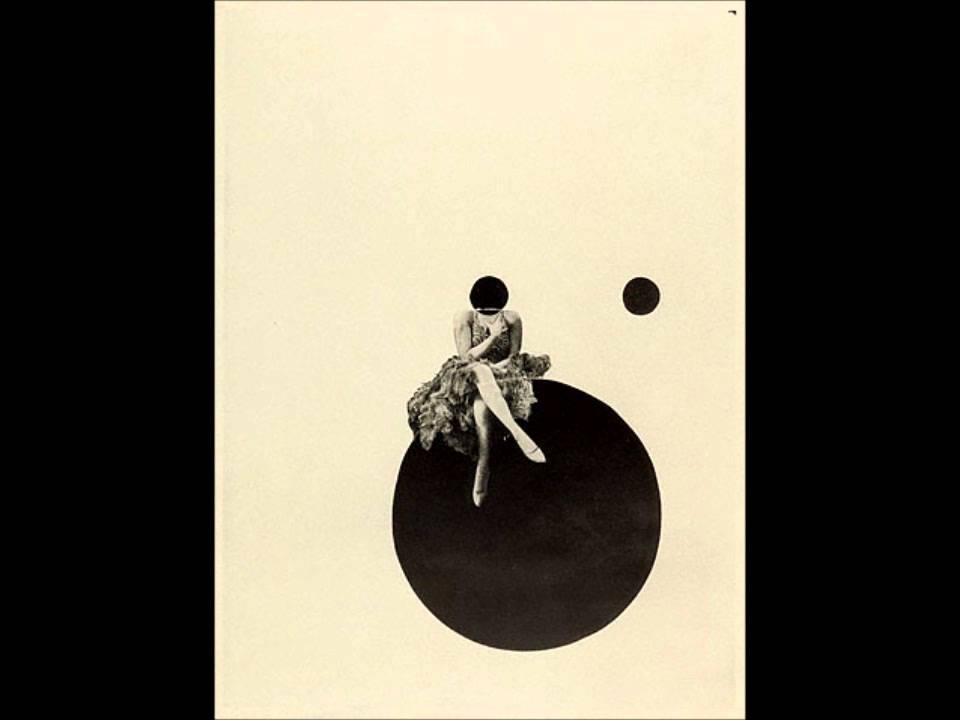
Art by László Moholy-Nagy
Повторяем попытку...
Доступные форматы для скачивания:
Скачать видео
-
Информация по загрузке: