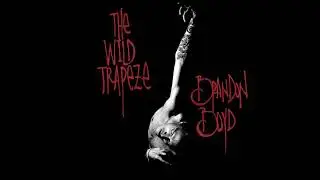
Brandon Boyd - Dance While the Devil Sleeps (Dynamic Edit)
Автор: Dynamic Editor
Загружено: 2022-09-05
Просмотров: 119
Описание:
This is what I like to call a ‘dynamic edit’ of “Dance While the Devil Sleeps” by Brandon Boyd! I probably don’t need to tell you that The Wild Trapeze is compressed, but dang, was I surprised just how compressed it was, with nearly every moment sounding intensely claustrophobic and hard to approach. In this, I attempt to undo that compression and resulting distortion, making the music more dynamic, and hopefully also more listenable as a result!
For those not in the know, the Loudness War is a phenomenon beginning in the mid-90s onward, in which music was mastered louder and louder, with the underlying reasoning being that louder music sounds better, and thus, should sell better. As with any medium, however, there is a peak loudness a signal can reach, so dynamic range compression (not to be confused with data compression, which concerns MP3s and such; dynamic range compression makes the louder parts of the signal quieter while keeping the quiet parts the same loudness) and sometimes even clipping (attempting to make a signal louder than maximum loudness) were used to make music as loud as possible.
The issue with this is that overuse of dynamic range compression and clipping can make music fatiguing to listen to, and sometimes even audibly distorted. Additionally, clipping, poor compressors, or overuse of compressors can result in artifacts such as hiss or crackle being audible atop the signal. For *The Wild Trapeze*, however, I do not believe that mastering was the main source of this album’s loudness; it’s likely the mixing from the album’s producer, Dave Fridmann.
Dave Fridmann, the producer and mixing engineer of this project, is rather known for using a heavy amount of dynamic range compression on his mixes before sending them off to mastering. Some other particularly compressed Fridmann works include Baroness’s Gold & Grey*, Interpol’s *Marauder*, and Sleater-Kinney’s *The Woods*. Unlike any of those records, however, the instrumentation of *The Wild Trapeze doesn’t complement the heavy abrasive compressed sound of the record.
I have seen an overdriven style used for more acoustic albums, such as Neutral Milk Hotel’s In the Aeroplane Over the Sea and The Microphones’ The Glow Pt. 2 (neither of which had involvement from Fridmann, to be clear), but those two albums at least had a sense of nuance in using it. The compression on The Wild Trapeze*, meanwhile, is akin to attempting to throw hammers at a nail from a distance—so pointlessly wild that it is bound to destroy something in the process. From the acoustic guitars sounding completely blown-out on “Runaway Train” to the black wall of distortion covering “Last Night a Passenger”, the compression on *The Wild Trapeze essentially supercedes discussion of the music itself.
I attempted to undo the incredibly heavy compression on these songs with a program called “Perfect Declipper”, which can not only affect clipping, but mastering compression as well. I believe I was able to make the album sound a lot less distorted, such as on “Runaway Train” and “Last Night a Passenger”! The program also makes the music more dynamic, and I was able to bring the dynamic range of the album from 4 to 12, and hopefully all that makes the music more listenable as a result!
It’s important to note that the dynamics are not being restored with the “Perfect Declipper” program that I use, but rather, they are being approximated. While one may not be able to “declip” an album as one would be unable to “unbake a cake”, I find the results here to be a convincible attempt at doing so. In the most extreme examples have I heard the program produce odd artifacts that would appear unintended in the album’s mix, and this may be one of those, just because of how compressed the album was before I edited it.
I also want to make clear that dynamic range compression is not an inherently bad thing. It can tighten up performances, add grit, and help remove dynamic outliers that would take you out of the mix. Additionally, mastering engineers are often underneath the implicit and explicit pressures of artists and record labels to master albums loudly, so the results of mastering may not necessarily reflect a mastering engineer’s intentions for how they wanted an album to sound.
I produce many more dynamic edits on this channel as well as further descriptions in posts over on Reddit! You can look at this for a full list of the albums I’ve done: https://docs.google.com/document/d/19...
If you like my work, consider donating to me on Ko-fi! I prioritize suggestions for $15, but any amount donated is appreciated! https://ko-fi.com/dynamiceditor
Повторяем попытку...

Доступные форматы для скачивания:
Скачать видео
-
Информация по загрузке: