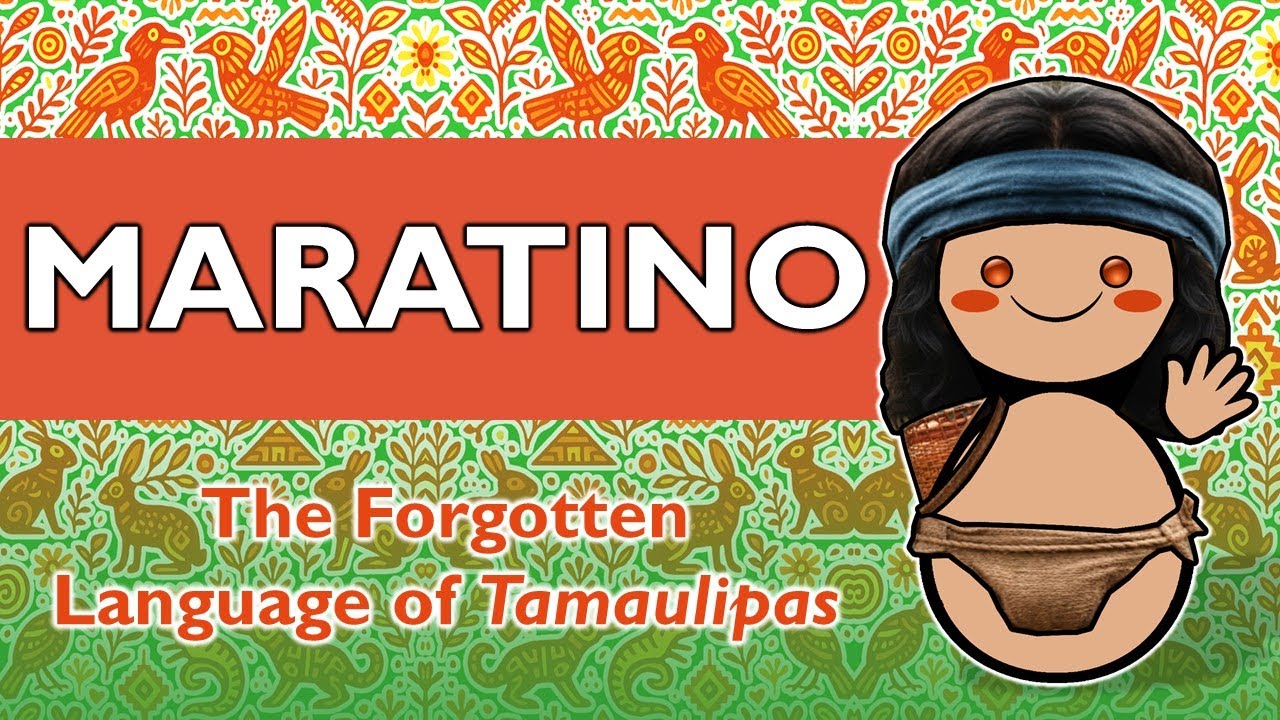
Maratino: The Forgotten Language of Tamaulipas
Автор: ILoveLanguages!
Загружено: 2025-10-20
Просмотров: 2737
Описание:
Maratino: The Forgotten Language of Tamaulipas
I love languages, Maratino language, Tamaulipeco language, Sierra de Tamaulipas languages, Maratines people, Mariguanes tribe, Kwini people, extinct Mesoamerican languages, unclassified languages, Uto-Aztecan hypothesis, Taracahítan branch, Morris Swadesh Maratino, Lyle Campbell languages, colonial Mexico indigenous peoples, Tamaulipas indigenous history, Maratino culture, , forgotten languages of Mexico, linguistic isolates, Mexican indigenous heritage.
CHAPTERS:
Introduction: 0:00 - 2:44
Vocabulary: 2:45 - 3:27
Sample Text: 3:28 - 4:18
Welcome to my channel! This is Andy from I love languages. Let's learn different languages/dialects together.
Special Thanks to Michael García :)
Hello! My name is Andy. How are you?
Let's talk about the Maratino language.
Maratino, also known as Tamaulipeco, was an indigenous language spoken in the southern part of central Tamaulipas, particularly around the Sierra de Tamaulipas. It was used by the Maratines and the Mariguanes, two closely related peoples who shared strong political and cultural ties, suggesting the existence of dialectal variations within a single linguistic continuum. Despite its historical importance, documentation of the language is very limited, mostly from the late 18th century, which has hindered its classification within Mesoamerican language families.
Morris Swadesh proposed a possible link to the Uto-Aztecan languages, particularly the Taracahítan branch, based on tentative lexical and morphological parallels such as the use of pronominal prefixes, postpositions, and an article associated with nouns. However, the lack of sufficient structural data led scholars like Lyle Campbell to conclude that the hypothesis cannot be confirmed, leaving Maratino classified as an isolated or unclassified language.
The Maratines, also referred to as “Martínez” in some 18th-century colonial sources, were a sedentary indigenous group from the Sierra de Tamaulipas. According to accounts by López de la Cámara Alta and friar Vicente Santa María, they lived in valleys near the sources of the present-day Tigre River, in the area where the Villa de la Divina Pastora de las Presas del Rey (today Aldama) was later founded. Their presence was also noted in a small mountain range extending toward the port of Soto la Marina, which was named after them.
The Maratines were described as a numerous, peaceful, and agricultural people, possibly related to the Aretines and closely connected to the Mariguanes. They lived in permanent houses, practiced pottery, and cultivated staple crops such as maize, beans, chili peppers, squash, and sweet potatoes. These activities reflect a stable and organized way of life, in contrast with other more nomadic groups of the region.
The term Maratino comes from the Spanish designation for the Maratines, which itself derives from the surname Martínez. This name was likely adopted by Christianized indigenous leaders, following the common practice of taking the godfather’s surname. In their own language, however, this people called themselves kwini, a word that translates as “boys.”
This video is created for educational, language awareness, and language preservation purposes. It aims to provide valuable insights and knowledge to viewers, enhancing their understanding and appreciation of different languages and their unique characteristics. By raising awareness about linguistic diversity, the video seeks to foster a greater respect and recognition for various languages, particularly those that are endangered or underrepresented. Additionally, it contributes to the preservation of languages by documenting and sharing linguistic knowledge, thus ensuring that these languages and their cultural heritage are not lost to future generations.
Please feel free to subscribe to see more of this.
I hope you have a great day! Stay happy!
Please support me on Patreon!
https://www.patreon.com/user?u=16809442.
Please support me on Ko-fi
https://ko-fi.com/otipeps0124
Follow me on Instagram. See you there! ✨✨✨
@ itsmeandy24
https://www.instagram.com/itsmeandy24...
If you are interested to see your native language/dialect featured here.
Submit your recordings to [email protected].
Looking forward to hearing from you!
Повторяем попытку...
Доступные форматы для скачивания:
Скачать видео
-
Информация по загрузке: