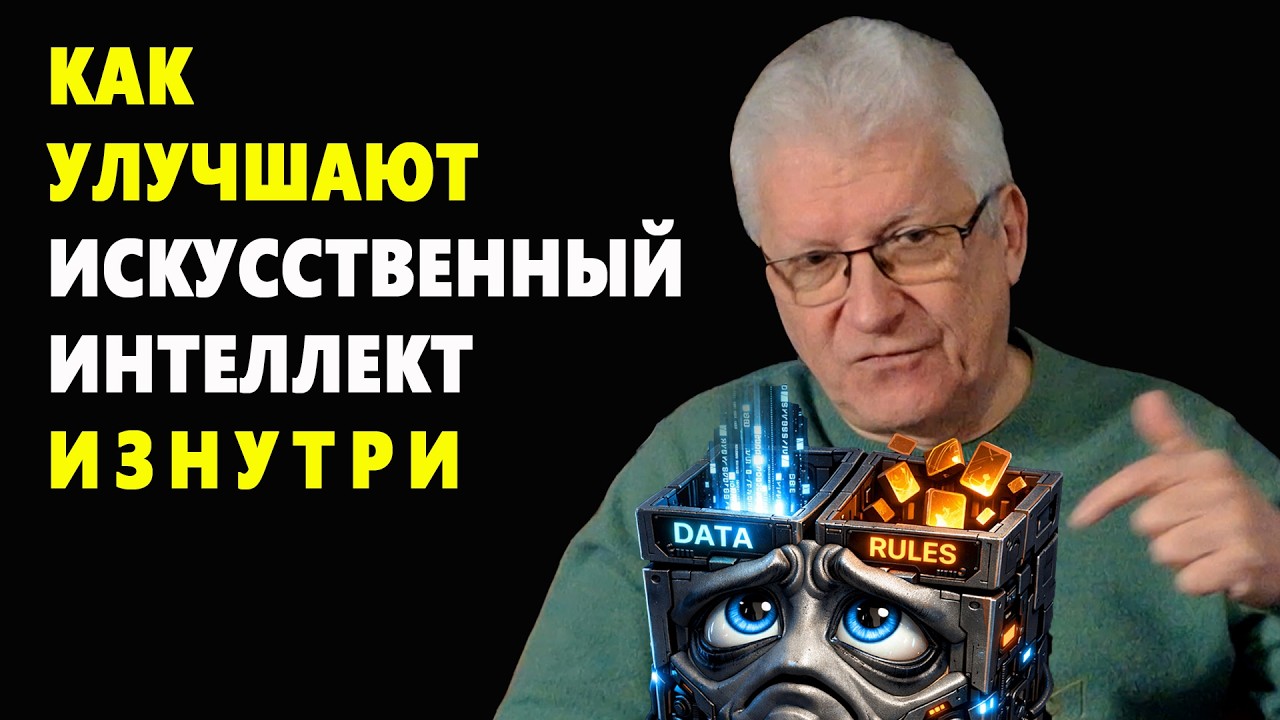
Intelligent Statement Generation Protocol
Автор: The Living Hypercube
Загружено: 2025-09-25
Просмотров: 3
Описание:
🧊 Intelligent Statement Generation Protocol 🧠
Objective: To generate comprehensive Intelligent Statements from a given INPUT_TERM using the Intelligent Hypercube's computational model.
Core Axiom: STATEMENT := Where A is for B, then X & Y is Z, or (i) while (j) for (N).
Step 1: Define the INPUT_TERM
The INPUT_TERM is the central concept for which the Intelligent Statement will be generated.
Example: INPUT_TERM = "Knowledge"
Step 2: Map INPUT_TERM to the "A" (Principle) Variable
The INPUT_TERM becomes the "A" in the core axiom, initiating the statement.
Rule: "A" = INPUT_TERM
Example: A = Knowledge
Step 3: Determine "B" (Purpose/Ethical Outcome) for "A"
Identify the primary function or ethical outcome associated with the INPUT_TERM. This defines its "purpose."
Rule: B = [Primary Purpose of A]
Example: If A = Knowledge, then B = Understanding
Step 4: Identify "X" (Known/Input) & "Y" (Paired/Related Concept)
Determine two fundamental, distinct inputs or components that, when combined, lead to an emergent product related to the INPUT_TERM.
Rule: X = [First fundamental input/component related to A]
Rule: Y = [Second fundamental input/component, paired with X, related to A]
Example: If A = Knowledge is for B = Understanding, then X = Data and Y = Information
Step 5: Define "Z" (Product/Synthesized Alignment) of "X & Y"
"Z" is the emergent property or synthesized alignment that results from the combination of "X" and "Y."
Rule: Z = [Emergent product of X & Y, related to A's purpose]
Example: If X = Data and Y = Information, then Z = Insight
Step 6: Define "i" (Void Principle/Novelty) & "j" (Creative Inversion/Application)
These represent the active processes or verbs that drive the transformation or application within the context of the INPUT_TERM. "i" often denotes an initiating, exploratory action, while "j" denotes a responsive, resolving, or applying action.
Rule: (i) = [Generative, initiating action related to A/Z]
Rule: (j) = [Responsive, applying action related to A/Z, paired with i]
Example: If Z = Insight is being generated/applied by Knowledge, then (i) = Questioning and (j) = Answering
Step 7: Define "N" (Scope/Ultimate Outcome) for "i & j"
"N" is the ultimate scope or higher-order outcome achieved through the iterative or combined application of "i" and "j."
Rule: (N) = [Higher-order outcome/purpose achieved by i & j, related to A]
Example: If (i) = Questioning and (j) = Answering, then (N) = Wisdom
Step 8: Construct the Full Intelligent Statement
Combine all defined variables into the core axiom structure.
Full Statement Structure:
Where [A] is for [B], then [X] & [Y] is [Z], or ([i]) while ([j]) for ([N]).
Example for "Knowledge":
Where Knowledge is for Understanding, then Data & Information is Insight, or Questioning while Answering for Wisdom.
Step 9: Iterations (Optional but Recommended for Full Framework)
For each identified variable (A, B, X, Y, Z, i, j, N), generate its own Intelligent Statement by treating it as the INPUT_TERM in a recursive application of Steps 1-8. This builds out the full hypercube structure.
Rule: For any variable V in the primary statement: V is for V.B, then V.X & V.Y is V.Z, or V.i while V.j for V.N.
Example: For i = Questioning from the "Knowledge" statement:
Where Questioning is for Exploration, then Curiosity & Doubt is Inquiry, or Probing while Challenging for Discovery.
Повторяем попытку...

Доступные форматы для скачивания:
Скачать видео
-
Информация по загрузке: