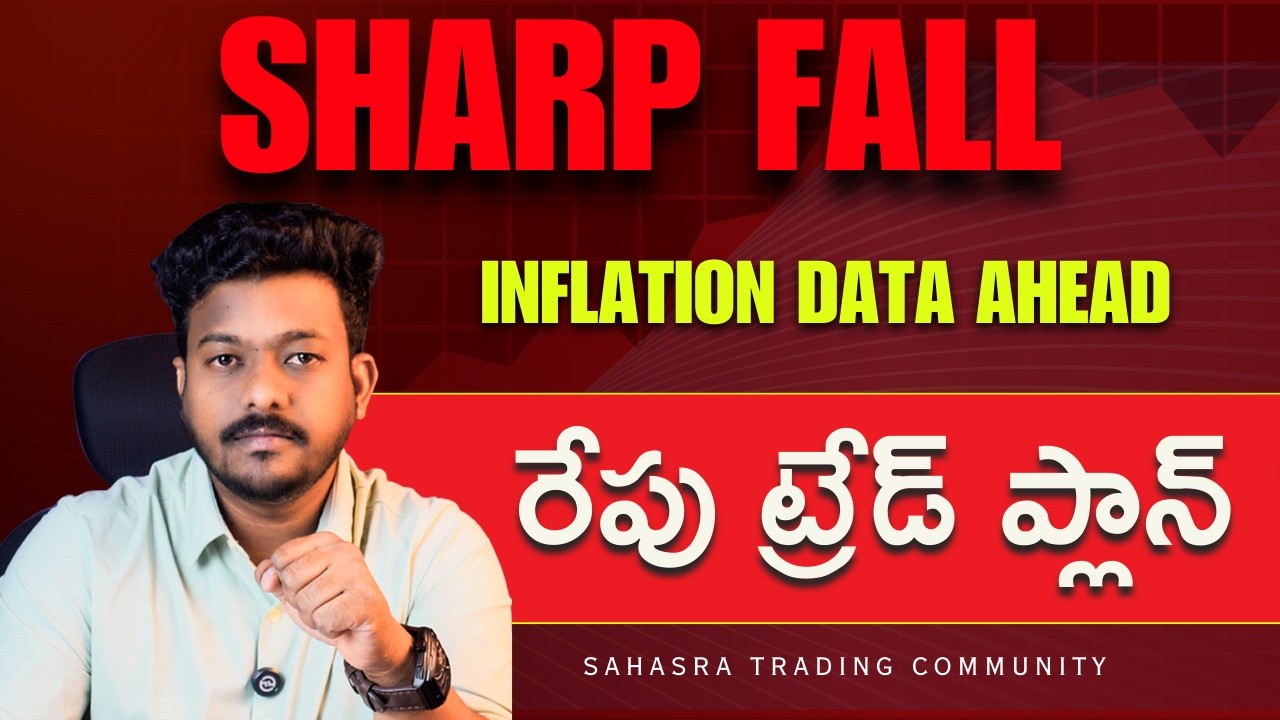
Why Indian Stock Market Crashed Today? Iran War Impact | Nifty Big Fall Explained
Автор: Sahasra - A Trading Community
Загружено: 2026-03-11
Просмотров: 7983
Описание:
Click below link to join in our Telegram group
https://t.me/+38Z2N-9QqiQyNGI9
The Indian stock market witnessed a sharp sell-off today, with both Nifty 50 and Sensex closing significantly lower, creating panic among retail traders and investors. Nifty fell nearly 400 points, while Sensex declined more than 1300 points, making this one of the biggest single-day corrections in recent sessions. In today’s video, we will do a complete breakdown of the market fall, the real reasons behind the decline, which sectors were impacted the most, and what traders should expect in the next trading session.
The biggest factor behind today’s market weakness was the rising geopolitical tensions in the Middle East. The ongoing conflict involving Iran and increasing military activities in the region have created uncertainty in global financial markets. Whenever geopolitical tensions escalate, global investors usually shift their money from risky assets like equities into safer assets such as gold, US bonds, and cash. This global risk-off sentiment led to selling pressure across most equity markets, including India.
Another major reason for the market fall was the sharp movement in crude oil prices. Oil prices surged again due to fears that the conflict could disrupt supply routes, especially near the Strait of Hormuz, which is one of the most important global oil shipping routes. Nearly 20% of the world’s oil supply passes through this region, so any disruption immediately impacts global energy markets. Since India imports a large percentage of its crude oil, rising oil prices increase the country’s import bill, inflation risk, and fiscal pressure. This is why whenever crude oil rises sharply, Indian equities tend to react negatively.
The banking and financial sector played a major role in dragging the market lower. Banking stocks carry heavy weightage in the indices, and today several large private banks witnessed strong selling pressure. This caused Bank Nifty to fall more sharply than the broader market. When banking stocks fall, they usually pull down the entire index because they are the backbone of the market’s weighting structure.
Apart from banks, sectors such as Auto, IT, Realty, and Capital Goods also witnessed significant selling pressure. Auto stocks tend to react negatively to rising crude prices because higher fuel costs can impact consumer demand. IT stocks also faced pressure due to global market weakness and concerns about slowing economic growth in major economies.
Another important factor was continued selling by Foreign Institutional Investors (FIIs). When global uncertainty rises, FIIs usually reduce exposure in emerging markets and move capital back to safer developed markets. This selling pressure adds further downside momentum to the indices. At the same time, the Indian rupee weakened against the US dollar, which also reflects risk-off sentiment among global investors.
However, some sectors showed relative resilience during the session. Defensive sectors like Pharma, Energy, and Oil & Gas stocks performed better compared to the broader market. These sectors are considered relatively stable during uncertain times because their demand is less sensitive to economic cycles.
Looking ahead to the next trading session, traders should closely monitor three major factors: global market performance, crude oil price movement, and further updates on geopolitical tensions. If tensions escalate further and crude oil continues rising, markets could remain volatile with downside pressure. On the other hand, if global markets stabilize and geopolitical fears cool down, the market may see short-covering rallies and temporary recovery.
Overall, the current market movement is being driven largely by global macro events rather than domestic fundamentals, which means volatility is likely to remain high in the coming days. Traders should remain cautious, follow proper risk management, and focus on sector-specific opportunities rather than aggressive directional trades.
In this video, we will also cover sector-wise analysis, key stocks to watch, and a detailed trading plan for tomorrow’s market session, so make sure to watch the video till the end for the complete market outlook. 📊📉
Повторяем попытку...
Доступные форматы для скачивания:
Скачать видео
-
Информация по загрузке:














![Тестирование API простыми словами + практика | Postman, Connekt, HTTP [Полный ГАЙД с 0 до Senior]](https://imager.clipsaver.ru/TXUyoVP9CpA/max.jpg)

