20240123 171409DIGITALE EXPOSITIE Februari 2024 Leeghwater Ateliers 26Schors
Автор: Ruud Streefkerk
Загружено: 2024-04-28
Просмотров: 31
Описание:
DIGITALE EXPOSITIE Februari 2024 Leeghwater Ateliers 26
Schors
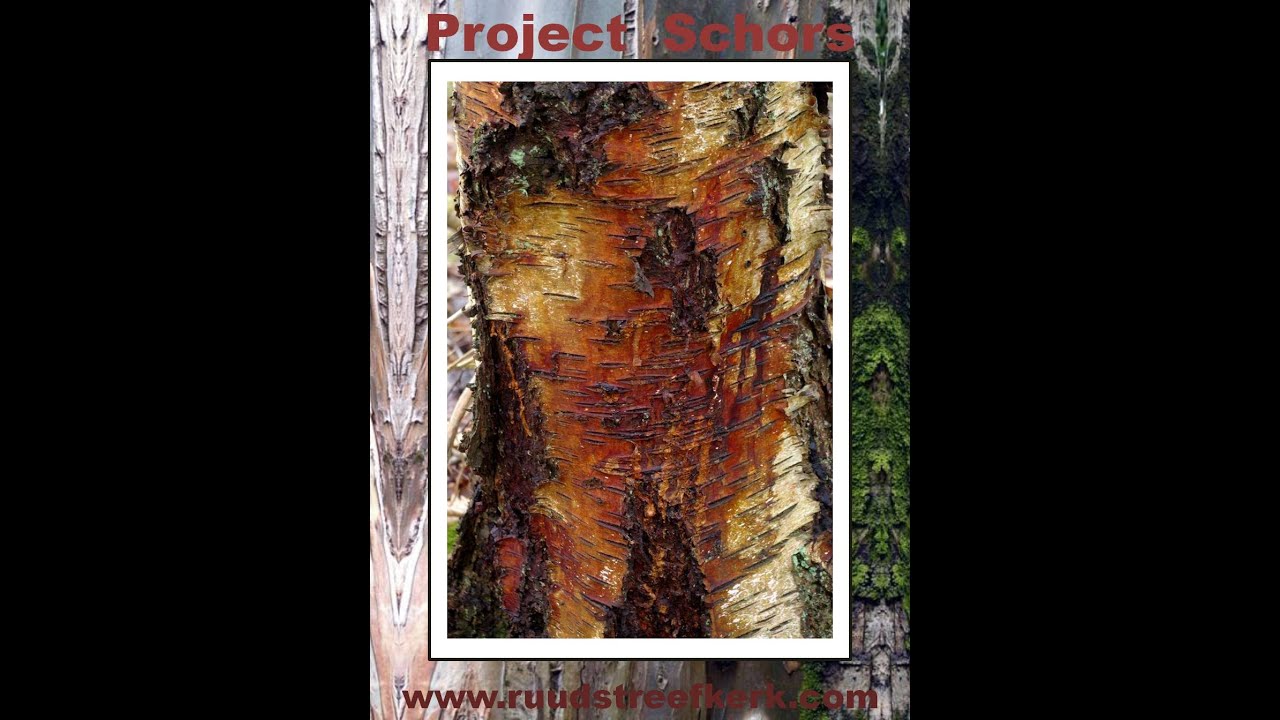
Aan de buitenzijde van de stam en de takken van bomen vinden we de schors. Schors is het dode, kurkachtige, buitenste deel van de bast. In de cellen van deze buitenste laag wordt Suberine, een wasachtige stof, afgezet. Zo wordt deze laag ondoorlaatbaar en beschermt de boom tegen allerlei invloeden van buiten, in de vorm van schimmels, bacteriën en beschadigingen. In de bast bevindt zich de levende cambium-laag. De cellen die daarin zitten delen zich, de ene keer in een cambium-cel en een hout-cel (naar binnen toe) en de andere keer in een cambium-cel en een schors-cel (naar buiten toe). Daardoor wordt de boom dikker.
Aan de binnenzijde van de cambium-cellen ligt het ‘xyleem’. Hierin vindt het watertransport van beneden naar boven plaats, waarbij mineralen vanuit de wortels naar de bladeren vervoerd worden. Aan de buitenzijde van de cambium-cellen bevindt zich het ‘floeem’. Deze laag vervoert de voedingsstoffen die in de bladeren onder invloed van het zonlicht gevormd worden, van boven naar beneden en naar alle andere delen van de boom. Ook kan daarin reservevoedsel opgeslagen worden, wat in het voorjaar gebruikt wordt voor het opnieuw uitlopen van de boom.
Bij veel boomsoorten barst de schors bij de diktegroei van de boom, daar hij niet elastisch is. De kurkeik bijv. vormt een zeer dikke bast, die om de tien jaar een oogstbare laag afgeeft , waarvan o.a. kurken voor wijnflessen gemaakt worden. Sommige boomsoorten kunnen echter door zijdelingse delingen deze groei opvangen, waardoor de bast niet scheurt. De beuk heeft bijv. een zeer dunne bast die glad blijft. Maar daardoor is een beuk wel zeer gevoelig voor zonnebrand. En soms valt de oude bast in schilfers of vellen af, zoals bij dennen, platanen of berken.
DIGITAL EXHIBITION Juli February 2024 Leeghwater Ateliers 26
Bark
On the outside of the trunk and branches of trees we find the bark. Bark is the dead, cork-like, outer cortex of the tree. In the cells of this outer layer ‘suberin’, a wax-like substance, is deposited. Thus it becomes impermeable and protects the tree against all kinds of influences from outside, like fungi, bacteria and damage. The inner part of the bark, the Cambium, on the contrary is very much alive. The cambium-cells in this layer, divide either in a cambium-cell and a wood-cel (internally) or in a cambium-cell and a cortex-cell (externally). As a result, the tree thickens.
Towards the inside of the cambium lie the 'xylem'-cells. These cells provide for the water-transport containing minerals from the roots, from bottom to top, to the leaves. Towards the outside of the cambium lie the 'phloem'-cells. These cells transport the nutrients that are formed in the leaves under the influence of sunlight, from top to bottom as well as to all other parts of the tree. This layer also stores food reserves, which are used in the following spring for the sprouting of the tree.
In many tree species, the bark cracks when the tree grows thicker, as it is not elastic. The cork-oak for instance forms a very thick bark, which gives off a harvestable layer every ten years, of which o.a. wine corks are made. Some tree species however, intercept this problem by lateral growth, whereby the bark doesn’t rip. The beech tree eg. has a very thin bark that remains smooth. But thereby a beech-tree is very sensitive to sunburn. And sometimes the old bark falls off in flakes or sheets, as is the case with pine, plane-tree or birch.
Повторяем попытку...
Доступные форматы для скачивания:
Скачать видео
-
Информация по загрузке: