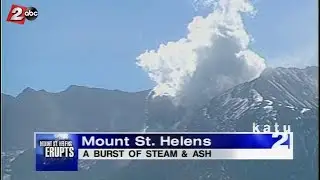
Mount St. Helens EXPLODED SIDEWAYS… and Flattened a Forest in Minutes (True 1980 Disaster)
Загружено: 2026-01-09
Просмотров: 20
Описание:
Mount St. Helens EXPLODED SIDEWAYS… and Flattened a Forest in Minutes (True 1980 Disaster)
On the morning of May 18, 1980, the Pacific Northwest looked calm—evergreen forests, crisp air, and a snow-capped Mount St. Helens standing quietly over Washington State. But beneath that postcard-perfect view, something terrifying was building. In this video, we relive the unforgettable fury of Mount St. Helens: the eerie calm before the blast, the moment the mountain “roared,” and the shocking reality that this wasn’t a typical eruption. It detonated sideways.
This is the story of one of the most infamous volcanic eruptions in U.S. history—an event documented through scientific records, eyewitness accounts, and the lasting scars carved into the Cascade Range. We’ll walk you through what made the 1980 Mount St. Helens eruption so uniquely destructive: a catastrophic lateral blast that ripped open the volcano’s north face and unleashed a hurricane of heat, ash, rock, and pressure across the landscape. In mere moments, huge swaths of forest were flattened like matchsticks—an apocalyptic transformation that still feels unreal even decades later.
You’ll also learn about the warning signs that appeared in the months leading up to the eruption. Mount St. Helens had been quiet for over a century, and for hikers, skiers, locals, and tourists it felt like a beautiful, reliable part of life. But the mountain was changing. Seismic tremors, gas emissions, and a growing bulge on the north side hinted that magma was rising and pressure was mounting. Scientists monitored these signals closely—yet even with research and preparation, the sheer violence of what came next would stun the world.
When the blast finally happened, it triggered one of the most dramatic sequences of natural destruction ever captured in modern times. A massive landslide, a roaring shockwave, and a deadly pyroclastic surge tore through the surrounding wilderness at incredible speed. The sky darkened with ash. Daylight vanished. Entire areas became unrecognizable. And from a distance, the eruption’s scale made one thing painfully clear: nature doesn’t negotiate.
This video doesn’t just cover the eruption—it explores the aftermath. The ash-coated silence, the flattened forests across hundreds of square miles, and the way the landscape looked more like the surface of the moon than the lush Pacific Northwest. But it’s also a story of resilience: of scientists learning from the event, of communities rebuilding, and of nature slowly returning—green life pushing back through gray devastation.
If you’re fascinated by volcanoes, natural disasters, geology, survival stories, or real-world history that feels like a movie, this is one you don’t want to miss. Watch until the end for the long-lasting legacy of Mount St. Helens and why its eruption remains one of the most important case studies in modern volcanology.
Keywords/Topics covered:
Mount St. Helens eruption 1980, lateral blast, volcanic eruption documentary, pyroclastic flow, ash cloud, USGS eruption history, Washington State volcano, Cascade Range, natural disaster history, volcano science, David Johnston “This is it!”, eruption aftermath, regrowth and resilience, geology explained, deadliest volcanic events in the United States
If you enjoyed this video, consider liking, subscribing, and sharing—especially with someone who loves disaster documentaries and true history.
#MountStHelens #Volcano #VolcanicEruption #1980Eruption #NaturalDisaster #PyroclasticFlow #Geology #USHistory #DisasterDocumentary #WashingtonState #CascadeRange #USGS #ScienceDocumentary #NaturePower #AshCloud #LateralBlast #SurvivalStories #History #EarthScience #CatastrophicEvents
Повторяем попытку...

Доступные форматы для скачивания:
Скачать видео
-
Информация по загрузке: