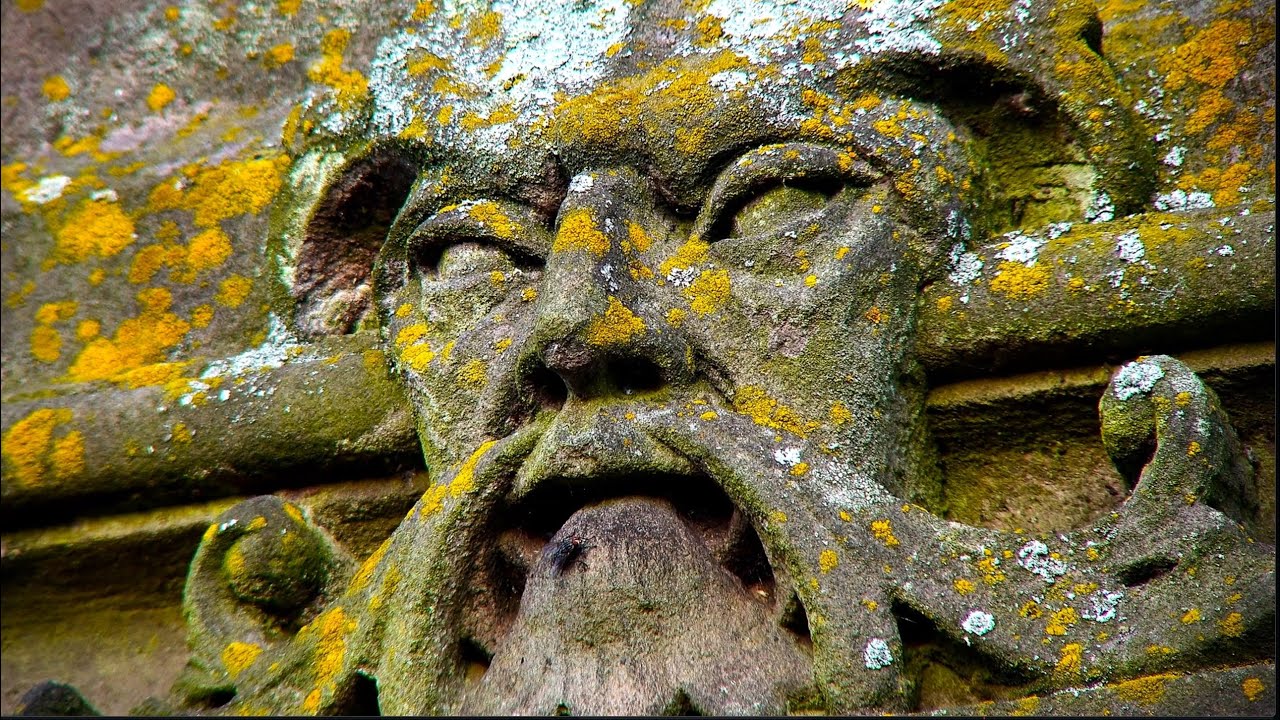
The Green Man Bridge: Leicester, England UK
Автор: Sacred Stone 4K
Загружено: 2024-11-20
Просмотров: 925
Описание:
There is much written about the meaning of the Green Man, nearly all speculation. What i believe can be said with some certainty is that it was some form of ancient pagan deity connected to nature and possibly rebirth.
The Bridge in the video is located at Upperton Road Leicester England. It was built during the Victorian era around 1890. It does seem to reflect free mason symbolism.
The Green Man is a motif in architecture and art, of a face made of, or completely surrounded by, foliage, which normally spreads out from the centre of the face. Apart from a purely decorative function, the Green Man is sometimes interpreted as a symbol of rebirth, representing the cycle of new growth that occurs every spring.
The Green Man motif has many variations. Branches or vines may sprout from the mouth, nostrils, or other parts of the face, and these shoots may bear flowers or fruit. Found in many cultures from many ages around the world, the Green Man is often related to natural vegetation deities. Often used as decorative architectural ornaments, where they are a form of mascaron or ornamental head, Green Men are frequently found in architectural sculpture on both secular and ecclesiastical buildings in the Western tradition. It is a mystery why it is found In churches across Europe.
Historian and professor Ronald Hutton traces the green man to India It has been speculated to of possibly developed in India, which travelled through the medieval Arab empire to Christian Europe. There it became a decoration for monks’ manuscripts, from which it spread to churches.
Templar churches in Jerusalem have Romanesque foliate heads. Some tentatively suggest that the symbol may have originated in Asia Minor and been brought to Europe by travelling stone carvers.
While the Green Man is an entity all on his own, there are indications that he may of been inspired by pre-existing deities, again both before and after the coming of the Roman Empire. Influence from within the Empire stems from both Roman and Greek gods, particularly Pan/Faunus and Dionysus/Bacchus. . Both gods are sexualized nature aficionados, thereby presented as anthropomorphic personifications of the forces of nature and it's cyclical nature— just like the Green Man. Pan was a satyr, a half man, half goat entity who took great pleasure in having sex with almost anything that moved—a trait of satyrs as a race. Despite this raucous behavior, Pan was more importantly a creature of nature tasked with protecting shepherds, mountains, pastures, and the wild. Similarly, Dionysus was a young god who encouraged sexual and spiritual freedom, whose cults appealed predominately to the repressed of the Greek and Roman cultures: women. His worships often turned into orgies and most often took place outside in open fields in the middle of the night.
The Green Man continues this day to be a sought after motif, never losing popularity and popping up across the globe. There have been claims of a masonic connection and it was extremely popular during the Victorian period. It should be remembered that most of the information provided concerning the Green Man is speculation and it remains an ancient and mysterious figure to this day.
#greenman #pagangods #gods #god #christianity #ancient #victorian #architecture #mystery #mystic #mysticism #paganism #forest #thegreenman #bridges
Повторяем попытку...
Доступные форматы для скачивания:
Скачать видео
-
Информация по загрузке: