Battleship Texas, Climbing In An Engine Crank Pit
Автор: Tom Scott, The Older One
Загружено: 2021-04-08
Просмотров: 123218
Описание:
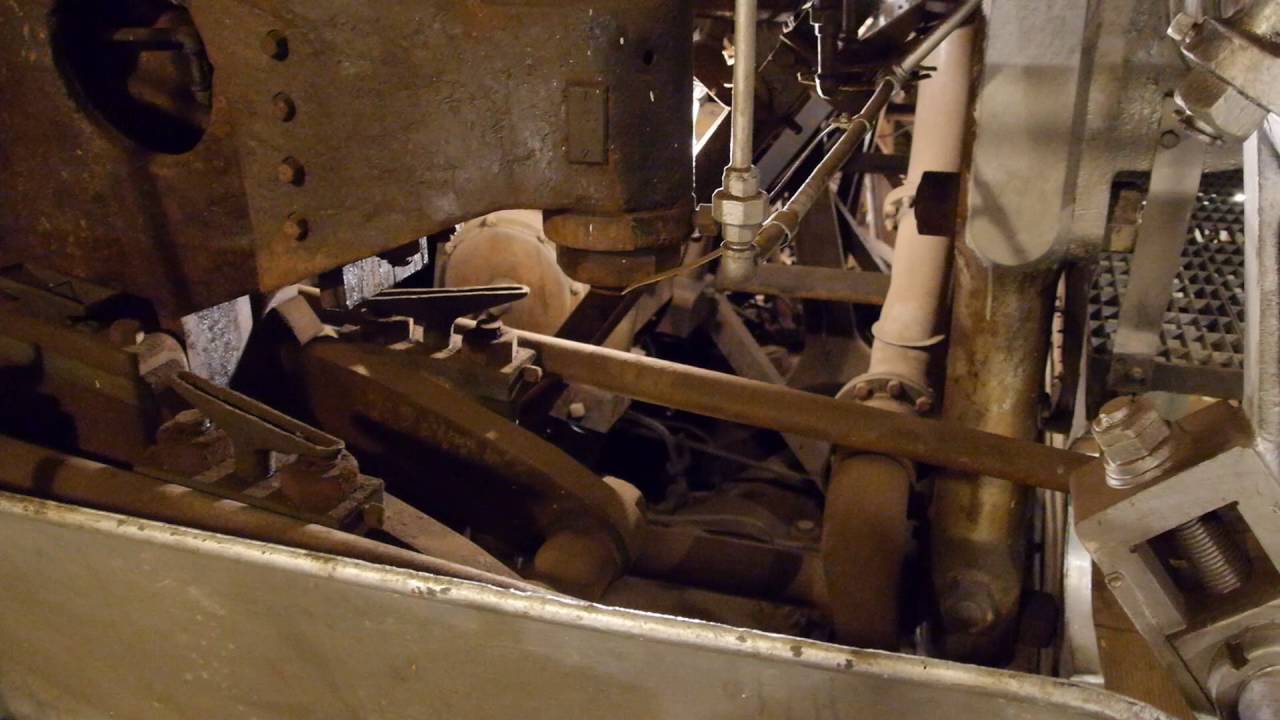
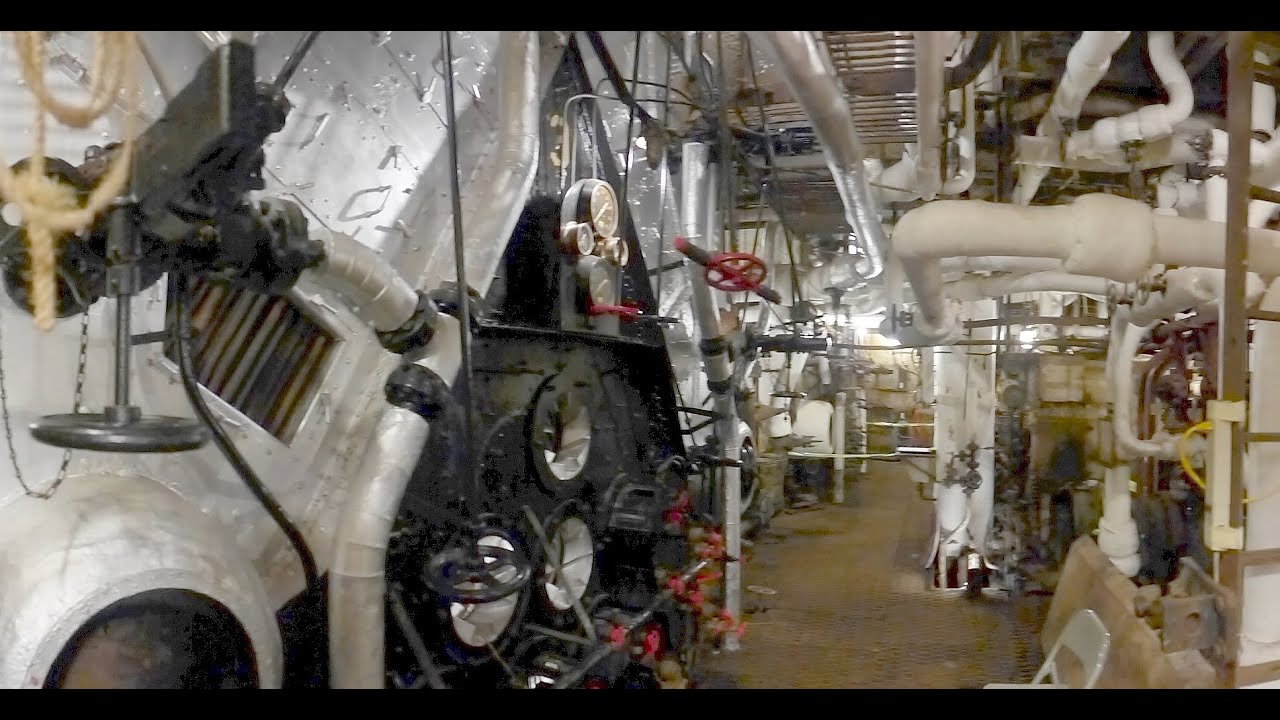
Here's a unique view of one of the two massive engines on Battleship Texas shot while standing inside the crank pit of the starboard engine. There's plenty of room to move around because these are perhaps the largest surviving marine reciprocating steam engines in the world. Only one other battleship, Oklahoma, was built after Texas with similar engines and they were smaller! While it is easy, and correct, to say that turbines were far superior, that wasn't the case in 1910, when the New York class was being designed. Previous ships were built using turbines, but they proved to be very inefficient at cruising speeds and suffered from materials and design shortcomings that made the use of reciprocating engines a reasonable choice. However, it was recognized at the time that improvements in turbine design, and the development of reliable reduction gears, would put turbines well ahead of these engines in succeeding classes.
These engines are the ultimate expression of reciprocating steam design and are the result of 100 years of design evolution. A lot has been said about their complexity and lack of reliability. The former statement is correct, but the latter is not. Proper preventative maintenance and a well trained crew resulted in reliable operation and engines that could run at high speeds for extended periods of time. The downside was that there were certain speed ranges that produced vibrations that traveled throughout the ship. Unfortunately, one of those speeds fell within standard cruising speed. Operating the two engines at slightly different speeds greatly reduced harmonic vibrations to resolve some of the problem, but not all.
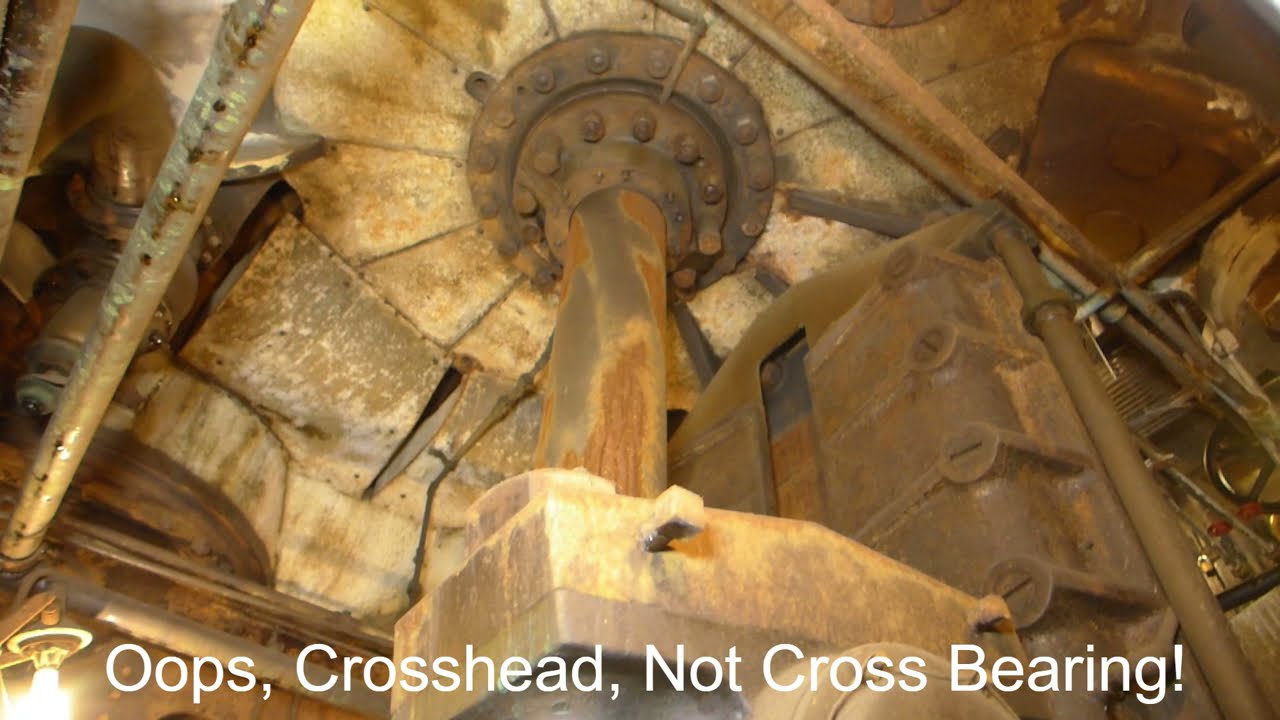
As you can see in the video, the mechanical design is amazingly complex. First, they have four cylinders that provide three stages of expansion. This is a preferred choice for large marine engines that gave the greatest practical amount of work from the expansion of steam. While that in itself created a lot of moving parts, there is a particularly good reason for additional complexity that practically doubled the number of parts. Unlike the great majority of internal combustion engines, these are dual action, meaning that steam is applied on both the down stroke and up stroke of the piston movement. Because up to 265psi of steam was applied beneath the piston to push it up, the piston rod had to be sealed to prevent steam leakage, meaning that it could only be allowed to move up and down, but not side to side like a gasoline or diesel engine. This required a crosshead, or hinge that connected it to a lower piece, the crank rod, that could be pushed up and down by the piston rod and move side to side as it rotated the crankshaft. Unfortunately, extreme lateral forces exerted on the crosshead would make it buckle and fail without a means of holding it in perfect vertical alignment. This was the job of the crosshead shoe attached to the crosshead that rode up and down in a crosshead guide that was firmly attached to the engine frame. This guide contained massive flat bearings that were constantly flooded with oil to provide a sliding surface for the crosshead shoe that was practically friction free.
Lastly, the engine could only work if valves were used to precisely control the input of steam at precisely the right time and for the right duration. There were a total of 7 large valves in the engine that did the work. One for the high pressure cylinder, two for the intermediate and two for each of the two low pressure cylinders. Their control and operation was accomplished using two eccentric rods per valve, one for forward and the other reverse, that attached between the valve rod and eccentrics on the crankshaft. Changing the engine from forward to reverse was accomplished through the Stephenson linkages that could move either the forward or reverse eccentric rod beneath the valve rod.
As you can see, these engines are stunningly complicated and it made complete sense to get away from their use once turbines became more efficient and reliable. However, even though they became obsolete, they still stand out as monuments to design and engineering!
For a more detailed look and description of these engineering masterpieces, go to: https://battleshiptexas.info/images/E...
Повторяем попытку...
Доступные форматы для скачивания:
Скачать видео
-
Информация по загрузке: